Excitingly we have just past our one month anniversary in Nepal and with both the language, teaching and portions of rice becoming manageable, these are our reflections on the month.
Teaching is exhausting but it has definitely become easier over the past two weeks. I teach three classes – one of 6 year olds, one of 10 year olds and one of 11 year olds (although these are just the majority of the class as school year is decreed by exam not age here so the classes are mixed aged. For example, the 11 year old in my class of 6 year olds). My class 2s started out as a class of monsters but they are growing to like me and understand classroom rules. Current methods of discipline including writing their name on the board, sending them to sit on the window and then to the office. However (I am not proud of this) I did confiscate the stickers out of a boys book who really got on my nerves yesterday – it’s a work in progress. They are incredibly sweet 85% of the time (if a little snotty) and when engaged they are very hardworking. Hardcore favourites of the class include the macerena, heads, shoulders, knees and toes, duck, duck, goose and of course – the Hokey Cokey (a definite favourite of the whole of the lower school and earns Selin and I questioning looks from the teachers as they walk past our classes). I teach this class for 2 hours every afternoon and whilst still exhausting, I don’t actively dread it all morning and pray for a surprise half day anymore. Although a lot of work they are really rewarding to teach. By the end of this week, after much manual labour and sticker bribes, the class finally understand and can spell double digit numbers (and lots triple) and I’m so proud of them.
Class four are currently my most challenging class as they can easily follow learning vocabulary but are quite far behind class 5 in terms of understanding how the language actually works. My poor Nepali is the biggest problem with them as their textbooks expect a much higher level of English than they’re currently at and much of the grammar is difficult to explain using only English. Class five are more aware of Nepali grammar and so find it easier to transfer that to English. I have just started adverbs with them and they can translate into Nepali and back to English showing that they understand the point of adverbs and then can use them in sentences. Class four however are still learning by memory and can’t use the language in sentences or conversation. Class four may also be my most difficult class as I share them with Selin and she’s definitely much nicer to them than me…
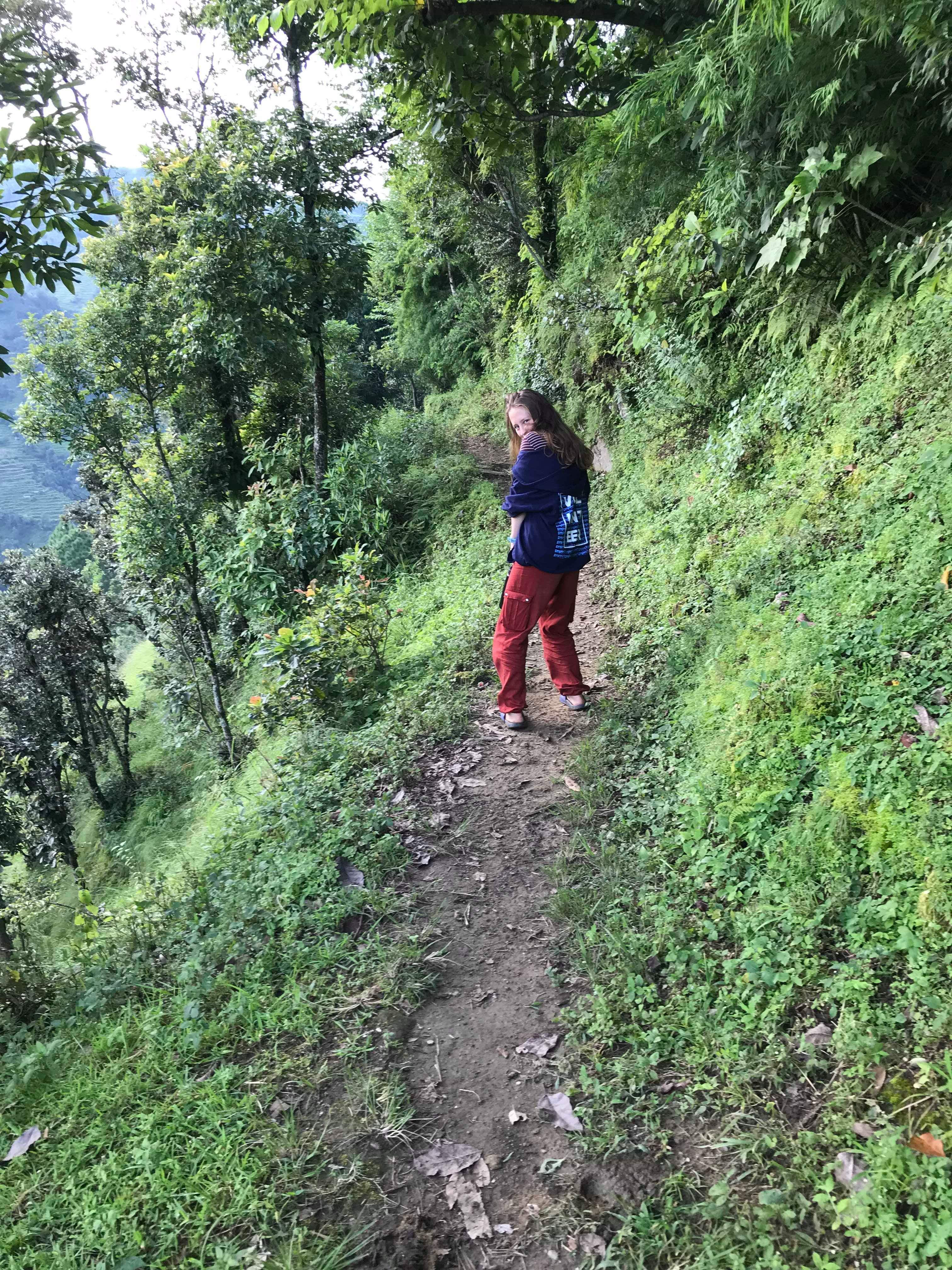
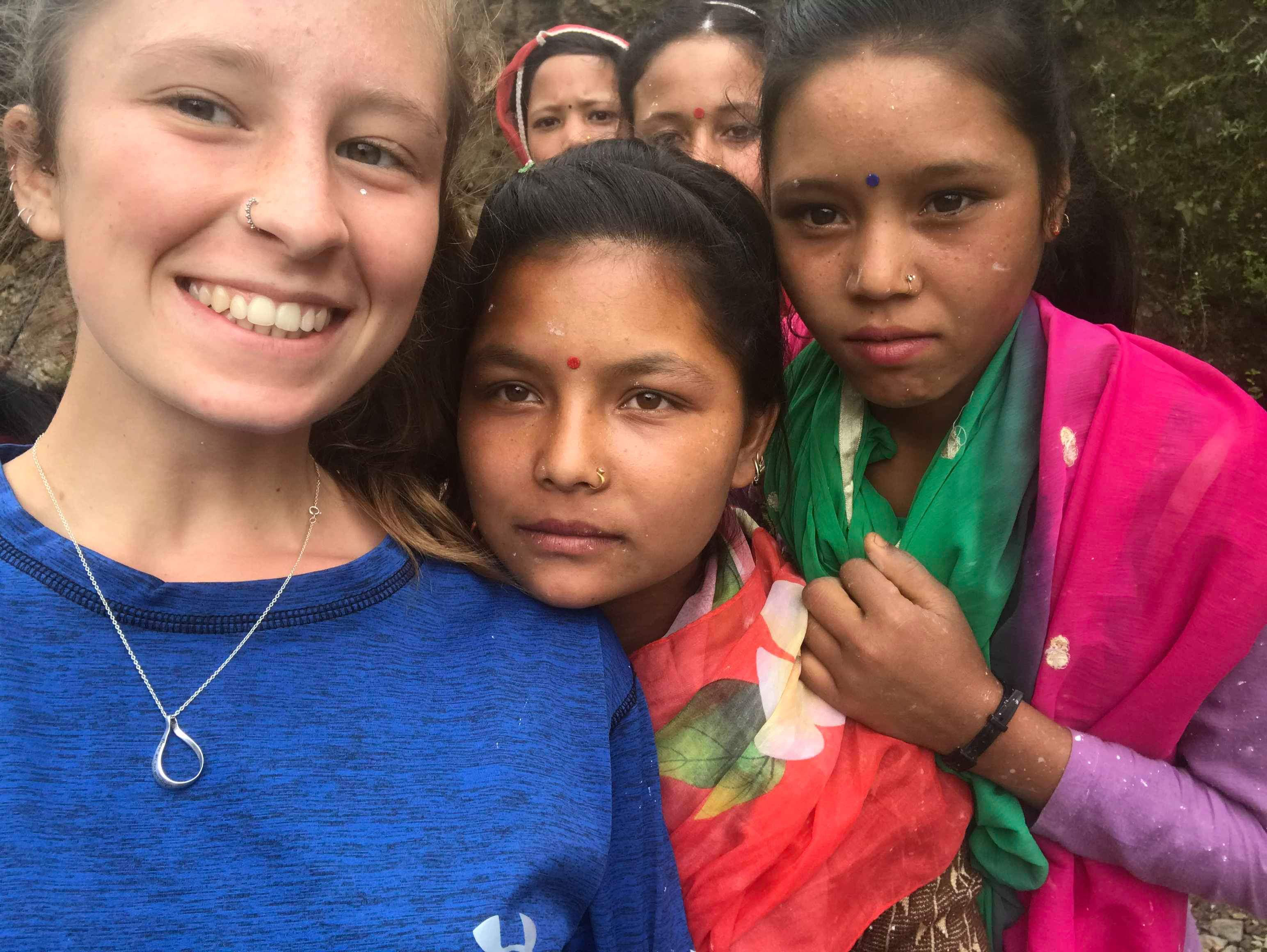
We are feeling much more settled into everyday life here although we still feel uncomfortable randomly entering strangers houses trying to make friends (cultural norm). We are getting into to a routine and making friends in the village and surrounding villages. I think I have become known as that odd white girl who runs. Exercise for the sake of exercise isn’t a thing at all here and the locals are all highly amused at my morning efforts as they run past me with sacks of rice tied to their heads (I’m not joking). Some are also concerned I will kill myself as I have already shredded two pairs of leggings from tripping over (lots of hills + lots of rocks) – I may not return to England with knees.
It’s really reassuring to be getting to know local people and gives us hope we will make friends here. One of our teachers and his wife have asked us to select an English name for their baby who was born about the same time we arrived in the village – so far Percy and William have proven the most popular choices. The mother is only eighteen but seems so much older than us as young mothers are the norm here. Although it’s pretty strange to meet such maternal teenagers when compared to the UK. However the smaller age gap between generations means extended families are so much larger here as people’s great and great great grandparents are still alive. We are trying to match up kids at school into families but everyone is related or if not they refer to each other by familial terms. We’re a bit lost.
When asking someone’s name, locals pointedly tell us their full name including their cast. Although the cast system is being dismantled, it is still extremely prevalent here and in similar small villages. We are trying to figure out the hierarchy – we’ve been informed that the higher casts eat goat and chicken whilst the lower casts eat buffalo(?). The kids seem unaffected by their casts but will still correct you if you ask if a child of another cast is their sibling. It is also fairly confusing working out what to call someone when they offer you three Nepali names, potentially none of which you can pronounce.
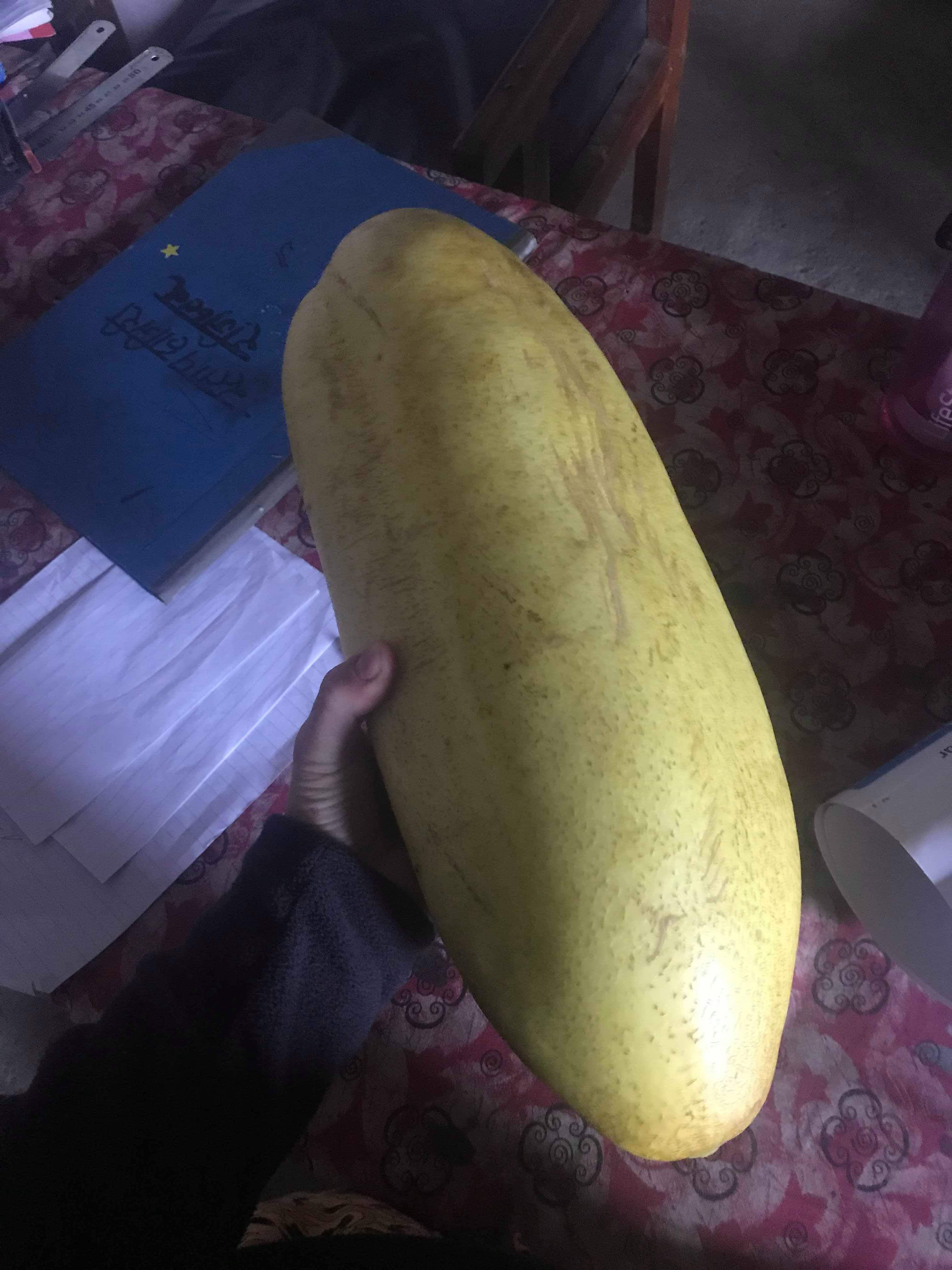
This week in the unspoken Nepali calendar cucumbers have come into season. A rough translation of a Nepali cucumber is that they are between the size of a butternut squash and a marrow. People cut them up like melons and dip them in crushed salt and chillis (sometimes other herbs). At first this was delicious, however being fed four in one day began to take its toll. It’s a lot of cucumber. We are not complaining though, we’re big fans of vegetables.
 A Year in Nepal