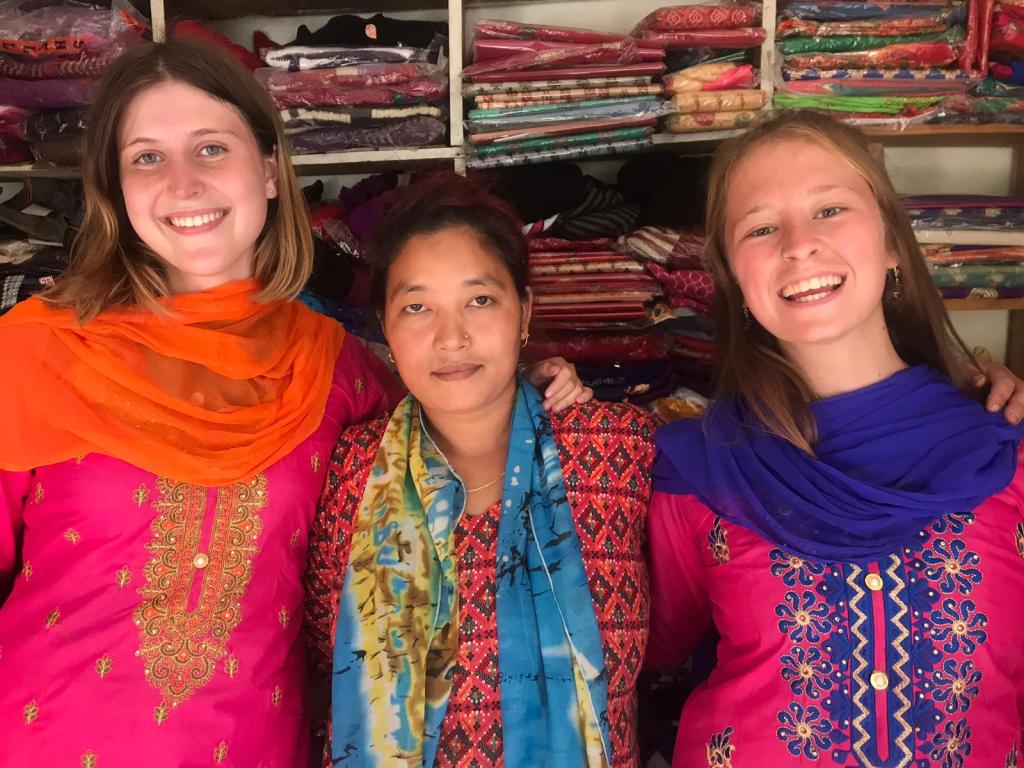
Having missed Nepal’s biggest festival Dashain to be in Pokhara, we arrived back in Neta for school again on 18th October. This was two weeks earlier than the other sixteen volunteers school dates until we realised school was running for three half days and then we miraculously broke up for the Tihaar festival holiday – the extra two weeks everyone else had. Although this classic display of Nepalese organisation and forward planning skills did mean we missed out on taking a language course in Pokhara (despite asking multiple teachers if they were sure we only had an extra three days rather than two weeks off for Tihaar), it was really nice to be able to spend some time around the village meeting more students families and other villagers. Neta is tiny – literally 20 houses on the top of a valley, spread out by farming land between them. The nearest shop is an hours walk away and is very temperamental. For the majority of our extra holiday we went from house to house drinking tea and eating popcorn and sel roti. Sel roti is the food of Tihaar and so even though Tihaar was days away everyone had begun their batch cooking. They are deep fried bread rings, like donuts but without the sugar and Selin and I are now definitely suffering from sel-roti-PTSD being presented with piles of them multiple times a day despite insisted we didn’t want food. Food is central to Nepali culture and leaving food is very disrespectful leading to lots of bargaining between us as to who had eaten more and what could be exchanged for the other to finish the plate. Calling people by familial terms is custom and we have maximised our holiday to collect grandmas – ‘Jummas’ – around Neta. So far we have ‘buro jumma’ (old grandma), ‘simi jumma’ (beans grandma), ‘mui jumma’ (milk grandma) and Depa’s jumma (Depa is a class four pupil). We have also collected a Nepali little sister (‘bahini’), her son and her mother as our Nepali ama. This has meant we’ve hardly had to cook for ourselves as either our grandmas or mums have taken liberty to feed us or we are so stuffed of sel roti we don’t need dinner (although I did make banana pancakes this week).
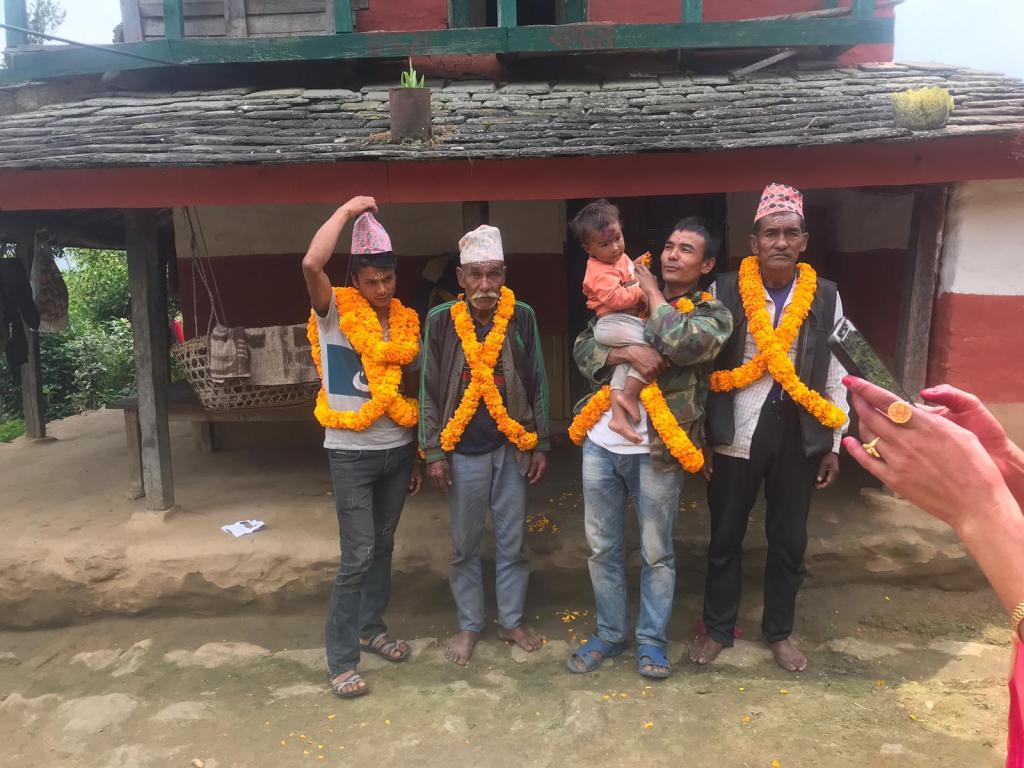
We have also hosted our first guests in Neta – four volunteers walking from Nisi in the Balung district, to Puja in Puythan (our district). This began with a text one day asking if we might have any room because Puja was turning out to be further away than anticipated and they didn’t think they’d make it there that night. We assured them we could definitely fit 6 people into our 3m by 4m room and we’d whip them up a banging daal bhat and tarkhari. Having cut up enormous portions of vegetables (it took two woks to cook them) we didn’t hear anything from the boys until about eight when we finally got a call that they were not even in the area having somehow only made it halfway from Nisi to Neta. Unfortunately for them they had no food or water and had to sleep on the mountainside with the tigers and no tent. Fortunately for us we had a lot of food. Eventually they made it to us the following evening and were very grateful for all the leftovers from yesterday (having walked 36 hours with a packet of biscuits) although a bit annoyed we’d gone for dinner with Buro Jumma instead of walking down to meet them as promised. The next day the Nisi boys decided continuing to Puja (another 4 hours away) was too much and went home. Instead we went to Puja for the night. Puja is about four times larger than Neta with a real road and regular jeeps (although the dirt road means it’s much dirtier than Neta). The houses are much more compact and the village is full of people. They even have four shops, a tailor and a restaurant compared with Neta’s zero. Puja school has similar resources to Neta (whiteboards) but much more of them. For instance the classes actually have enough desks and fixed whiteboards to the walls compared to in Neta where the class regularly has to sit on the window ledge or floor and write on their knees and the school has three small whiteboards that a child has to located at the start of class. Puja school has painted walls (it’s not even made of mud) and actual windows so the classes are light. The school is much bigger and better kept than Neta’s and even has two floors.
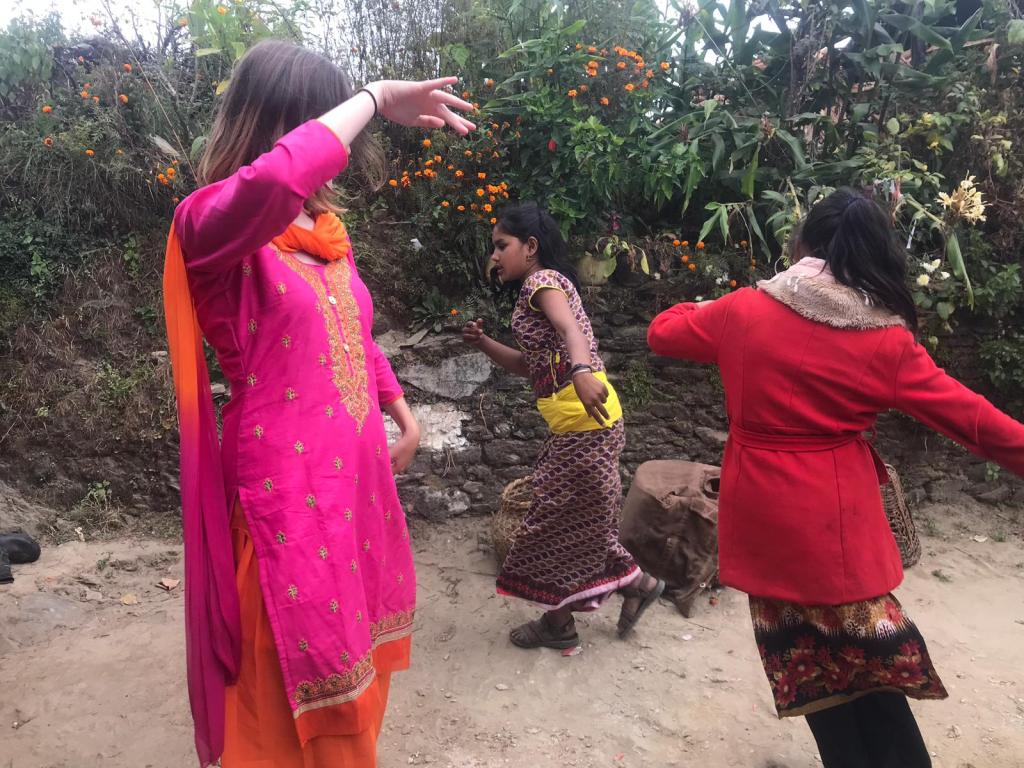
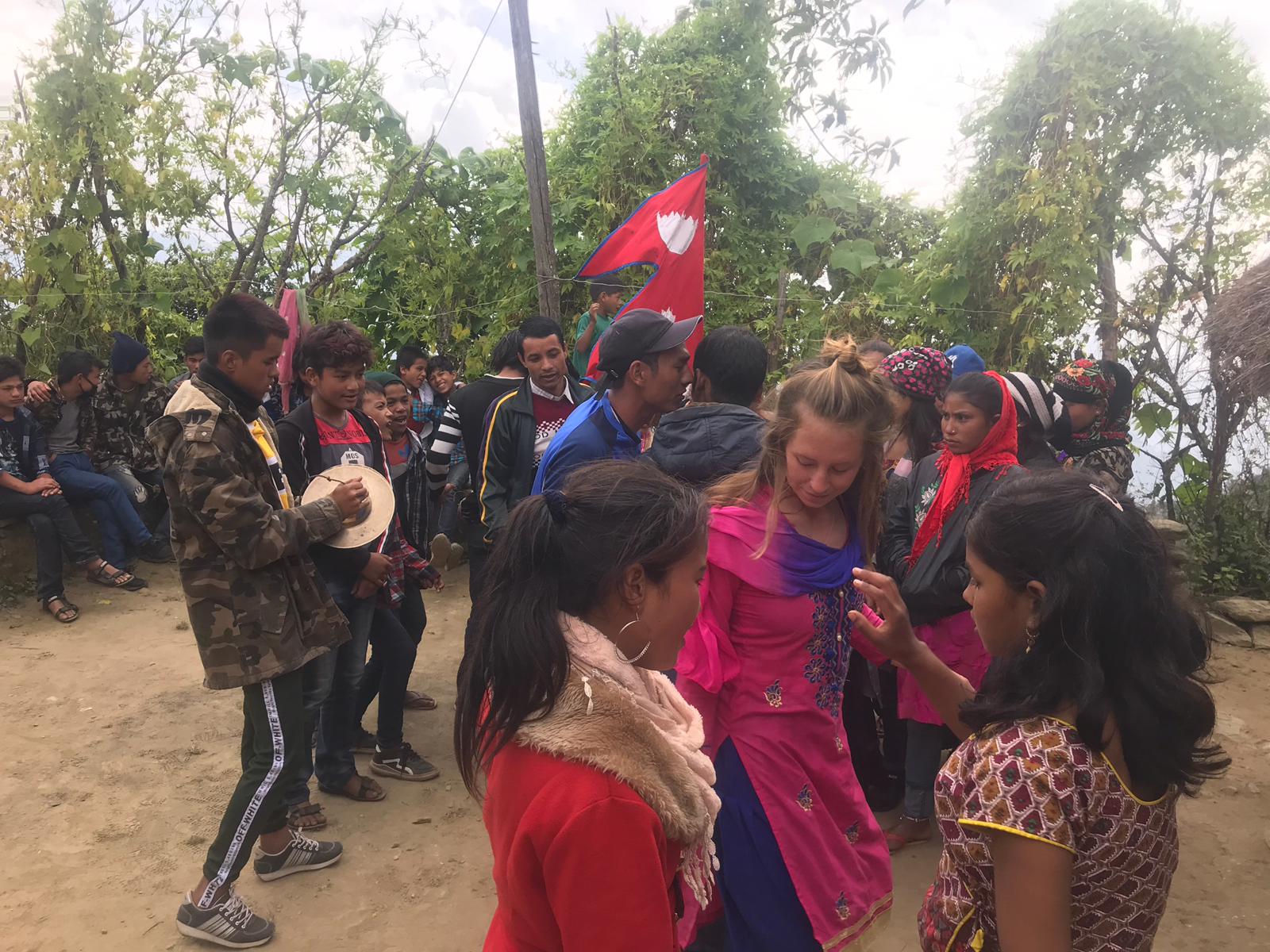
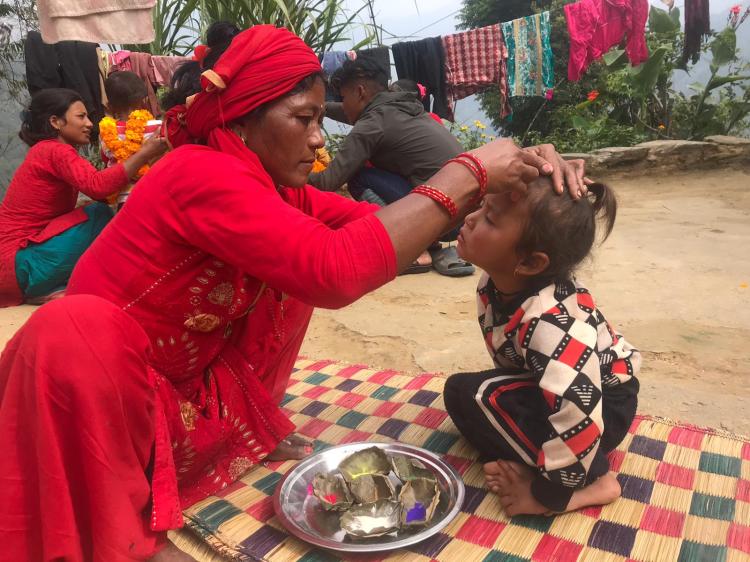
Arriving back in Neta after Pokhara we did not hear the end of firstly, disappointment at our having missed Dashian and secondly, excitement over Tihaar. Tihaar is the second largest festival in Nepal and is a celebration of brothers and sisters where the sisters give their brothers tikka and flower garlands. This began for us with a two day dancing crawl around the next valley, raising money with the school. Having only been told we were doing dancing practice at school, we were told to go home and bring overnight things (unusual forward planning for Nepali standards) and then left with some of our teachers and older students. We walked for a few hours until we reached the next valley and proceeded to go into houses dancing and singing for locals expecting them to produce a plate of uncooked rice with money in and often some sel roti or snacks (at some point a box of instant noodles was produced to eat raw for lunch – they’re like crisps) At each house the teachers also mysteriously disappeared for 20 minutes, returning increasingly drunk and merry.
Having danced until dark, Selin and I were put to bed on a large single bed that filled the entire room. With only a single duvet between us and gap in the wall between the door and the ceiling it was a fairly cold night. We still have no idea where the very drunk teachers found to sleep 30 teenagers that night but it’s Nepal so it just worked out. The next day we continued dancing and the teachers continued drinking until we did not know if we would ever make it back to Neta. Nepalese alcohol is called roxy as is 50 rupees (35p) for a bottle. By about five, our headmaster decided he was too drunk and was going home and took us back with him.
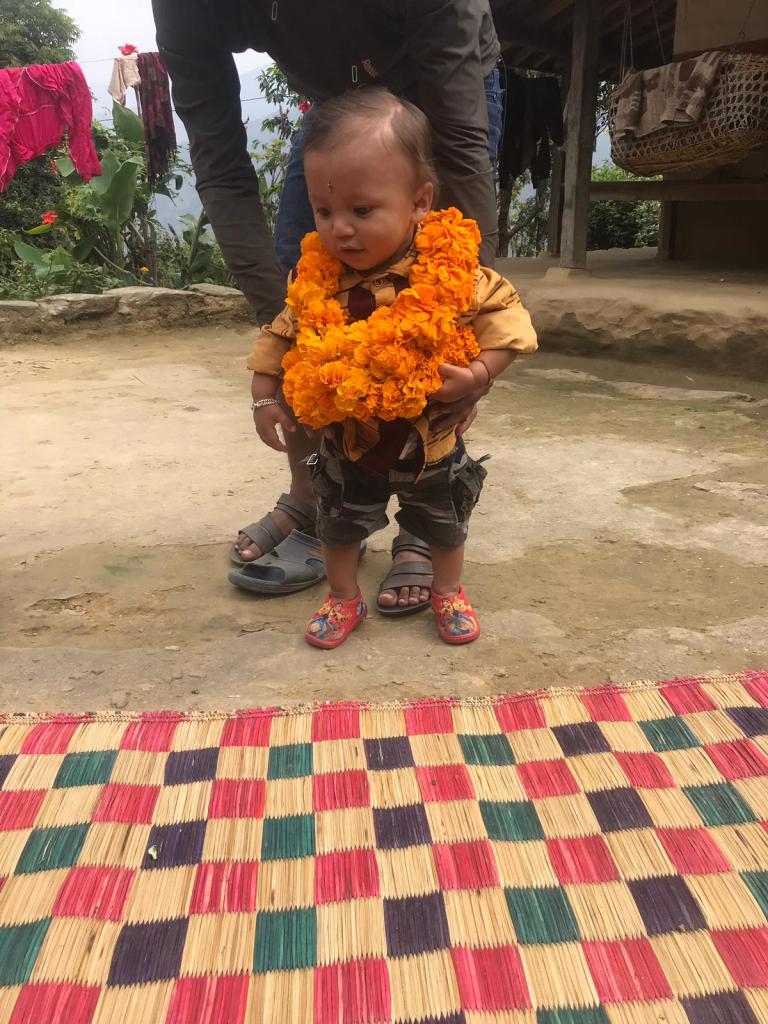
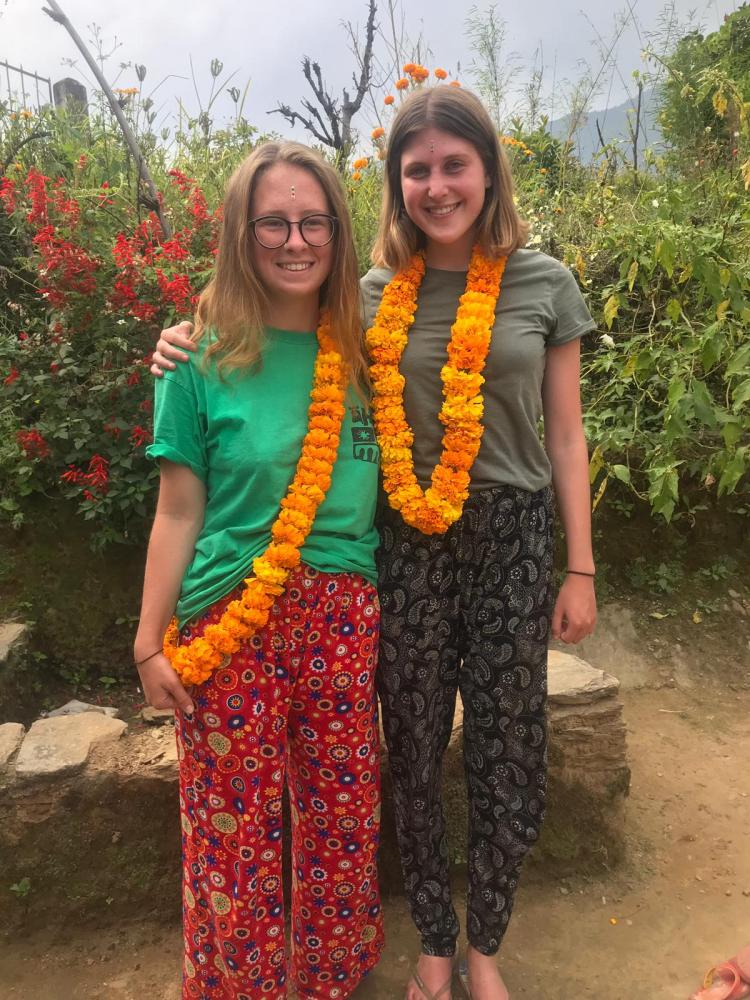
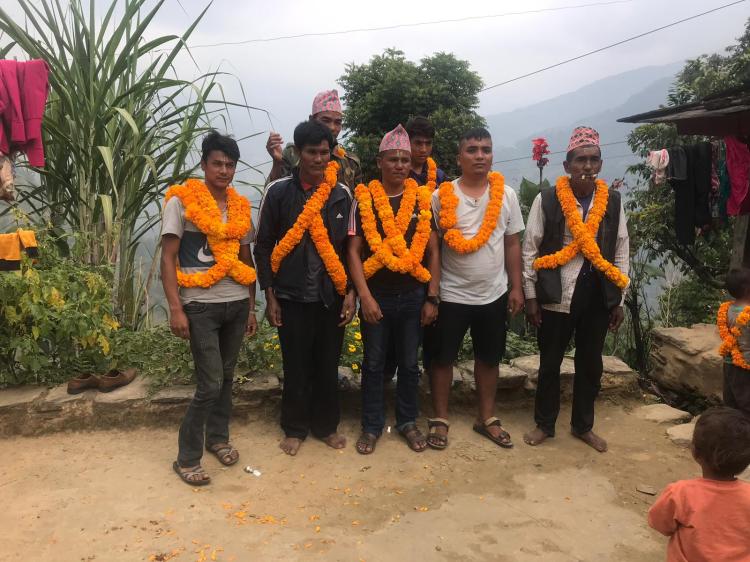
Despite all the excitement leading up to Tihaar, we were suddenly told it was cancelled as someone in the Malla cast had died meaning none of the Mallas were celebrating anymore. About 80% of Neta are Mallas leaving only two houses celebrating – the Sens. Luckily, our Mui Jumma is a Sen and was very happy to have us join their Tihaar and even gave us tikka and garlands despite only being meant for men. We had lots of roti, dal bhat and eclairs – and of course milk from ‘milk grandma’. Despite being repeatedly told no Mallas were celebrating, nearly every man in the village had garlands and tikka and all were drunk so we aren’t sure about this.
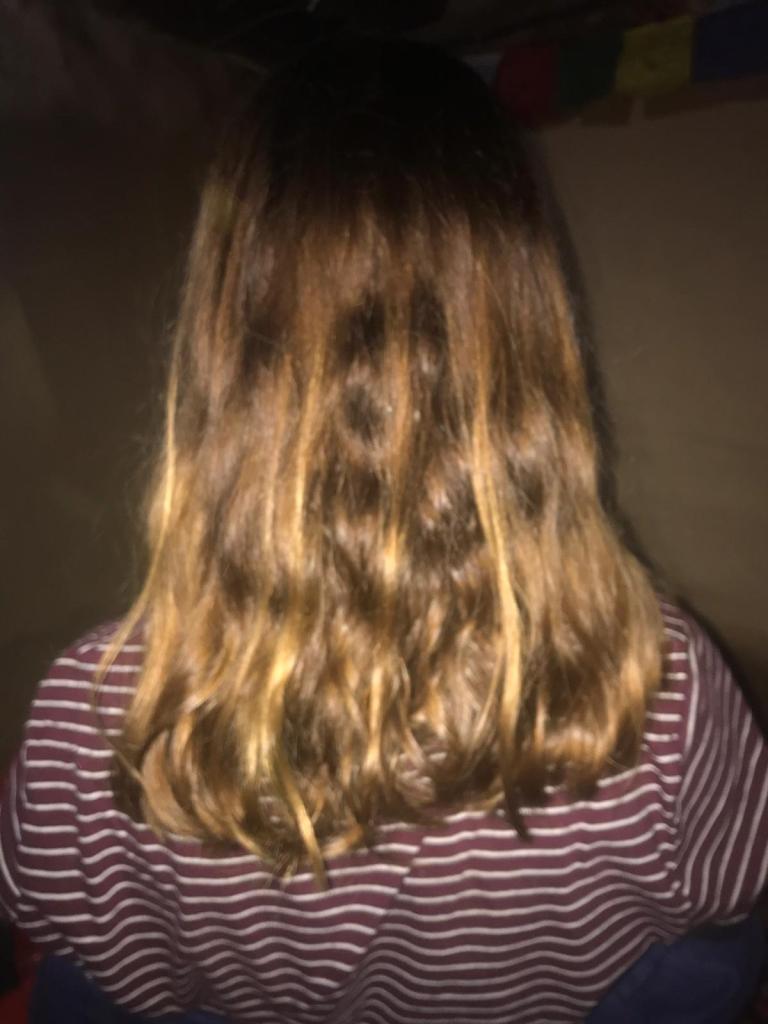
In other news I have given myself an incredibly uneven haircut (the left is over an inch longer) but I did cut Gray’s from Puja very well. We also tried grass cutting although the Nepalis were convinced we would die. We finally got kurtas (traditional Nepali clothing) and found a swimming and picnic spot – although three children watched us from half a metre away for an hour.
 A Year in Nepal