Friday 19th March: 11km, 600m ascent
My trip to Machu Picchu began at 5:30am hunched over a mixing bowl full of porridge with a spoon and a ladle between the four of us. We were aiming to catch the first collectivo out of Cusco to Challacancha, the beginning of the trek. Dressed in fleeces with hiking shoes and rucksacks, we had no trouble finding a driver. We were identified almost immediately: “Salkantay?”, a man asked as we walked passed and directed us to his friend’s car a few hundred metres up the road. We were the first to arrive and had to wait about thirty minutes for the car to fill up with a few Peruvians needing a lift to the villages along the way and a South African couple also doing the hike.
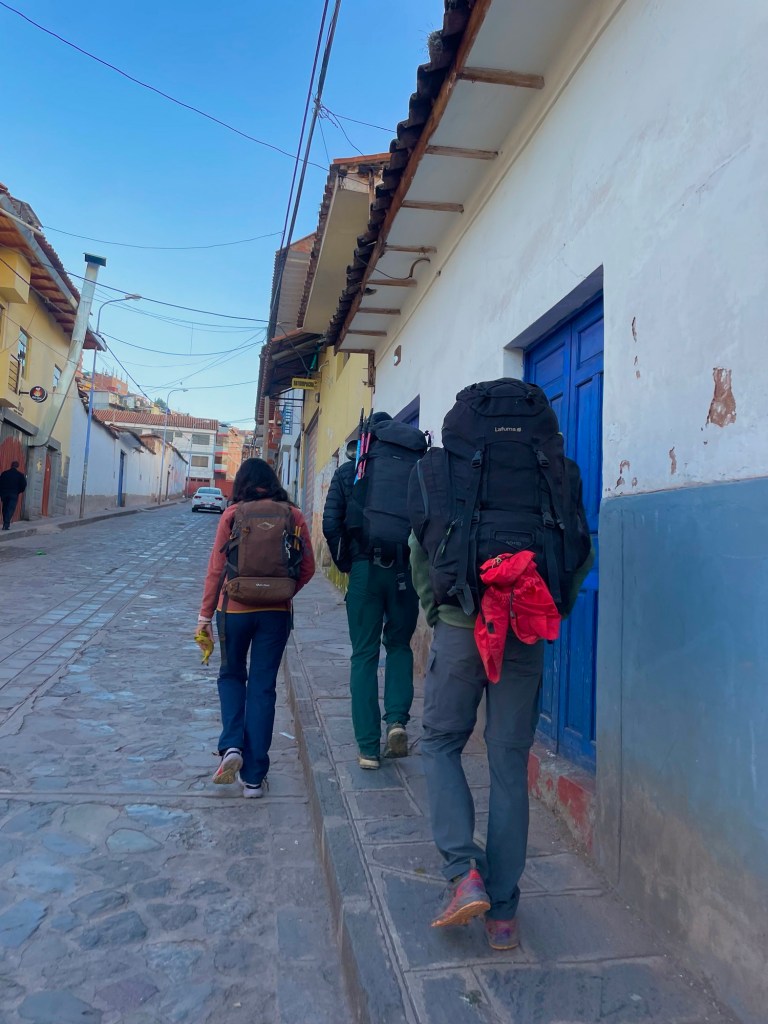
The Inca Trail is the most famous trek to Machu Picchu however you need a guide to do it meaning it is expensive and booked up months in advance. The Salkantay is much more popular amongst budget travellers without plans or reservations – so me. I had met two French boys a week before who seemed very organised and prepared to do the hike without a guide and I was pretty sure that they wouldn’t let me die on the side of a mountain somewhere. The girlfriend of one of them joined us in Cusco, making a good team of four.
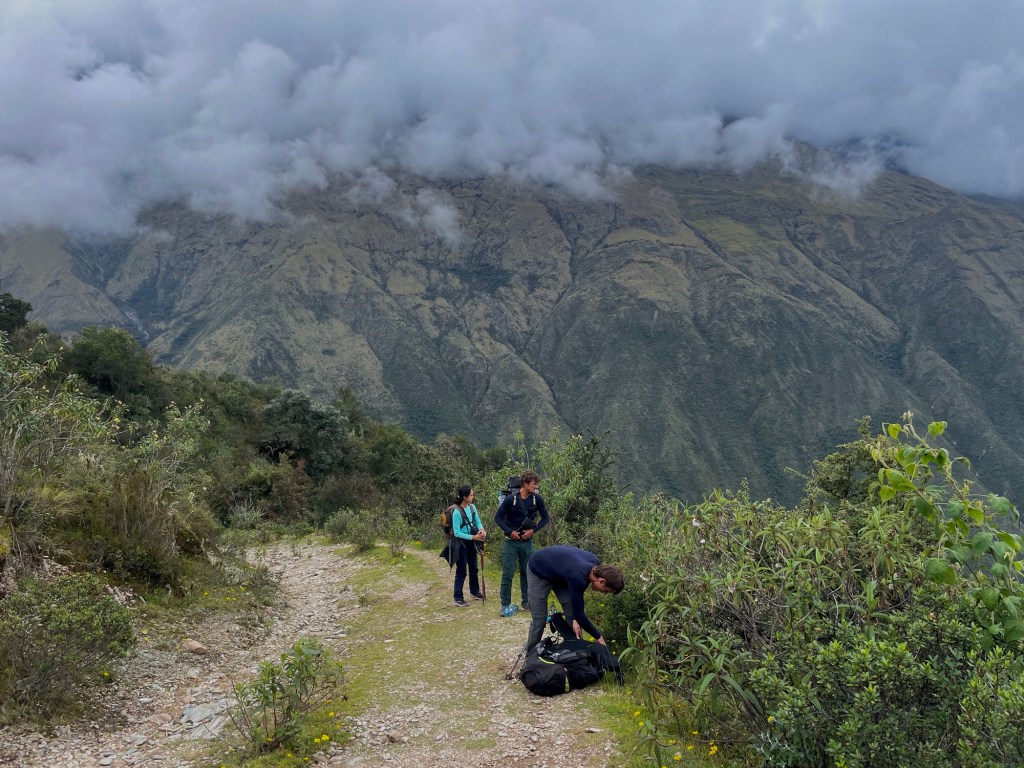
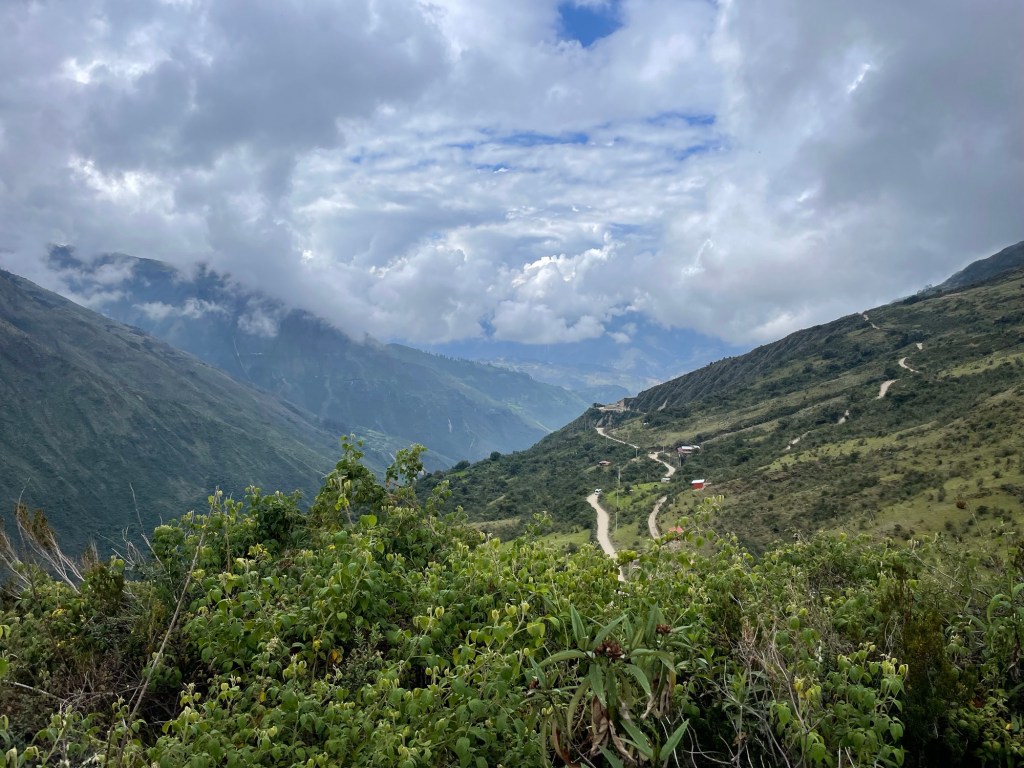
Having bought our trekking passes in Mollepata, we began the hike at about 10am in Challacancha. The first day was an easy one with only 7.5km to cover and 250m to climb. I had however bought new hiking shoes after suffering in Huaraz. Although I had been for two runs in them in Cusco, they gave me blisters on the first day but hey, what’s new? Will I ever find a pair of hiking shoes that don’t destroy my feet?
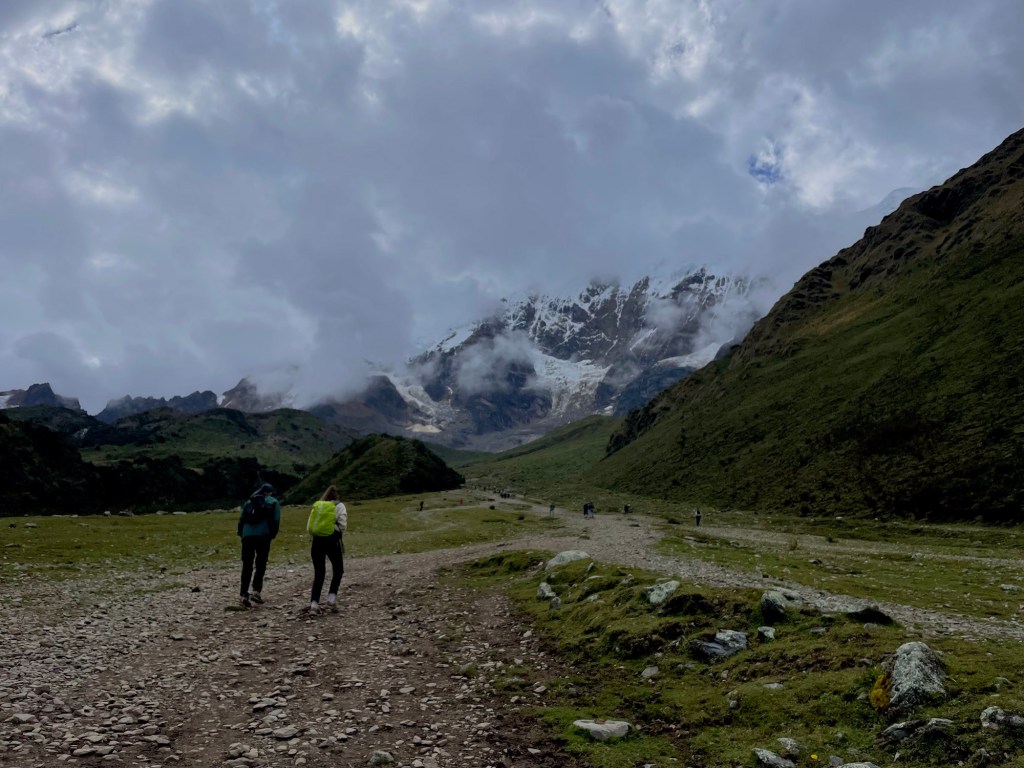
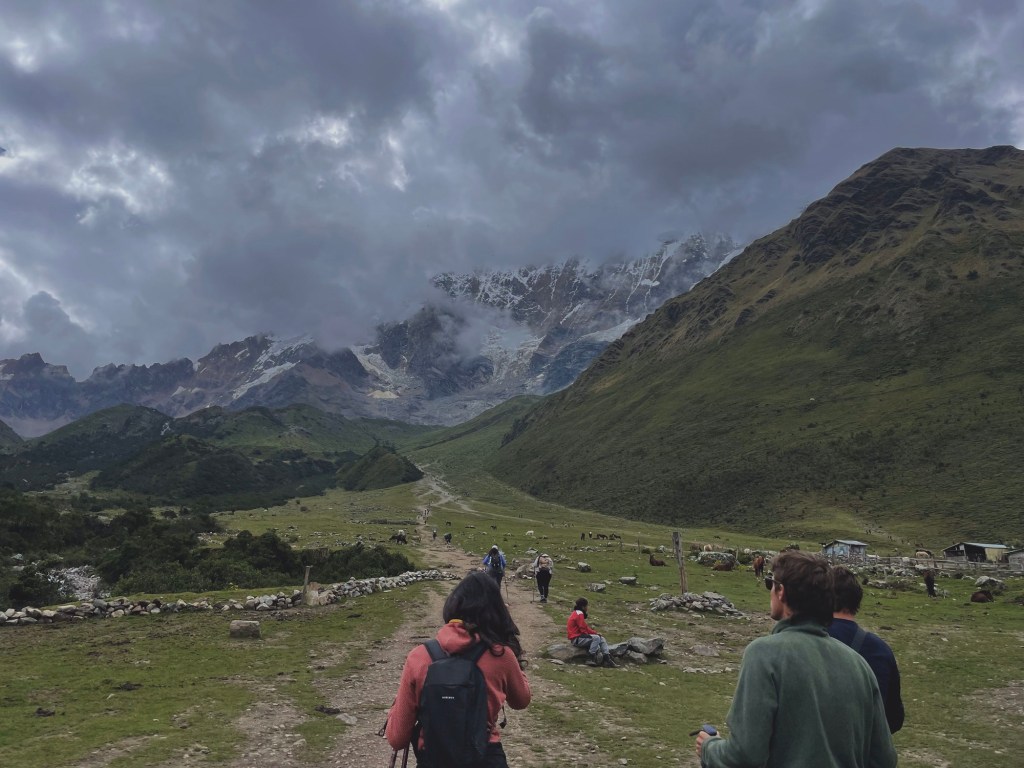
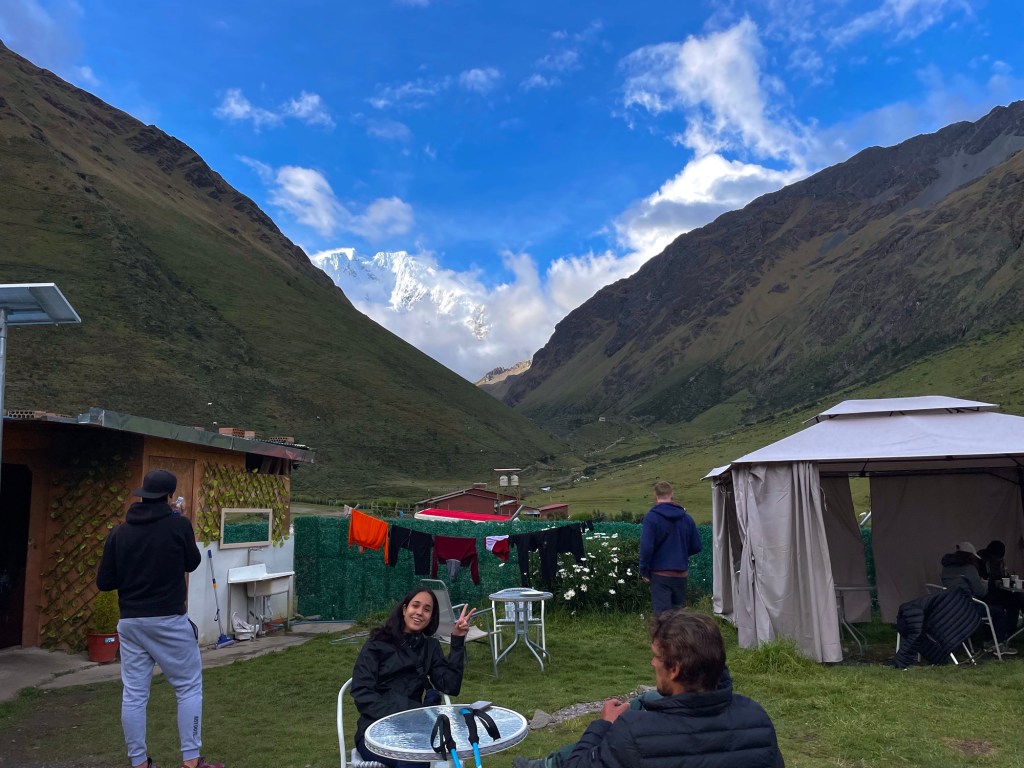
We arrived in Soraypampa our destination for the first night at around 1pm. The trek is well built up with plenty of places to stay along the route offering a bed with an optional dinner and breakfast. We had prepared oats for breakfast and wraps with tuna, vegetables, cheese and avocados for lunch. Whilst the avocados didn’t ripen until the penultimate day, they were so good when they finally did that it was worth carrying them (especially as if wasn’t me carrying them).
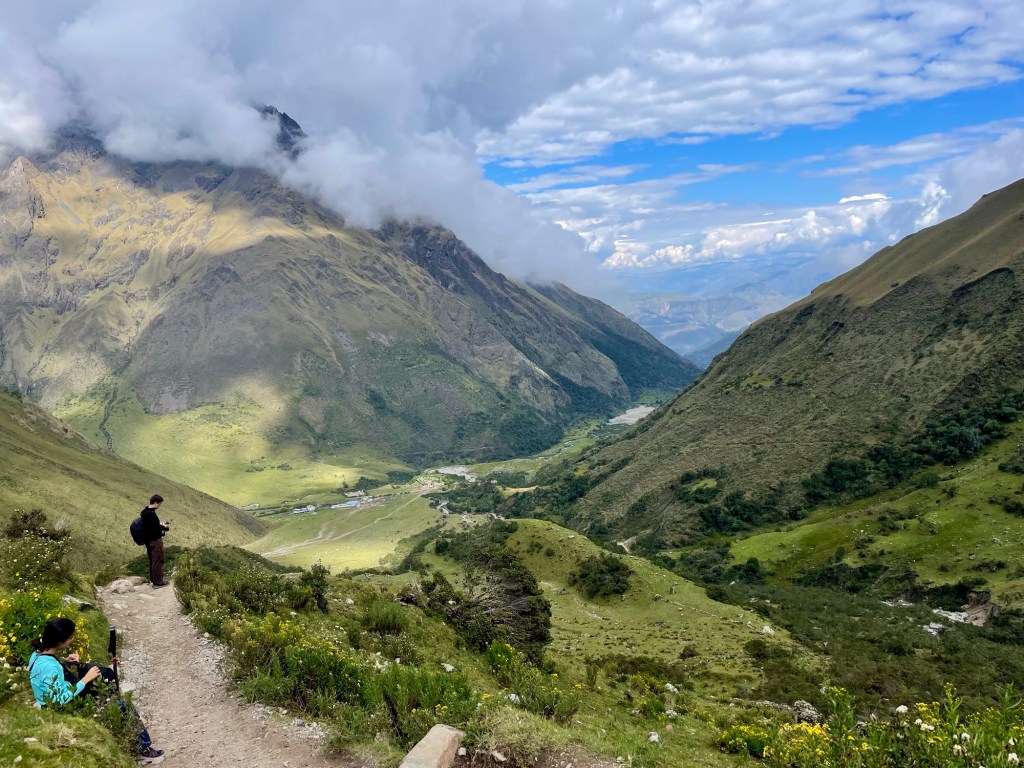
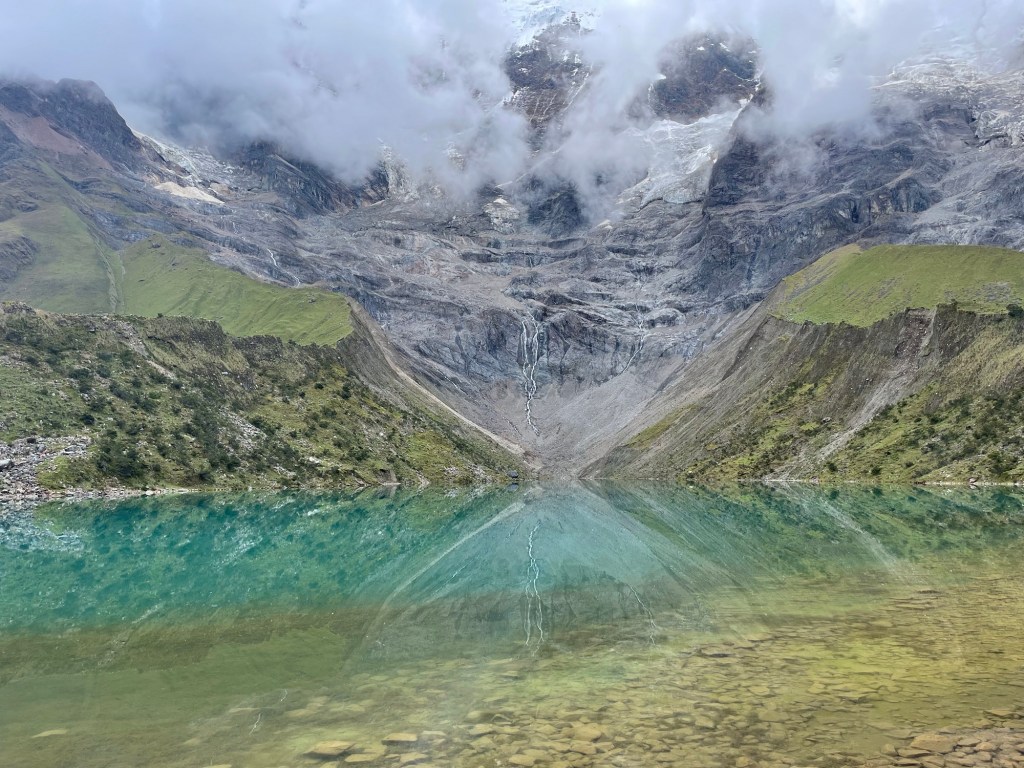
Having eaten over half our cheese rations at this first lunch, we left our bags in the accommodation and climbed up to Humantay Lake, 4km and 350m climb. Soraypampa is already at 3850m and climbing up to 4200m was hard but the views at the lake were stunning.
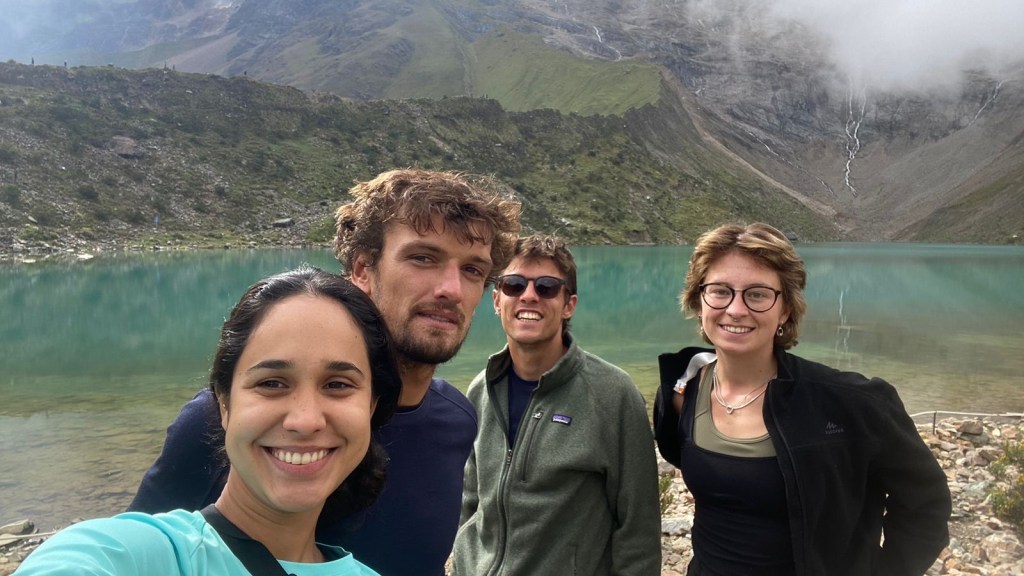
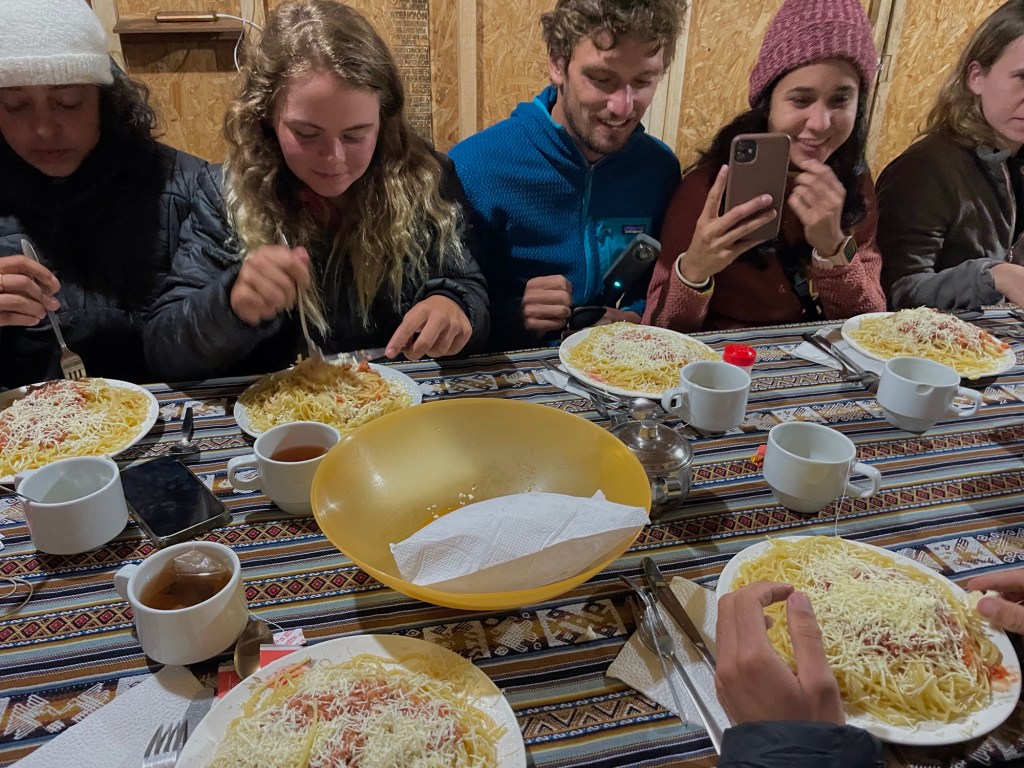
Our day ended with very very cold showers, questionable spaghetti bolognaise and all of us being asleep by 8pm.
Saturday 20th March: 22.5km, 800m ascent, 1000m descent
After 9.5 hours of sleep, the second day began at 5:30 again. Having decided to eat breakfast on the way (the French boys having obviously packed a camping stove), we were still loitering at 6, munching our way through our bags of dried fruit and nuts until we had essentially eaten breakfast by the time we left. Nonetheless, we stopped an hour or so later and enjoyed a second breakfast of porridge.
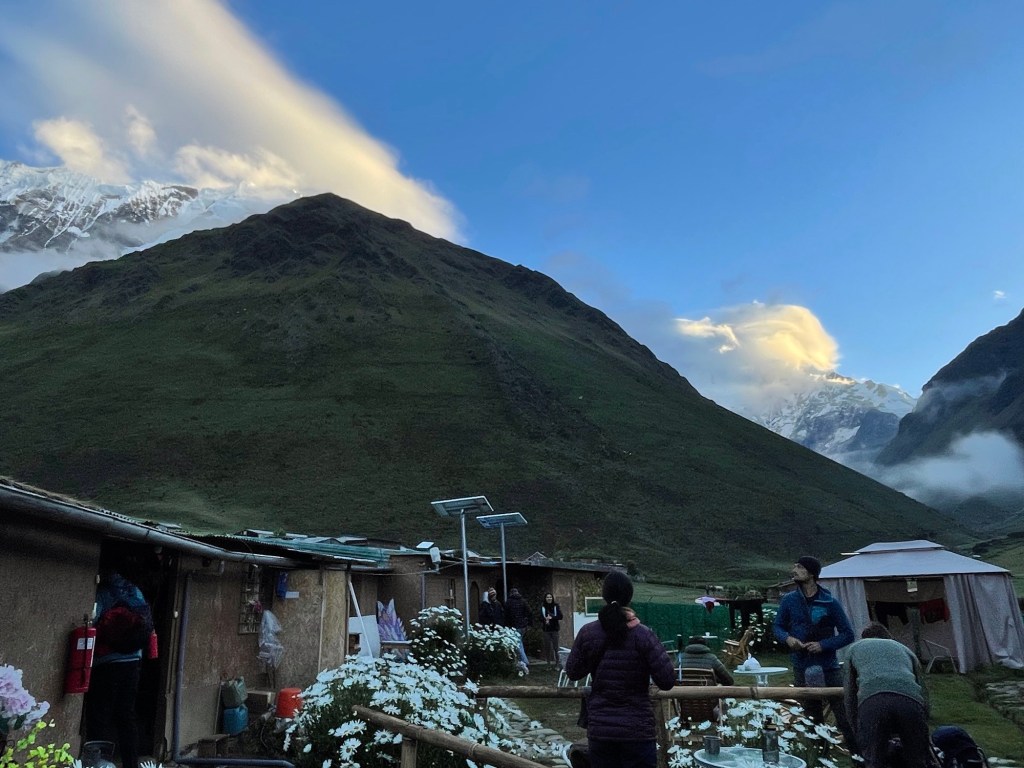
Until we arrived at Soraypampa, the South African couple we shared the car with were the only other hikers we saw on the first day. The second day was very different. You could see exactly where the route twisted up the mountain, illuminated by the fluorescent T-shirts and bag covers of tour companies and we frequently had to stop to allow the donkey traffic to pass.
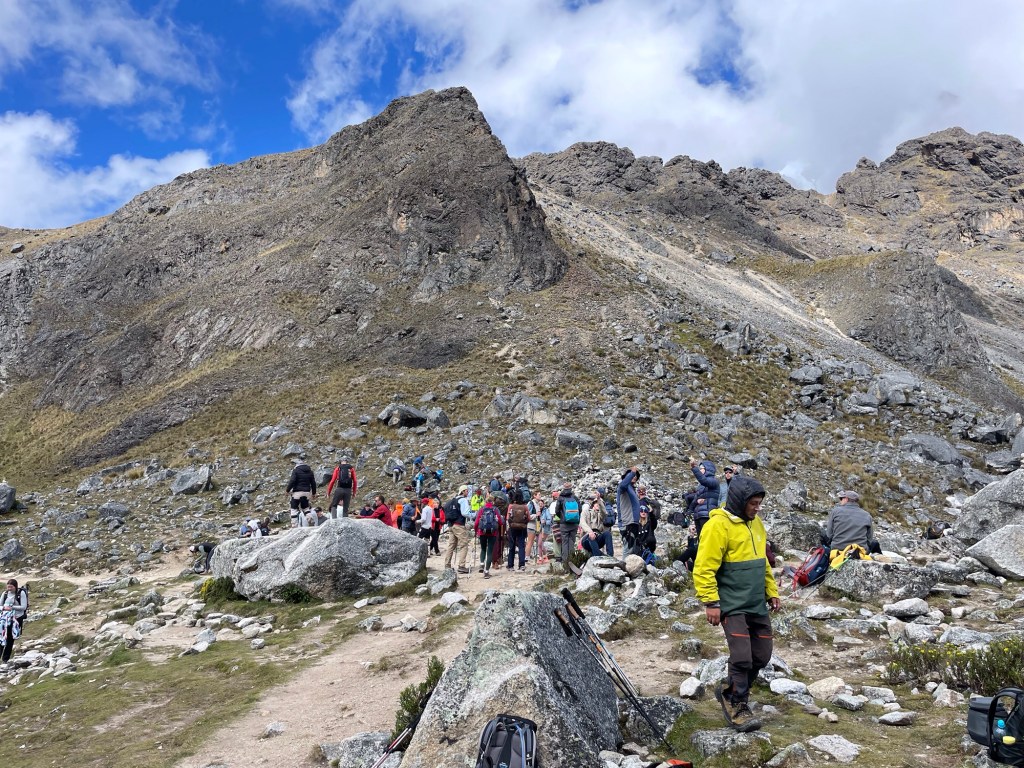
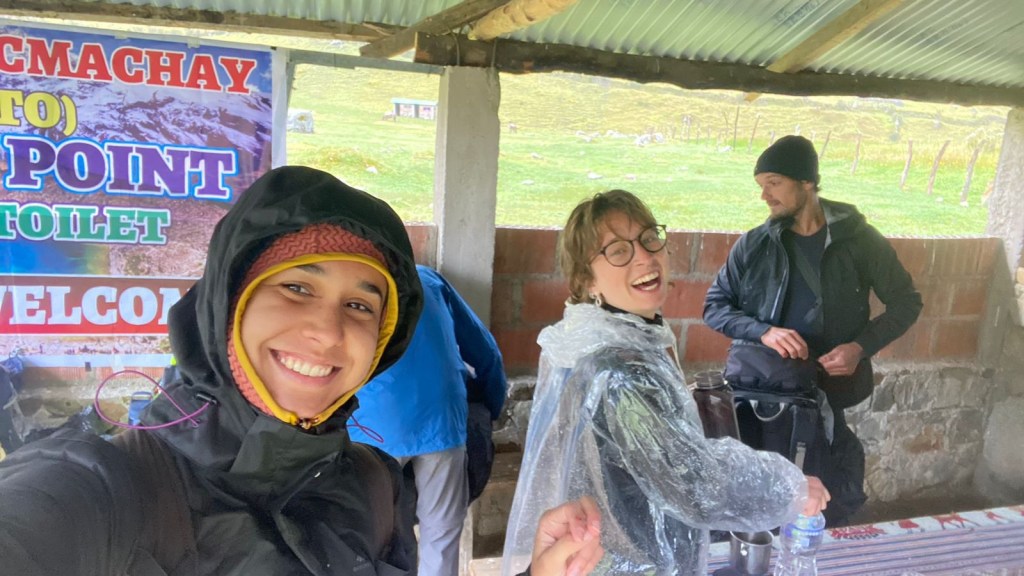
The second day of the trek was one of the hardest with 7km and an 800m climb up to the Salkantay Pass, the highest point at 4630m, followed with an 1000m descent over 13km. As I was well acclimatised, getting up to the pass was fine. However, the afternoon’s descent was killer and not helped by the sudden downpour at lunchtime. In my relaxed state of going with the flow, I still did not have a coat or rain cover for my bag and so I looked super stylist in a plastic poncho and a bin bag over my rucksack. Fortunately we found shelter and missed most of the rain whilst eating lunch.
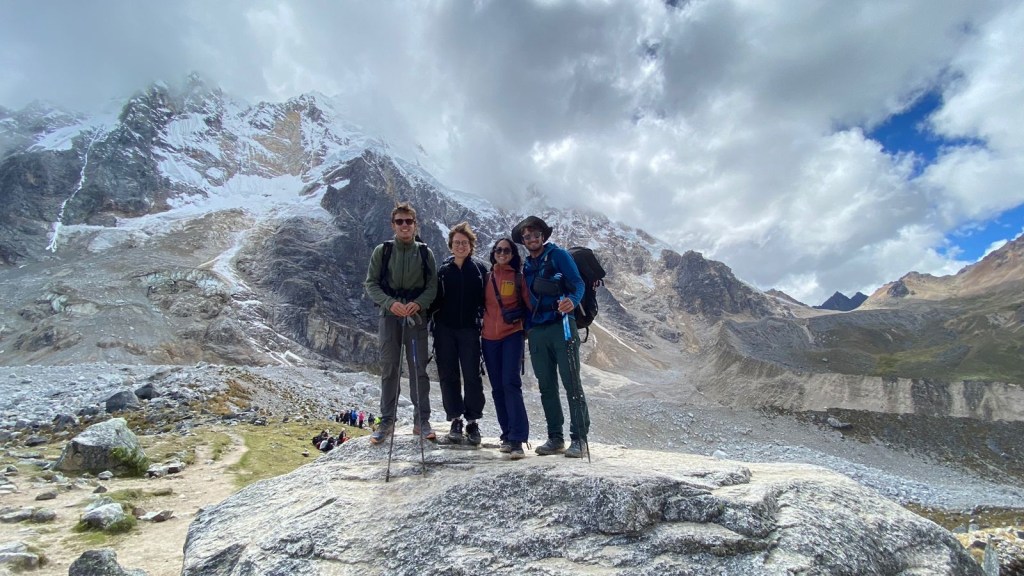
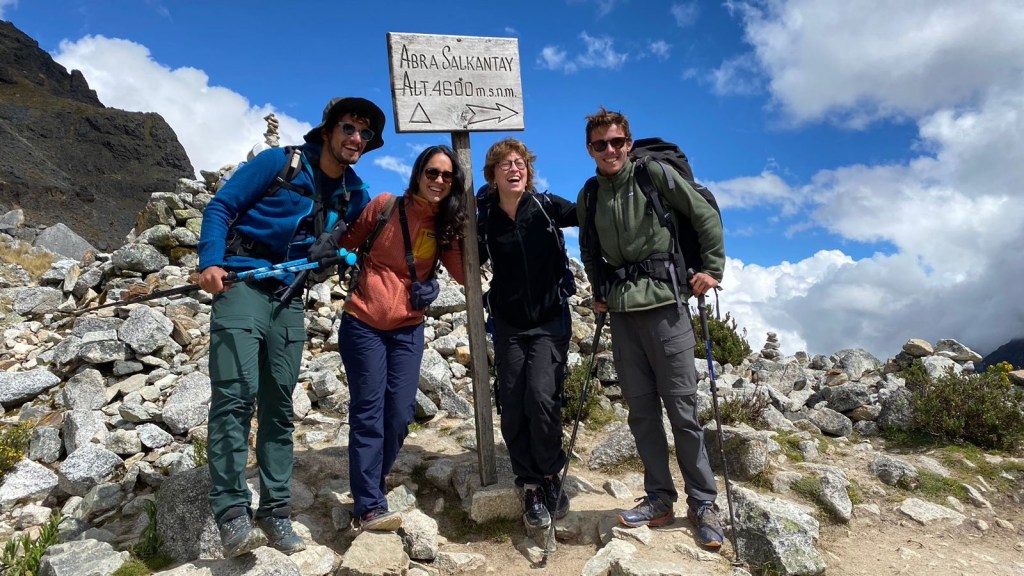
The second day has two options of places to sleep, Chaullay and Colcapampa. Colcapampa is around 2km further on and, although we were pretty exhausted, we decided to head there to not only save a few kilometres tomorrow but to also hopefully beat the crowds.
Sunday 21st March: 29km, 800m descent, 800m ascent
Our decision to keep walking the day before turned out to have been a good one and not only because the accommodation had hot showers included.
On the third day we got up at 4:30, determined to beat the crowds. After breakfast of avocado, eggs and our trusty porridge, we were warned that the route was subject to landslides and to be careful. Five minutes into the walk, this warning materialised as the road was blocked by mud and rocks. Despite mud overflowing into my shoes and my hand and sleeve having been submerged, we traversed it safely. Later on, we could see a line of walkers waiting to cross this section one by one, reassuring us that staying in Colcapampa had been the right decision if only to avoid this queue.
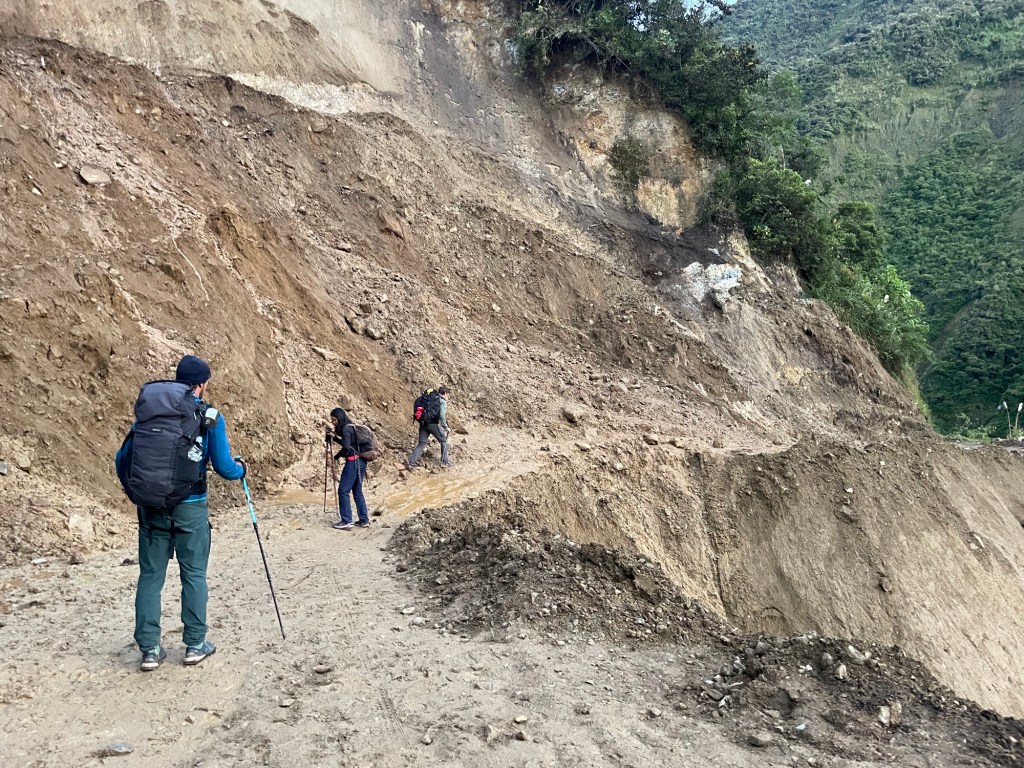
A short while later we reached a split in the route. There was the road and the footpath. We followed the footpath for 1.5km until we reach another part of the path that had been destroyed by a landslide. However, unlike the previous one that had been difficult but not unsafe to cross, this section looked like it might end badly for us. We decided to head back to the road, having enjoyed our 3km detour but also enjoying still being alive. Whilst the road was the duller route, we probably made the right call. Later we asked a tour guide we passed if the footpath was open to which he told us it was “muy cerrado.” A few kilometres later we saw just why the path was “muy cerrado” as from the road we could see about 20m of it had been entirely wiped out. Maybe someone could have written a sign?
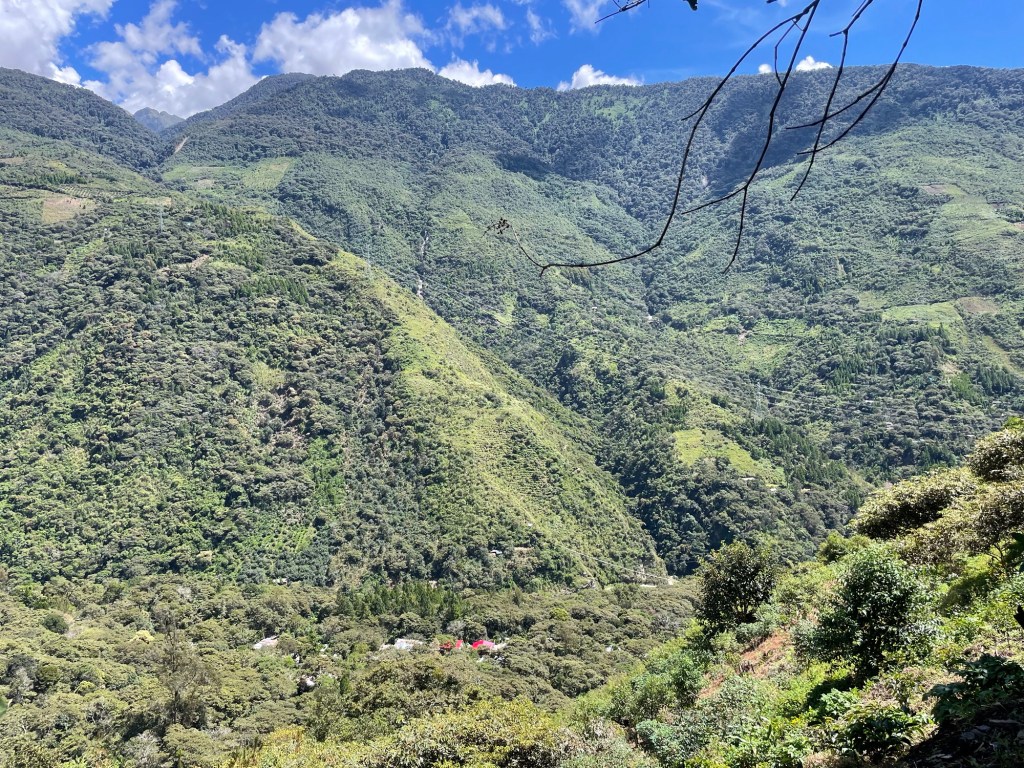
Walking on the road made the first half of the day very easy and we covered the first 14km which were pretty flat in a few hours. The afternoon however was another story with an 800m climb over 6km.
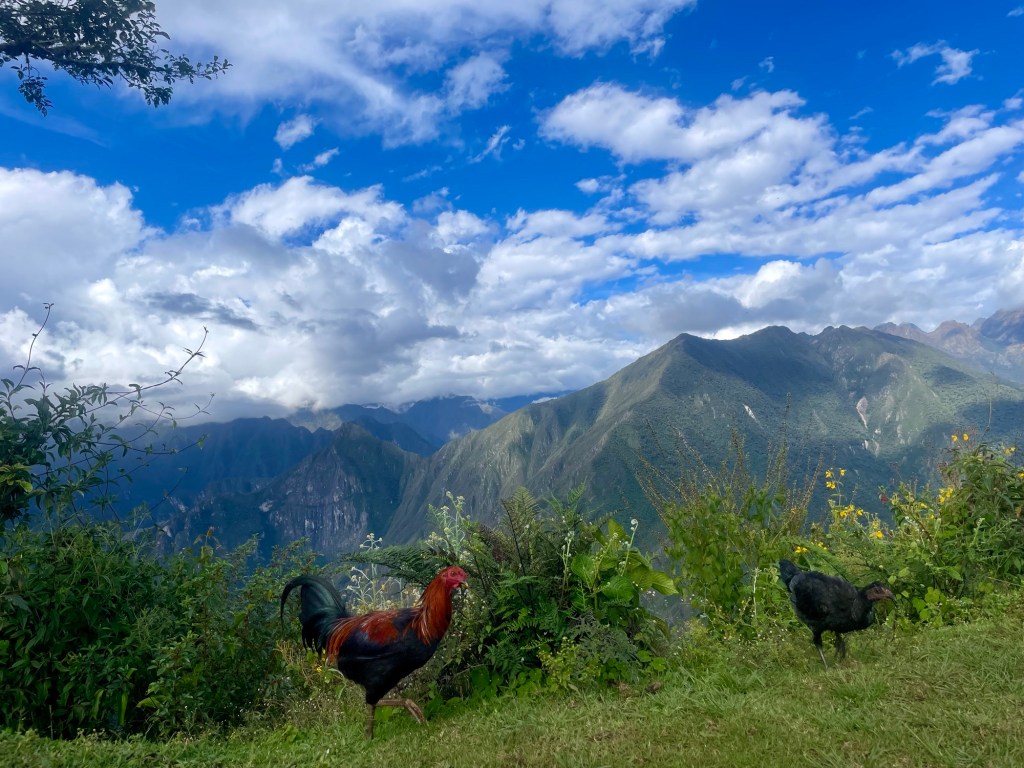
We stopped for an hour for lunch at 12 with 600m still to climb and that afternoon was definitely the most challenging walking for me. Everything hurt and there was still 2.5 hours to go. At 3:30 we arrived at a campsite with incredible mountain views however, decided to backtrack and head on another kilometre to a lodge with equally stunning views and real beds in Llactapata.
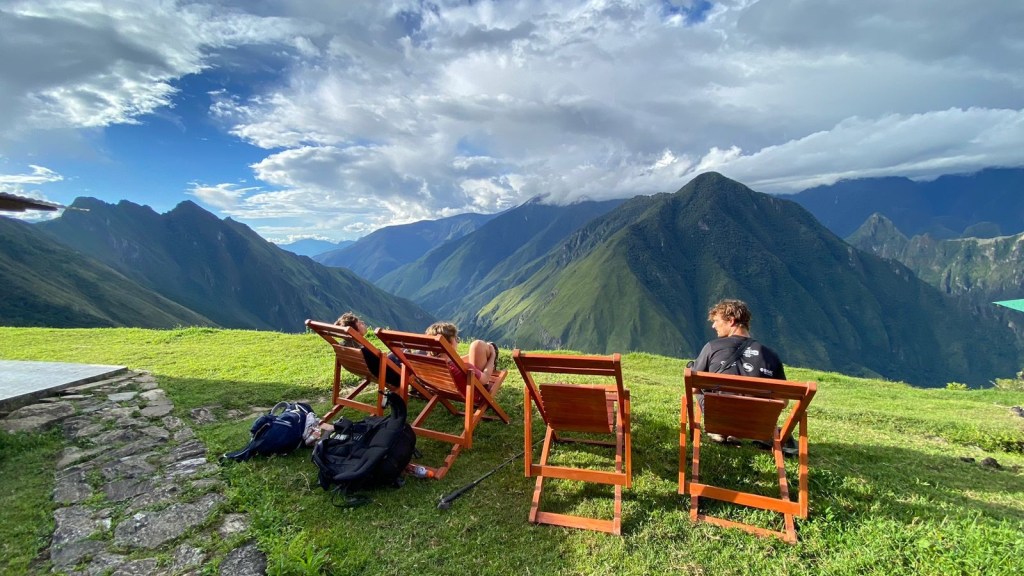
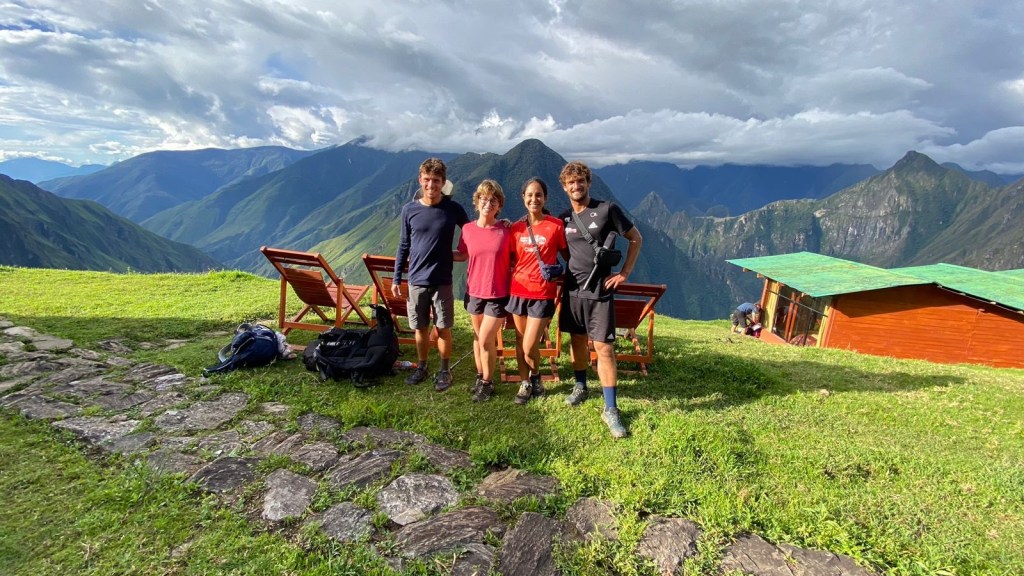
This accommodation was definitely a highlight of the trek with a series of private cabins overlooking the valley with a view of Machu Picchu. Additionally the dinner was delicious with three courses including stuffed avocados for a starter and fried banana for dessert. Worth the extra mileage and 20 soles.
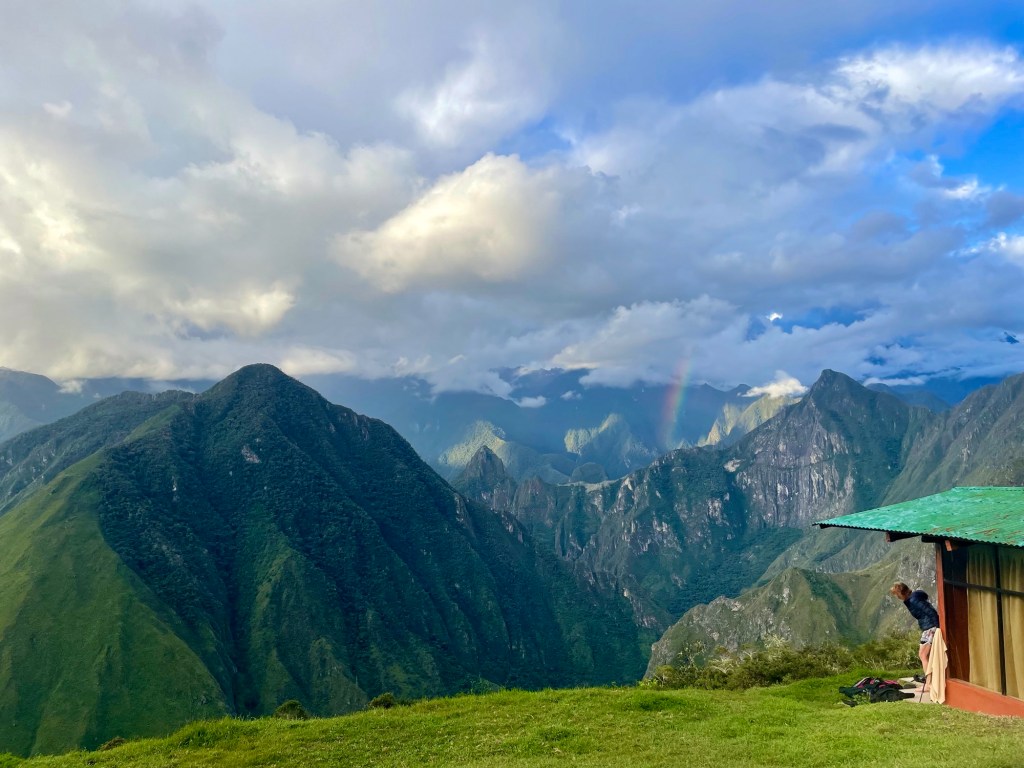
Monday 22nd March: 16km, 800m descent
The fourth day was supposed to be an easy one with a descent of 800m over the first 6km and then a flat 10km to Aguas Calientes, the town at the base of Machu Picchu. However, we had all woken up in the night to the sound of heavy rain on the roof of our cabin and this had turned the path down into a bog. By some miracle (mainly thanks to hiking poles) we all remained upright during the two hour descent.
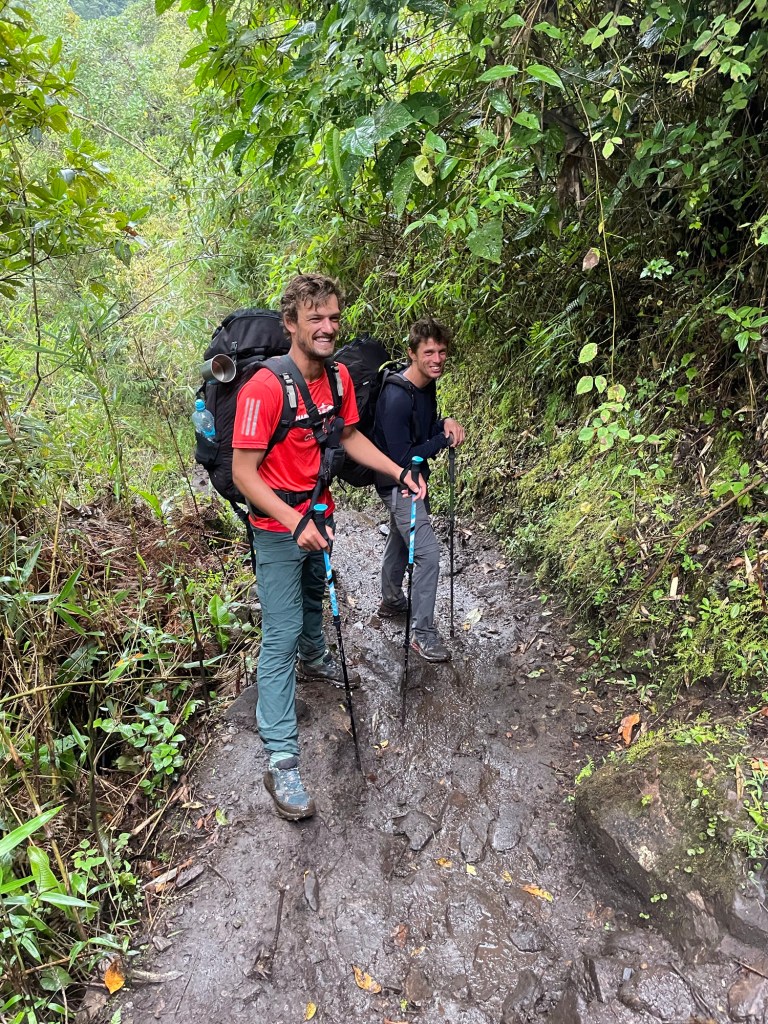
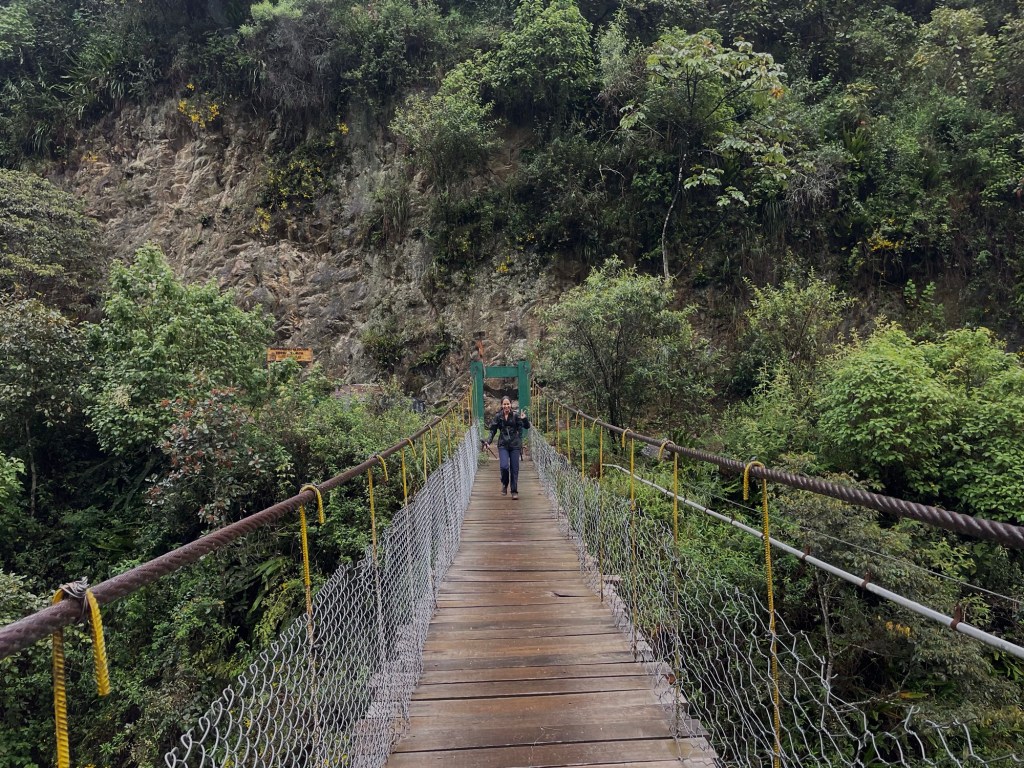
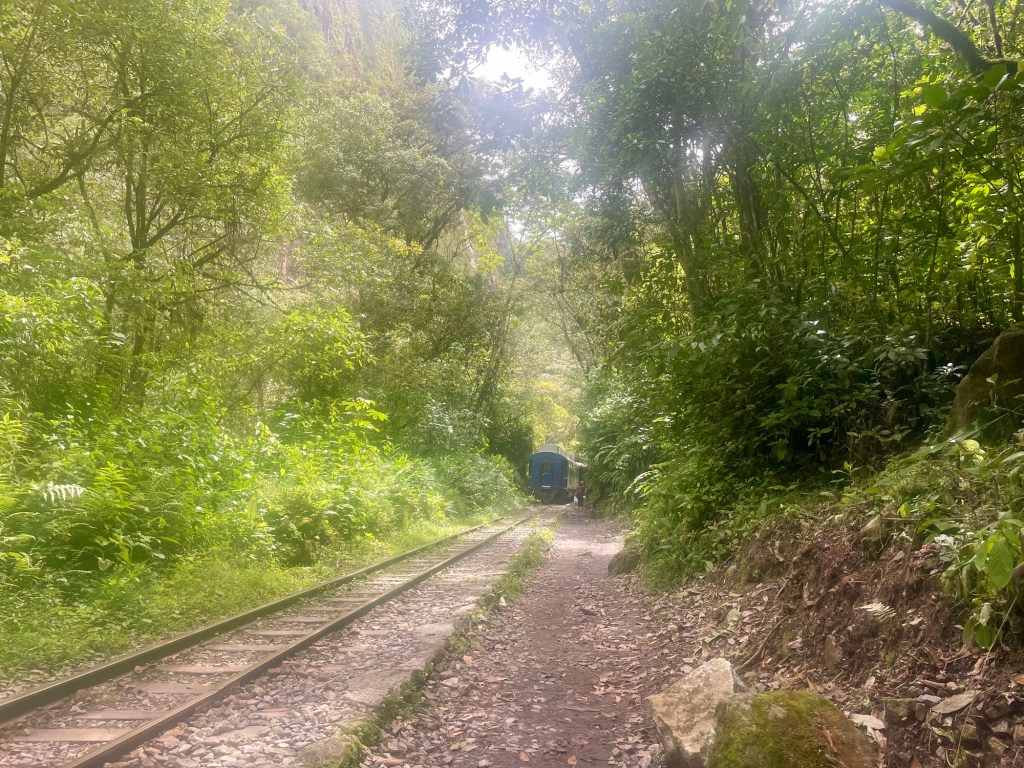
The final 10km was along the railway tracks between Hidroelectrica and Aguas Calientes. Although the path is flat, you walk on uneven gravel and we were all so tired that the road felt never ending.
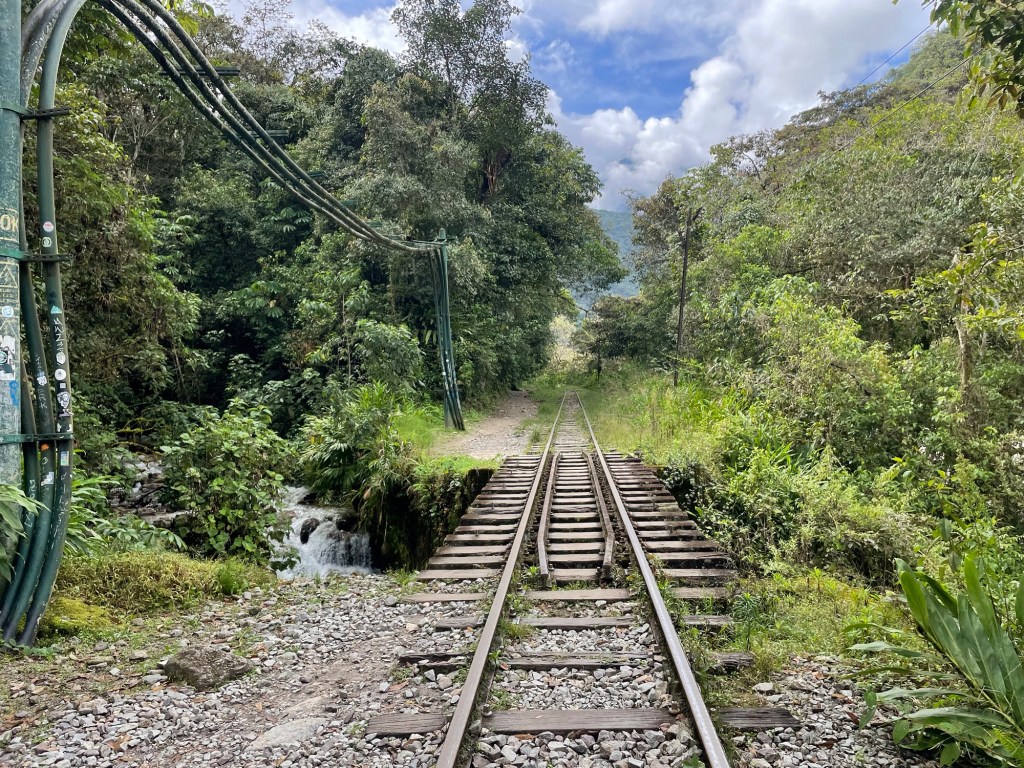
We arrived in Aguas Calientes at 10:30am and heading straight to the Machu Picchu ticket office. Whilst online tickets sell out months in advance, there are 1000 tickets available in person everyday for the following day. First you get a queue ticket, assigning you your place in the queue and then at 3pm the office opens and you can buy whichever tickets are still available. As we were around spot 100 in the queue, all the different tickets were still available and we got our first choice.
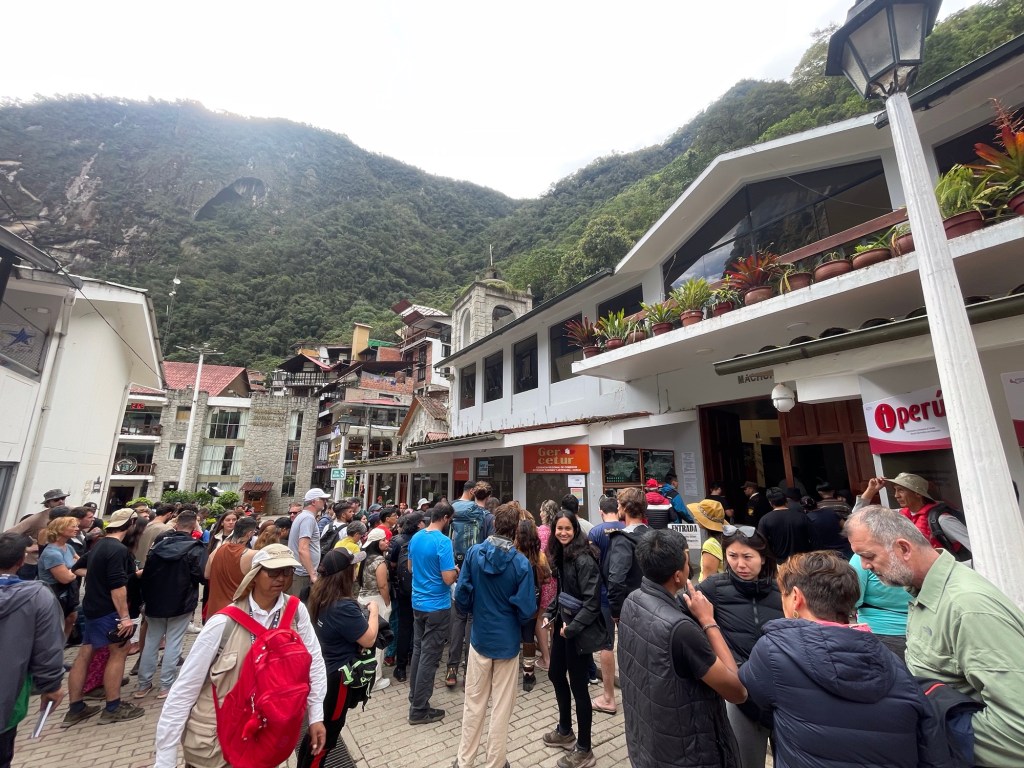
Aguas Calientes is a world away from the tiny towns you stay in along the way which mostly consist of a few lodges or campsites and nothing else. By comparison, the streets of Aguas Calientes are lined with pizzerias, coffee shops, and bakeries and we indulged.
Tuesday 23rd March: 15km, 430m ascent
Safe to say we were slightly regretting the final Pisco sours we’d had the night before when our alarms went off at 4:30. Our tickets were for 7am and there were approximately 1600 stairs between us and Machu Picchu to go. Having dragged our weary bodies up to the entrance, we met with our guide and began the tour.
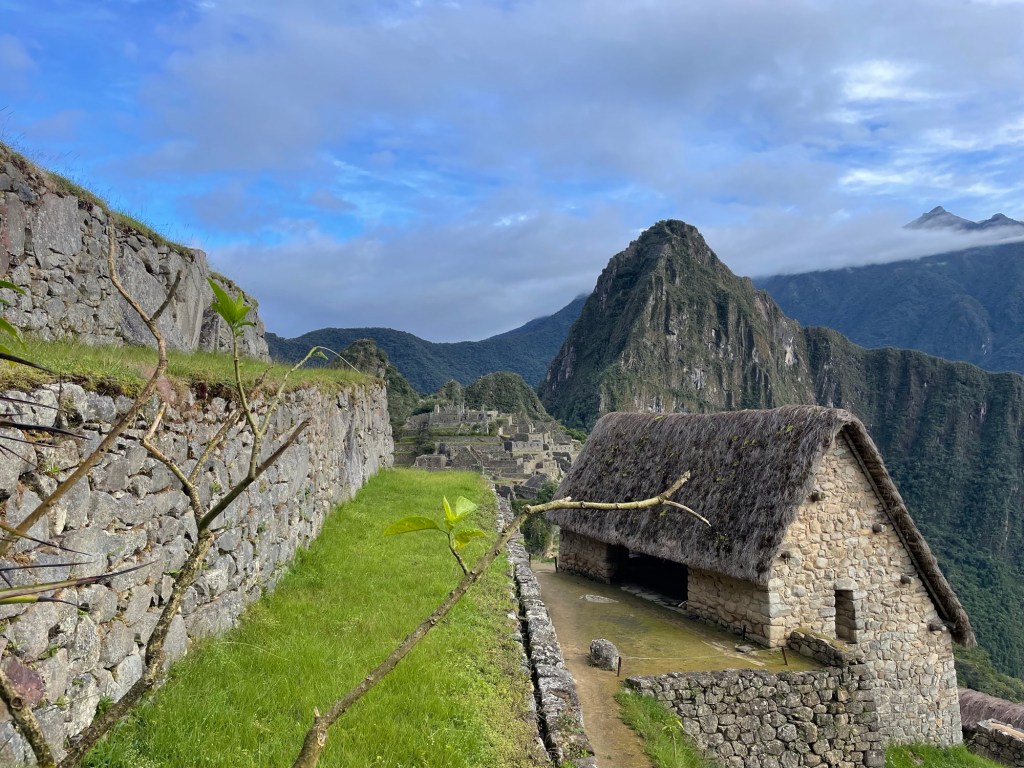
Machu Picchu was supposedly discovered by Hiram Bingham, an academic from Yale, in 1911. Bingham was taken to the site by Melchor Arteaga, a local man who already knew the site. Additionally, Machu Picchu had already been discovered by Agustín Lizárraga Ruiz, a Peruvian explorer in 1902. When he arrived, Bingham burnt the vegetation to clear the site, destroying all the remaining original roofs with it. He then took most of the artefacts he found back to Yale to study them, many of which now remain in private collections in Europe or North America.
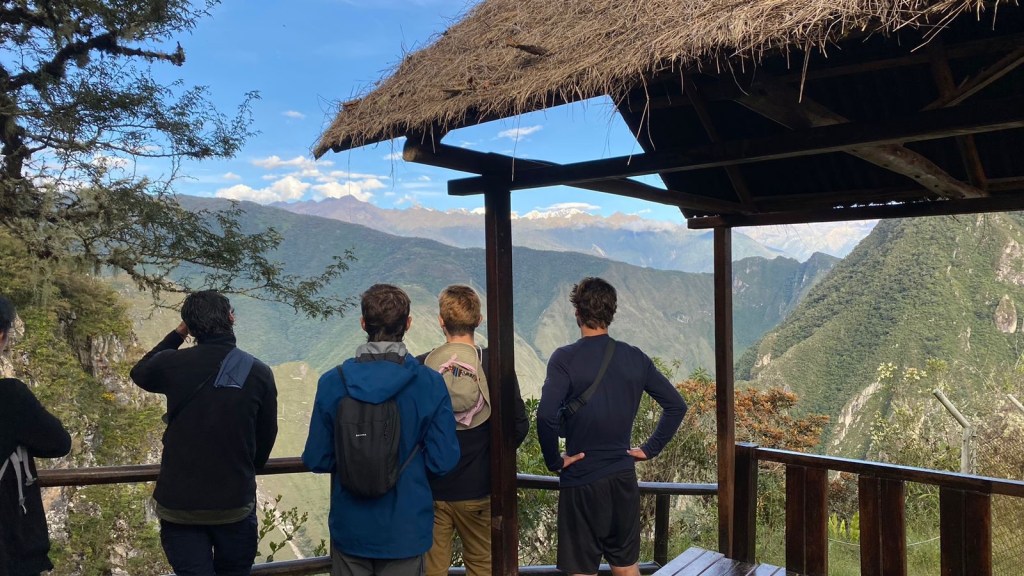
Machu Picchu was built in around 1450 as a base for the government in Cusco to extend greater control over communities living in the jungle regions. Around 400-500 people lived there however it was abandoned in the mid 16th century. There are many theories as to why it was abandoned after just 100 years. Our guide told us that the inhabitants learnt of the arrival of the Spanish and fled to a neighbouring refuge. Unfortunately the Spanish then found this refuge but never found Machu Picchu.
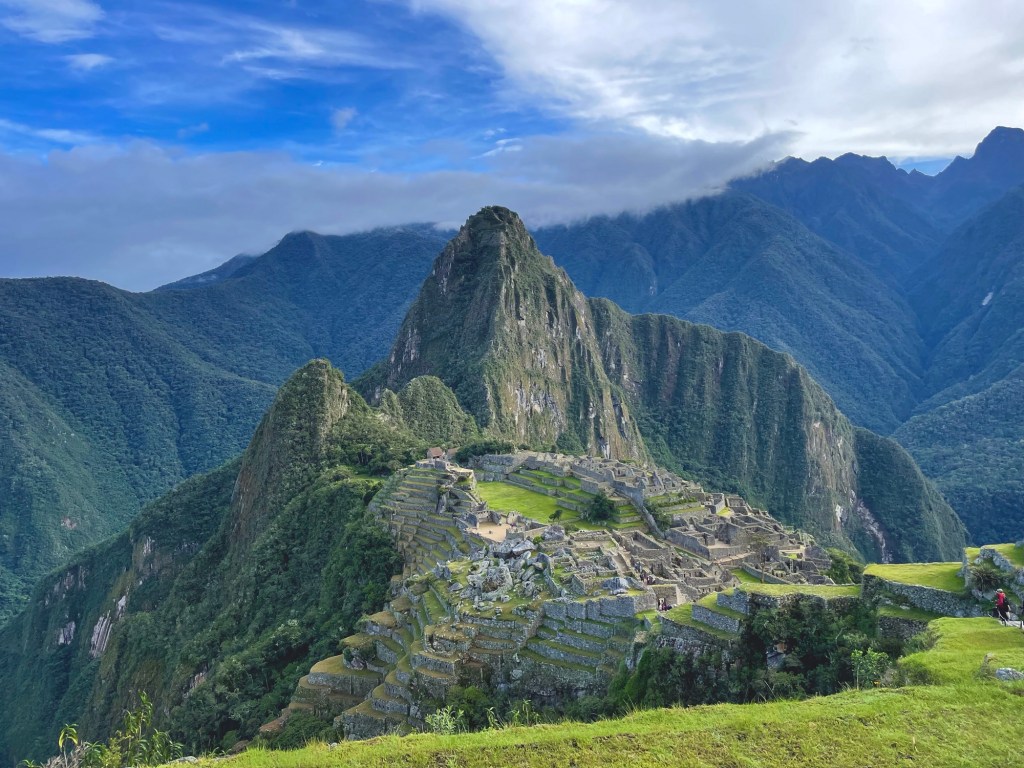
It is hard to describe walking around the site so I’ll just tell you it was extraordinary and leave you with some pictures instead.
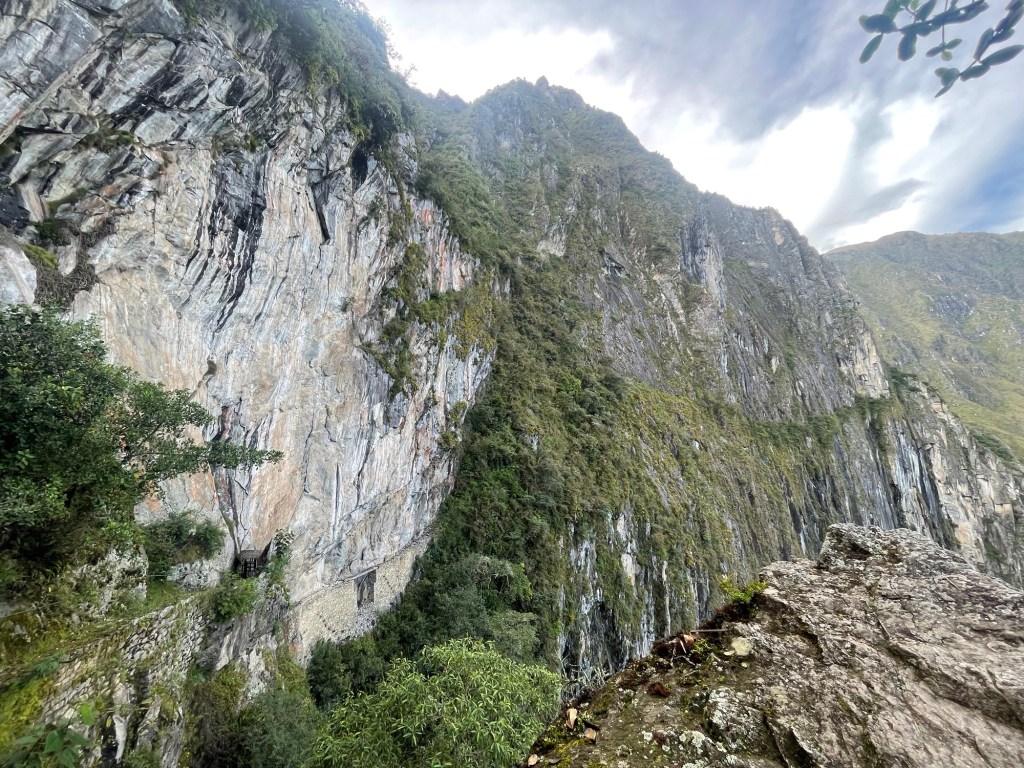
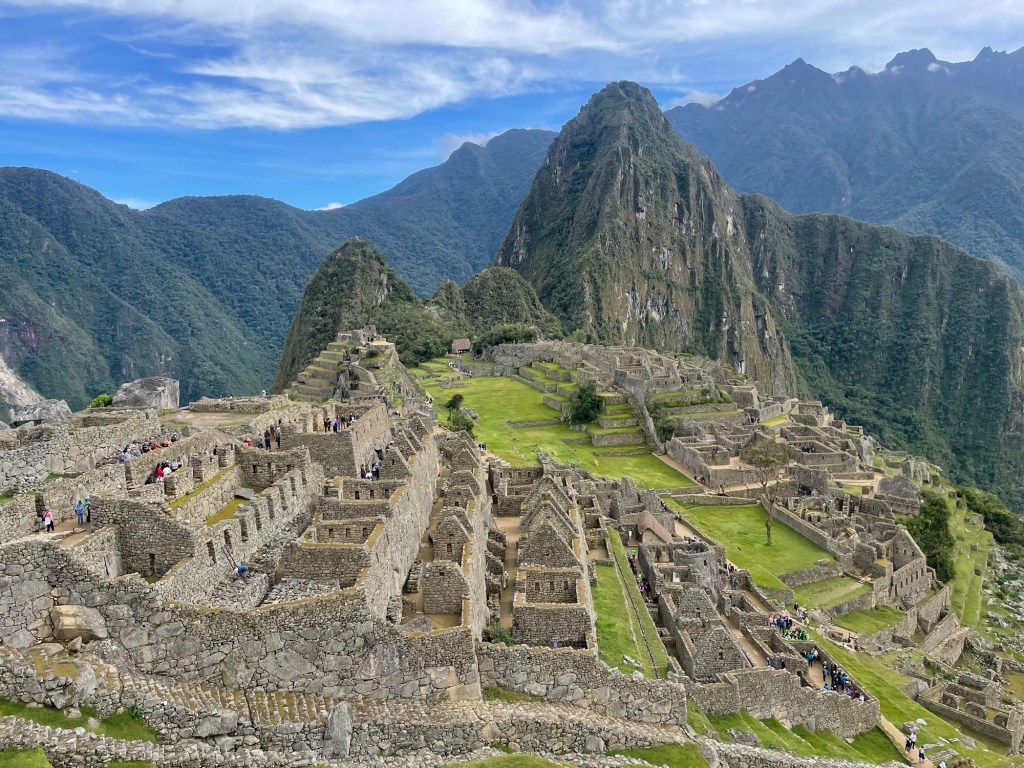
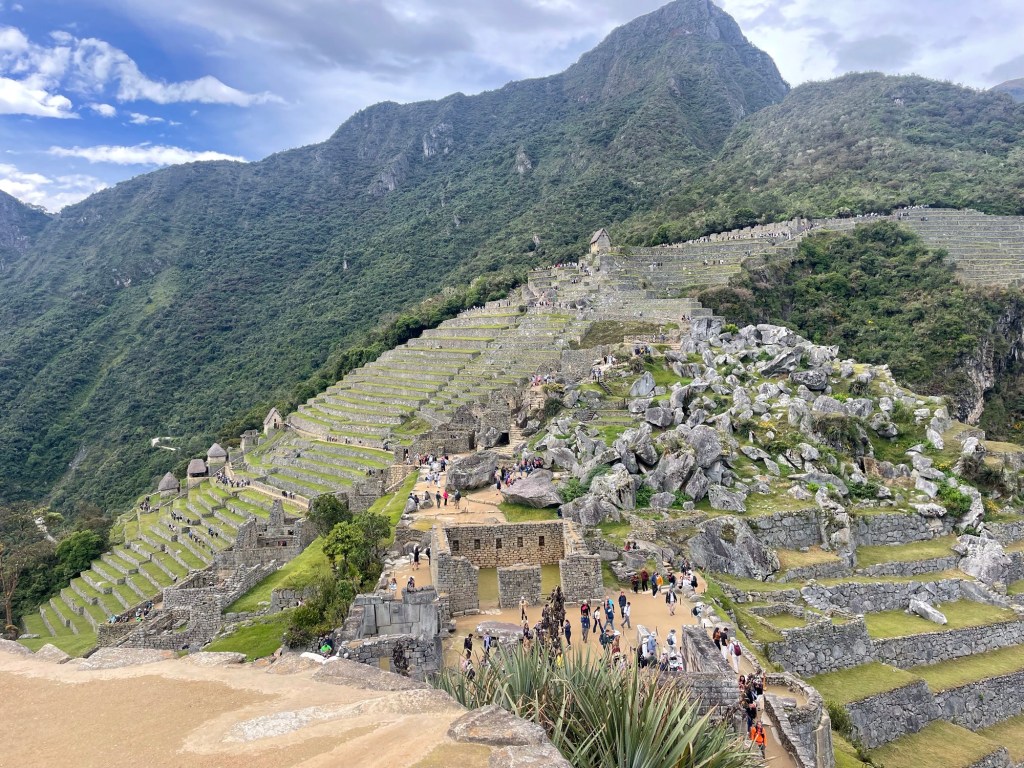
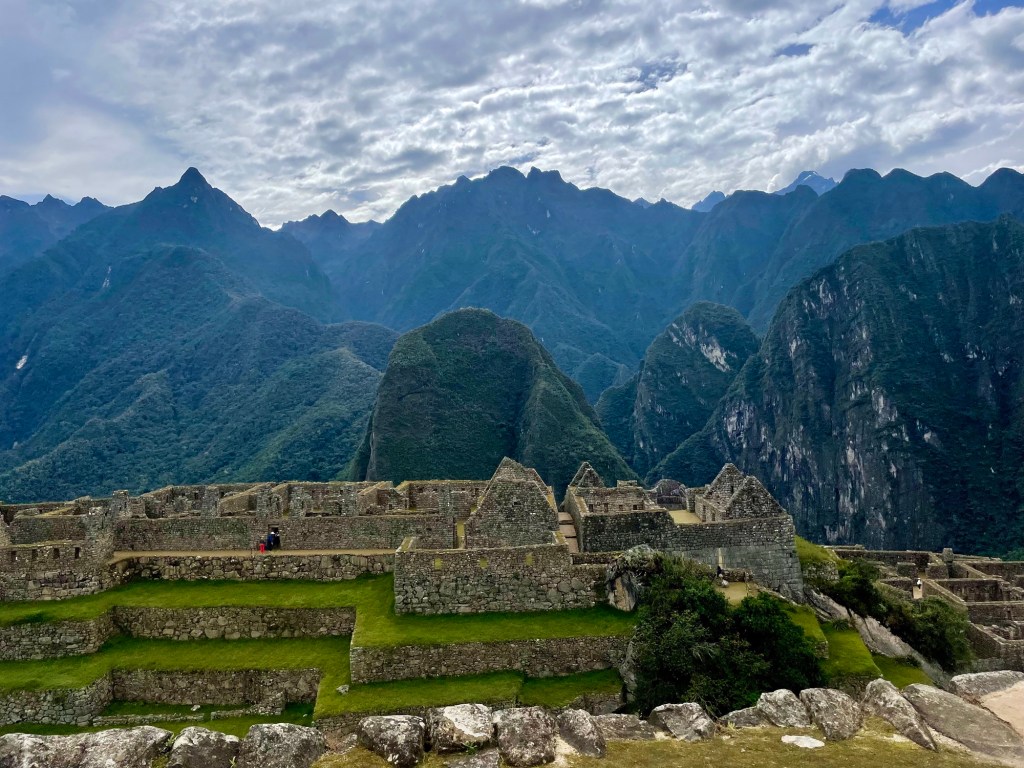
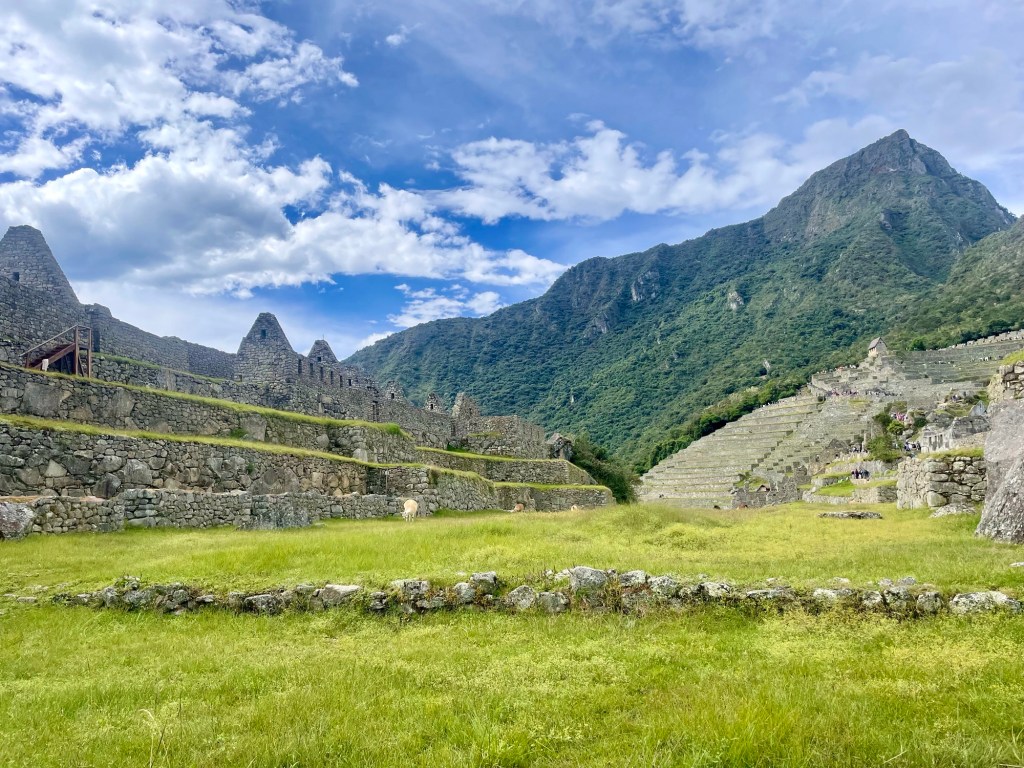
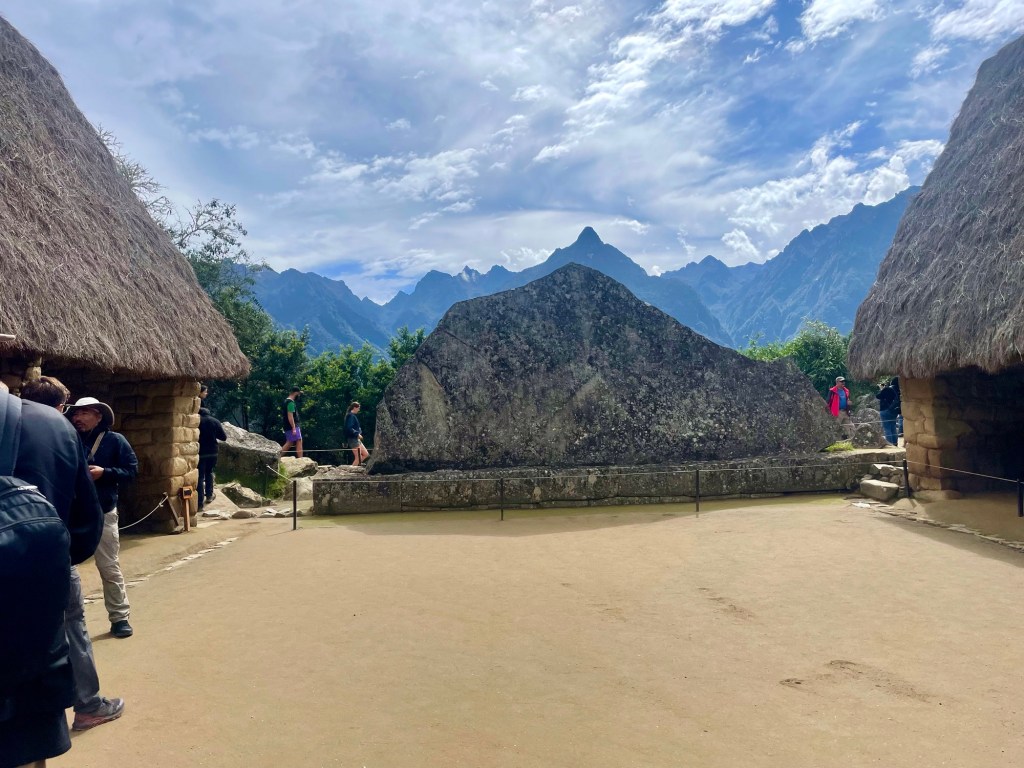
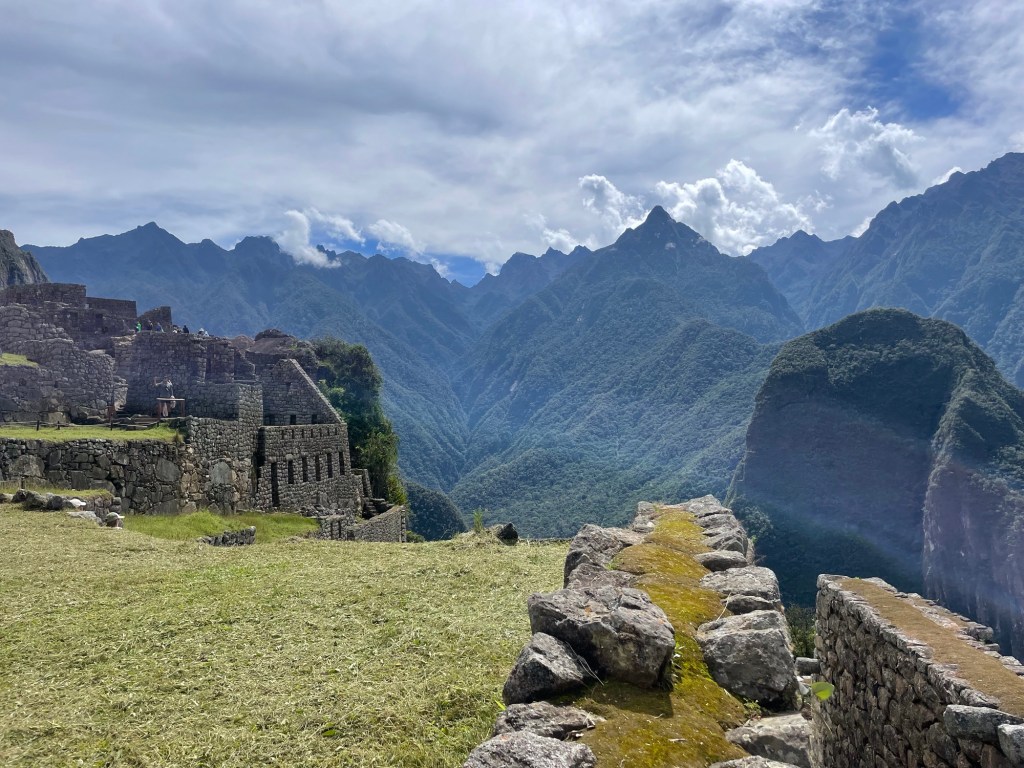
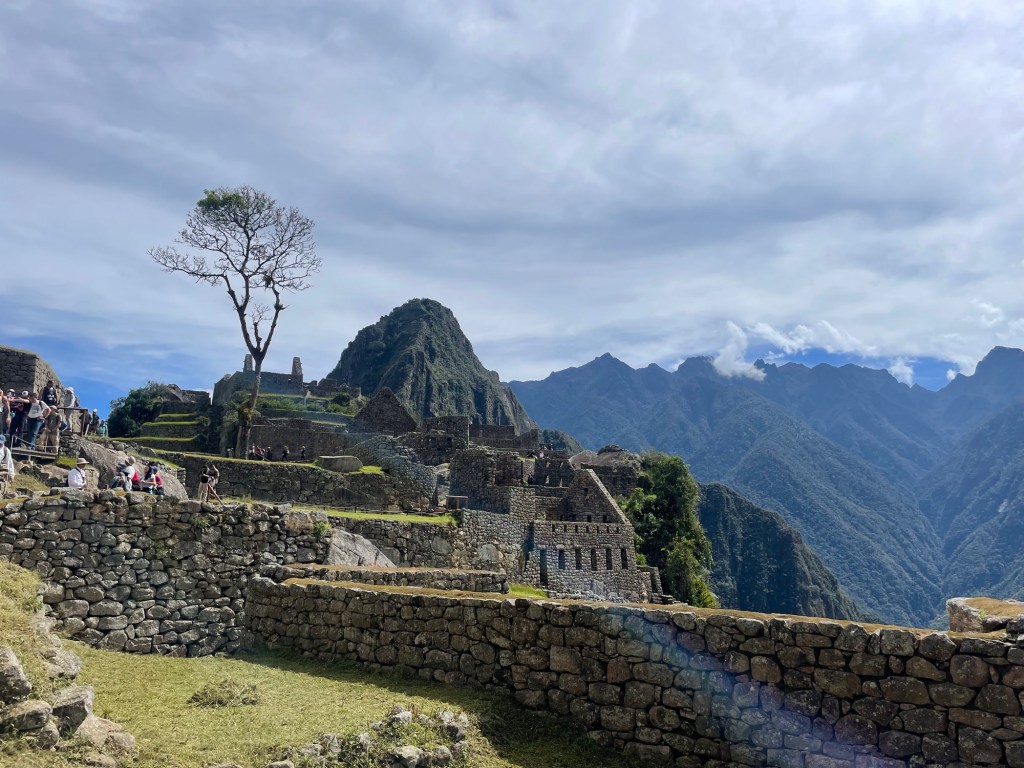
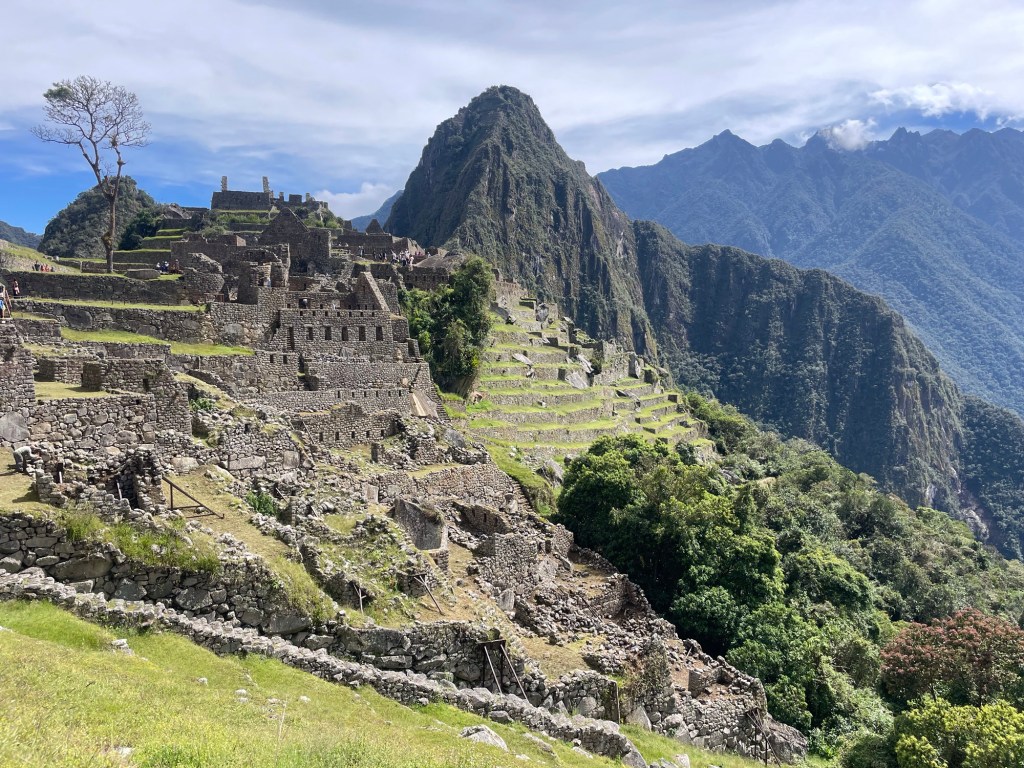
After climbing down approximately 1600 steps, we had to walk back along the 10km of train track from the day before. We made it with the assistance of avocado sandwiches, Pringles and Coke Zero. Arriving at Hidroelectrica at 1:30pm, we loaded ourselves onto a very hot and tightly packed minibus and enjoyed a seven hour drive back to Cusco. There is a train which only takes 3-4 hours and is much more comfortable but we opted for the budget choice.
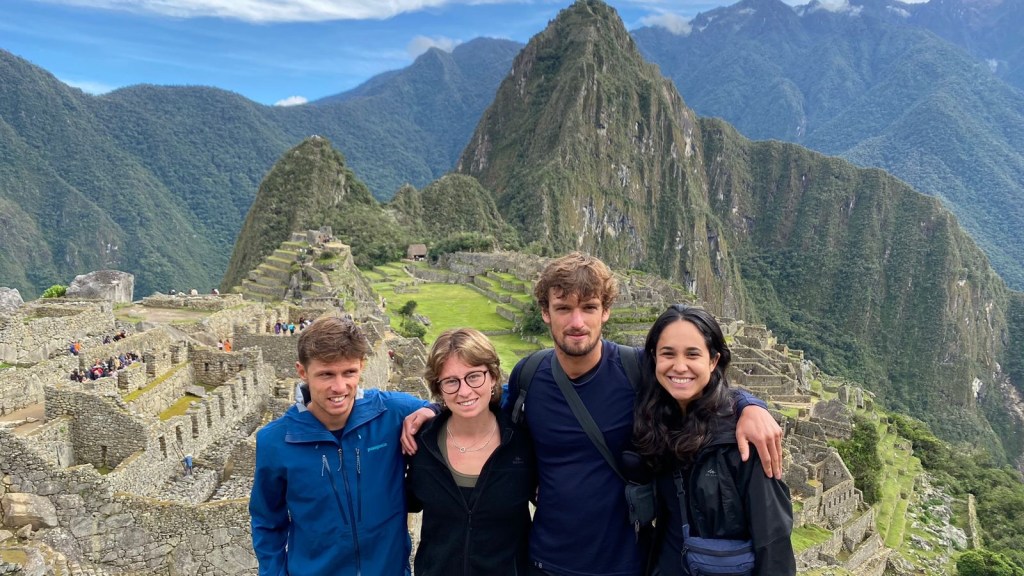
We arrived in Cusco at 8:30pm and most of the group went in search of some kebabs. I however couldn’t manage anything more than walking to the hostel, having a shower and collapsing in bed for the best 9 hours of sleep in my life.
 A Year in Nepal