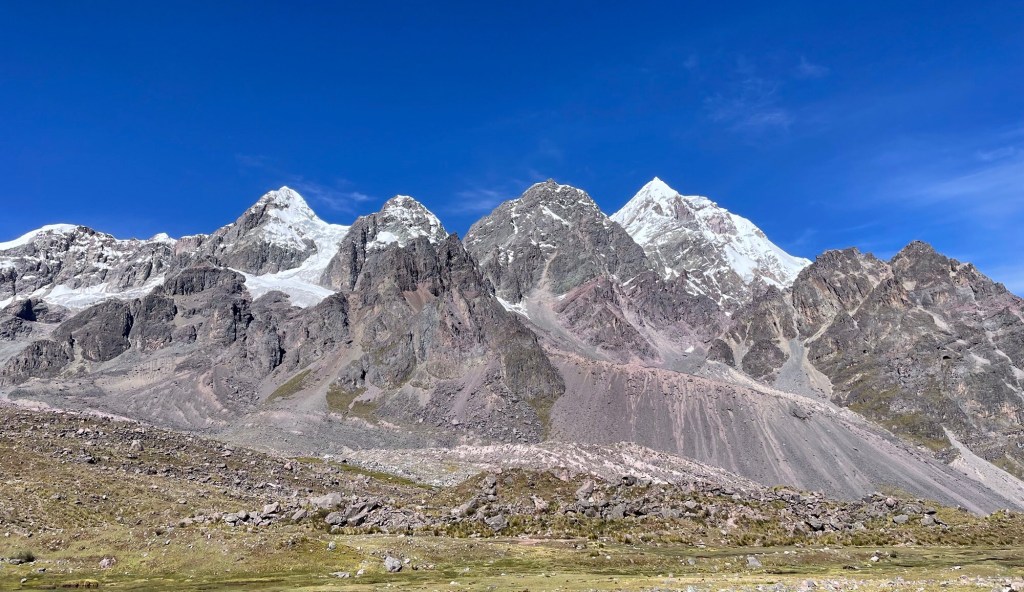
Welcome to the third consecutive blog detailing me up a mountain somewhere. Much like the others, this one will read: “woke up, walked, slept;’ however, the Ausangate Trek was four days of snowy mountains and glaciers making it not only one of the highest hikes I’ve ever done but one of the most beautiful. So, if you’re tired of the repetitive content, just enjoy the pictures.
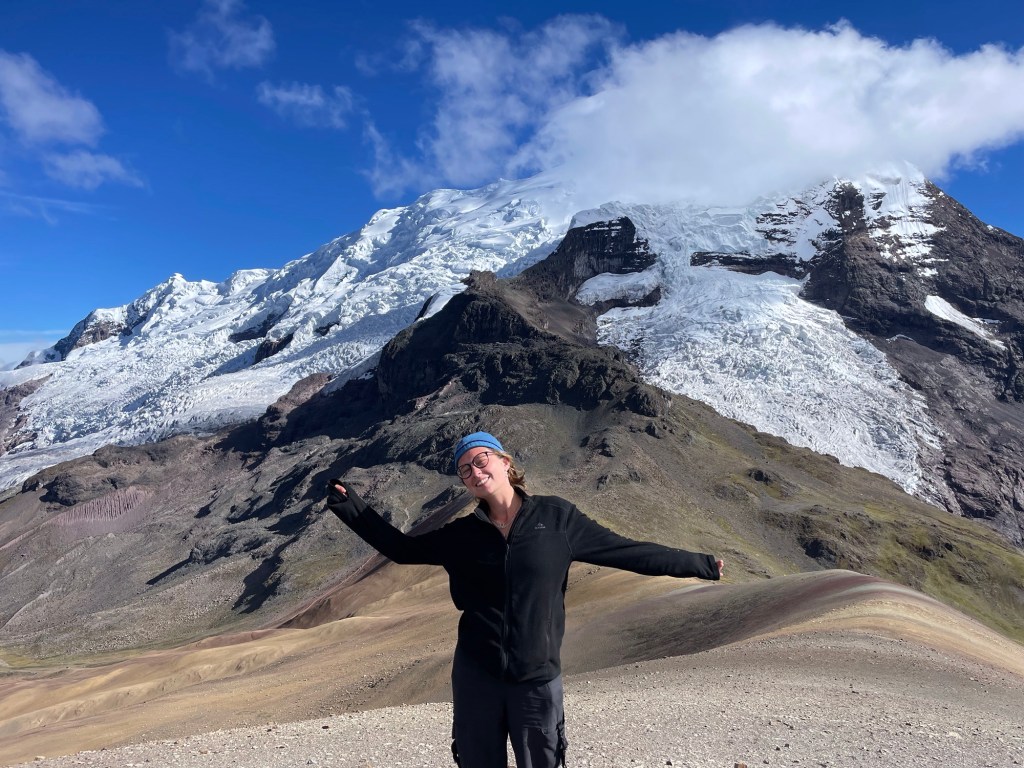
The circuit took four days and besides being absolutely stunning, it was extremely high – rarely dropping below 4600m. I went with the same group of four with whom I walked Salkantay with an additional French guy we had met on Salkantay. Again, we did the trek without a guide but Ausangate is much less built up than Salkantay and required carrying tents and food for the four days. The whole experience was a world away from the overcrowded paths of the previous trek. Instead of following a train of donkeys and guided tours, we saw less than a dozen people a day and mostly farmers at that. Only at two points when the route crosses through two major tourist attractions, La Montaña de Siete Colores and Las Siete Lagunas, did the path become anyway crowded, leaving us for most part completely alone.
The trek began with meal planning and hiring equipment in Cusco. Having secured a second tent (my original French friends already had some equipment), four sleeping bags, two sleeping mats, a second stove, and enough Oreos to support group morale, we packed our rucksacks and headed to the local bus stop, just making the last bus of the day to Tinke, a town at the beginning of the trek.
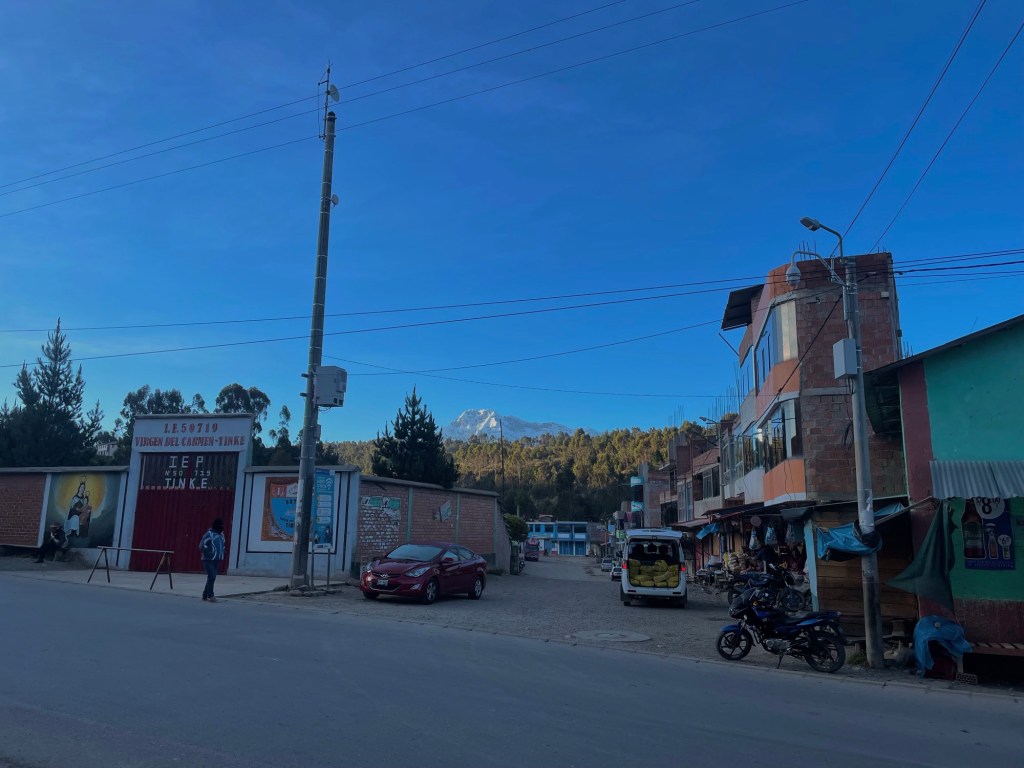
Tinke is a very typical Peruvian town. Their only tourism is hikers spending a night before or after trekking. Their shops testified to this, selling tins of fish and Oreos alongside a typical Peruvian meat market. Despite having made a reservation, we arrived at our hostel to a slightly surprised but very welcoming host. So far, so good – until we began divvying the food between the five bags to realise we had left one bag in Cusco. Not only had the bag contained the carbohydrates for two out of three dinners, but it had also contained two hefty blocks of cheese we had found in San Pedro market in Cusco and all our Oreos – disaster. Five crestfallen faces stared at each other. The rice and grains were replaceable as were the Oreos but the cheese – we weren’t confident in Tinke’s delicatessen selection.
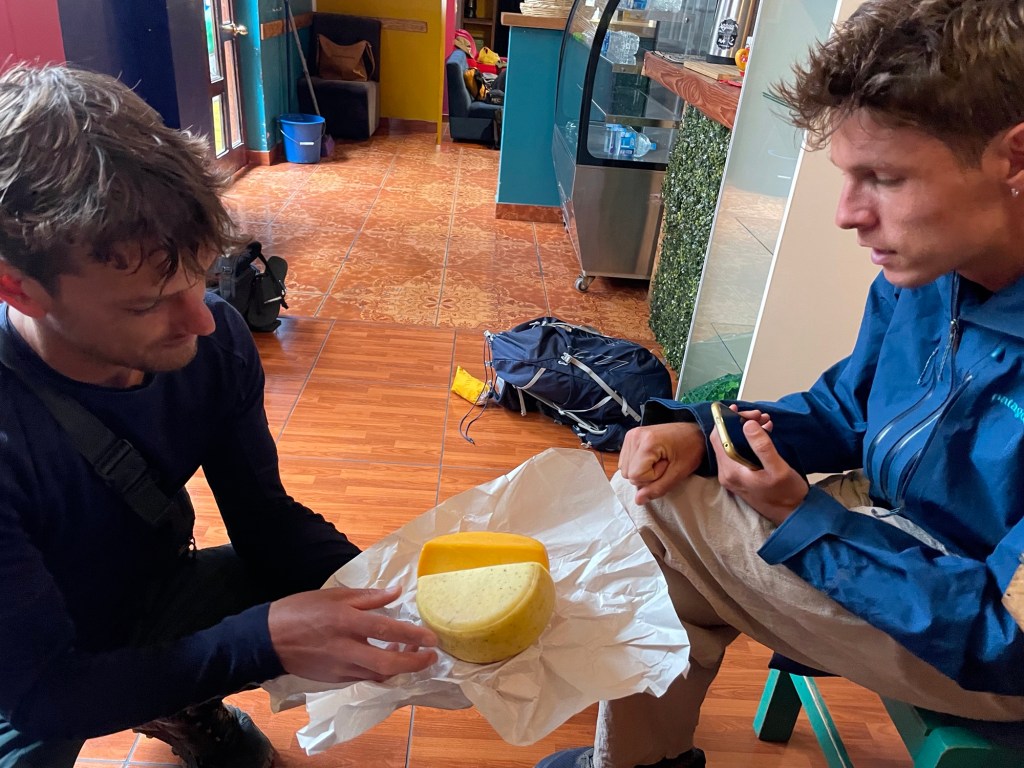
We went to bed, bitterly disappointed and wondering if someone in our hostel in Cusco had found the forgotten bag and our cheese.
Day One: Upis – Arapa Pass (4750m) – Puca Cocha Pass (5050m) – Anontapata
We woke up at 5:30 only to learn to hostel’s complementary breakfast would not be ready for an hour. Whilst we waited, we scoured Tinke for supplies – buying the only shop that was open at 6am out of Oreos.
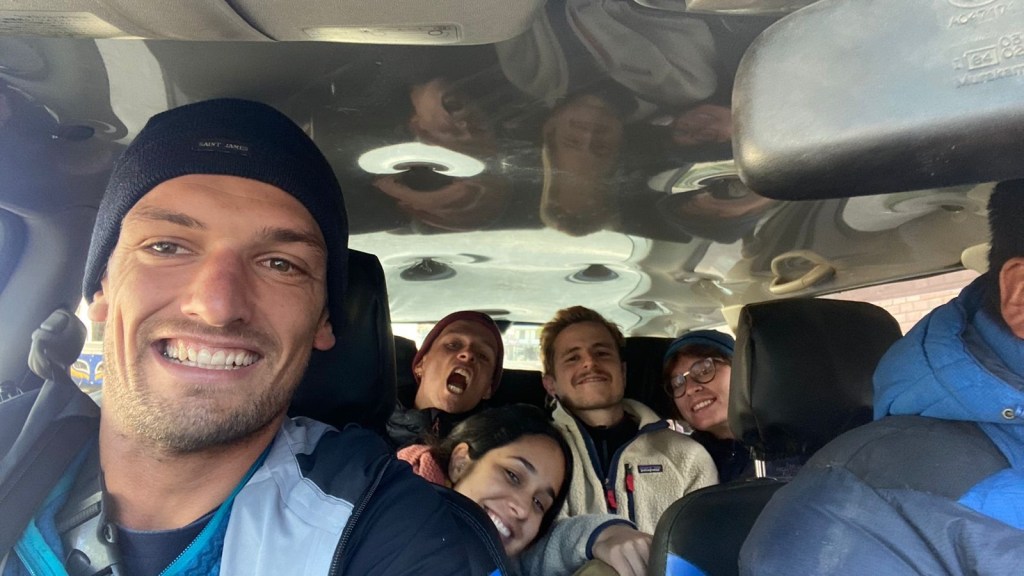
After breakfast and an impromptu photoshoot in traditional local dress curtesy of our hosts, the five of us squished into a taxi to drop us at Upis, about 45 minutes from Tinke where we would start walking.
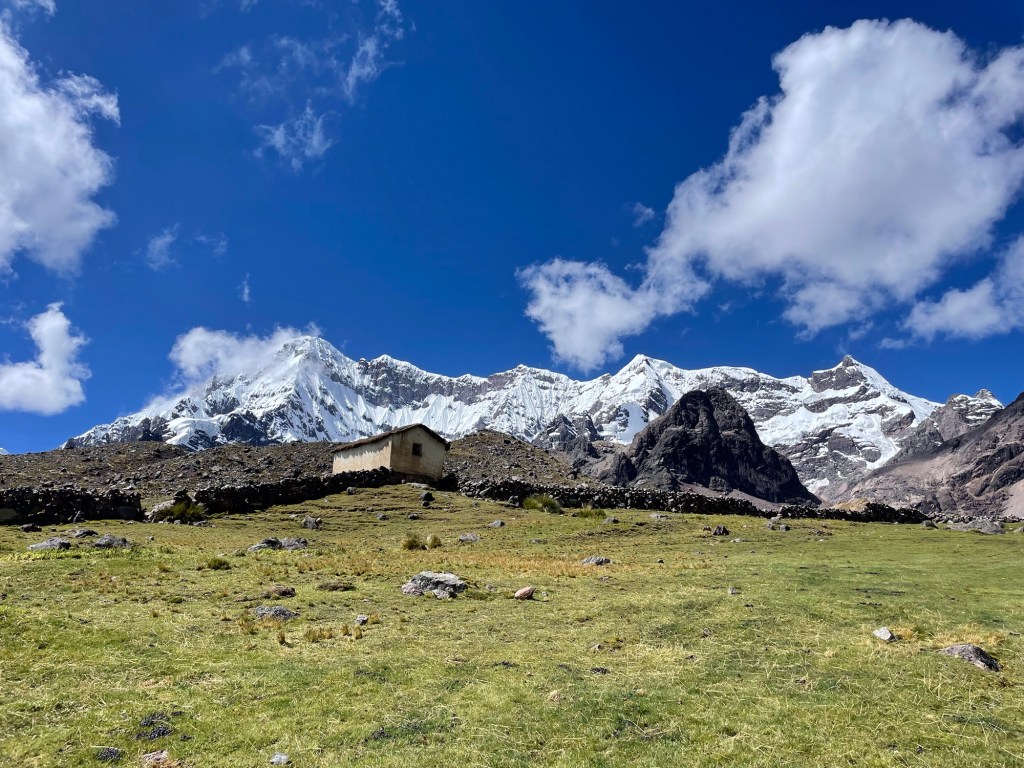
After one very nearly forgotten pair of walking poles in the taxi, we were off with a view of Ausangate ahead of us.
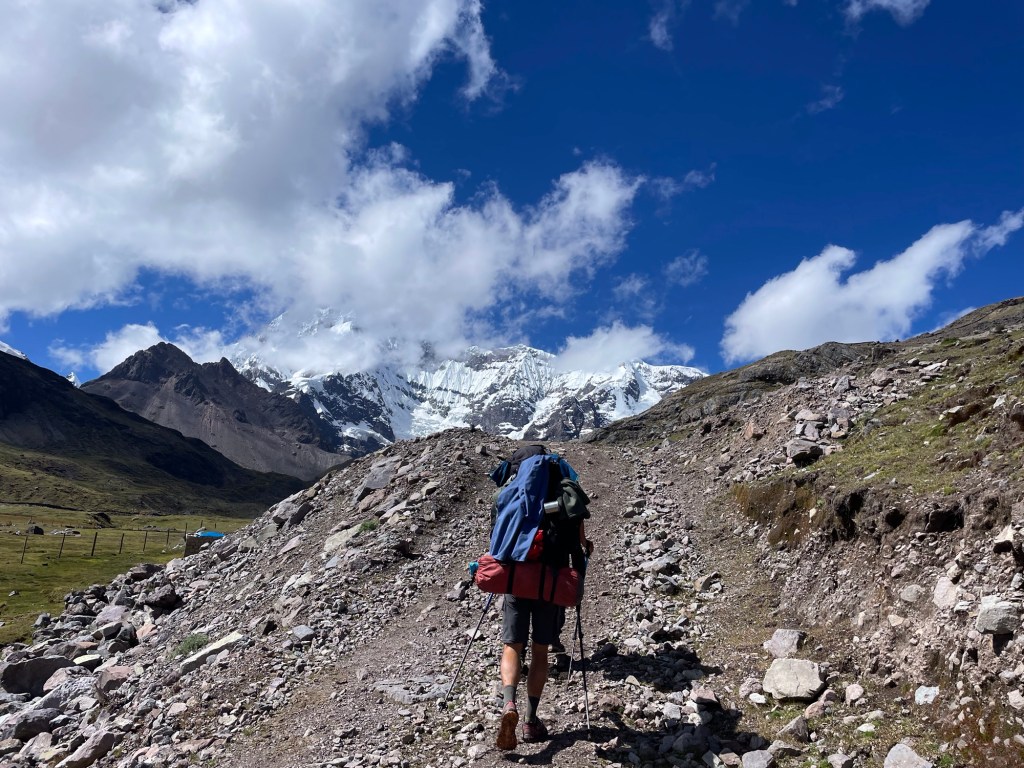
Beginning at 4400m, the altitude was immediately noticeable. We started walking at eight and by 11:30 had summited the first peak of the day at 4750m. With everyone already feeling pretty tired, we broke into our snack supplies, refuelling on Ritz crackers, nuts, and Chips Ahoy cookies – we had already eaten one of four packets of Oreos when a farmer had stopped us earlier, requiring we pay him to cross their land. We shared our Oreos as a gesture of good will.
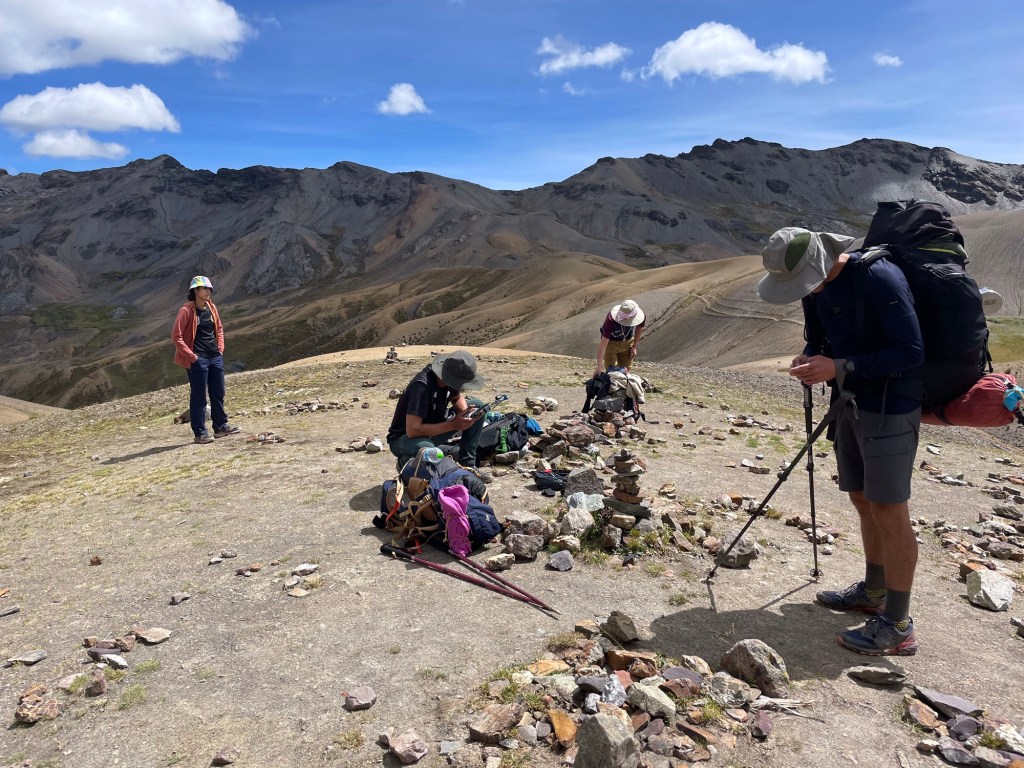
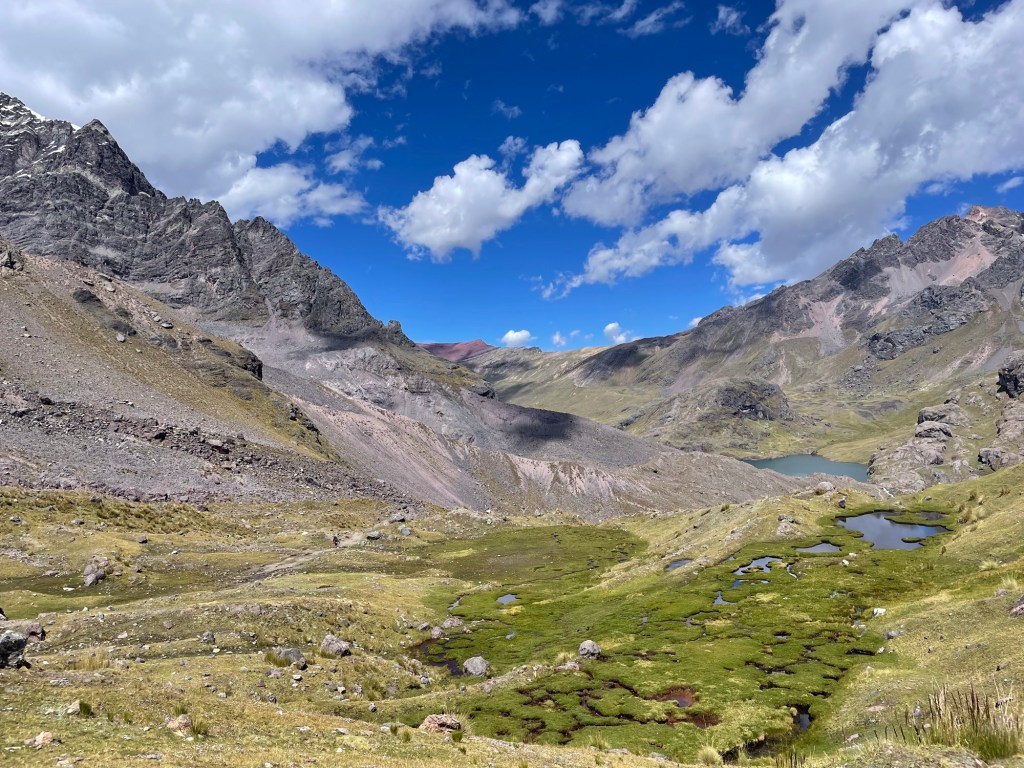
A few hours later, we came across a viewpoint looking out over a lake – a perfect stop for lunch. Fortunately we had found replacement cheese in Tinke and whilst it was not on par with that we had left in Cusco, nobody mentioned it. Anyway, this first lunch was decadent – we had bought avocados that morning and filled tortillas with mackerel, avocado, cheese, peppers, carrots, cucumbers, and undercooked boiled eggs. The undercooked eggs were the first occurrence of a recurrent problem we had throughout the trek – the altitude lowered water’s boiling point meaning we spent many hours staring at boiling pots of rice or grains, willing them to cook. Whilst the eggs had been cooked for 10 minutes, they were very soft bordering on raw.
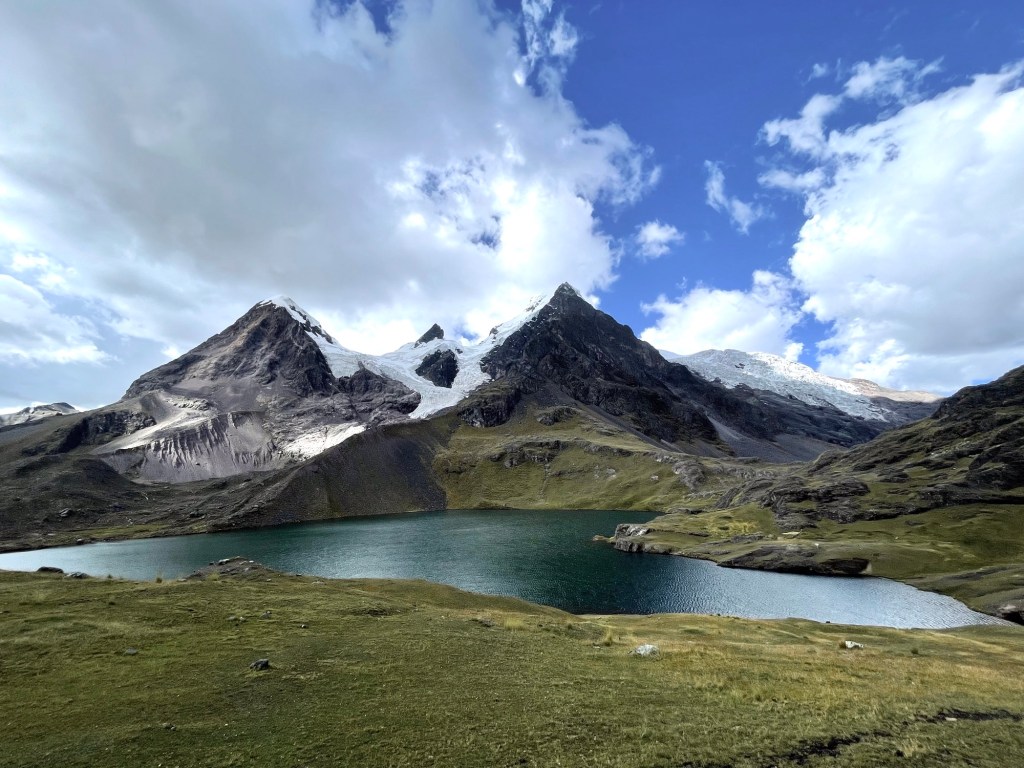
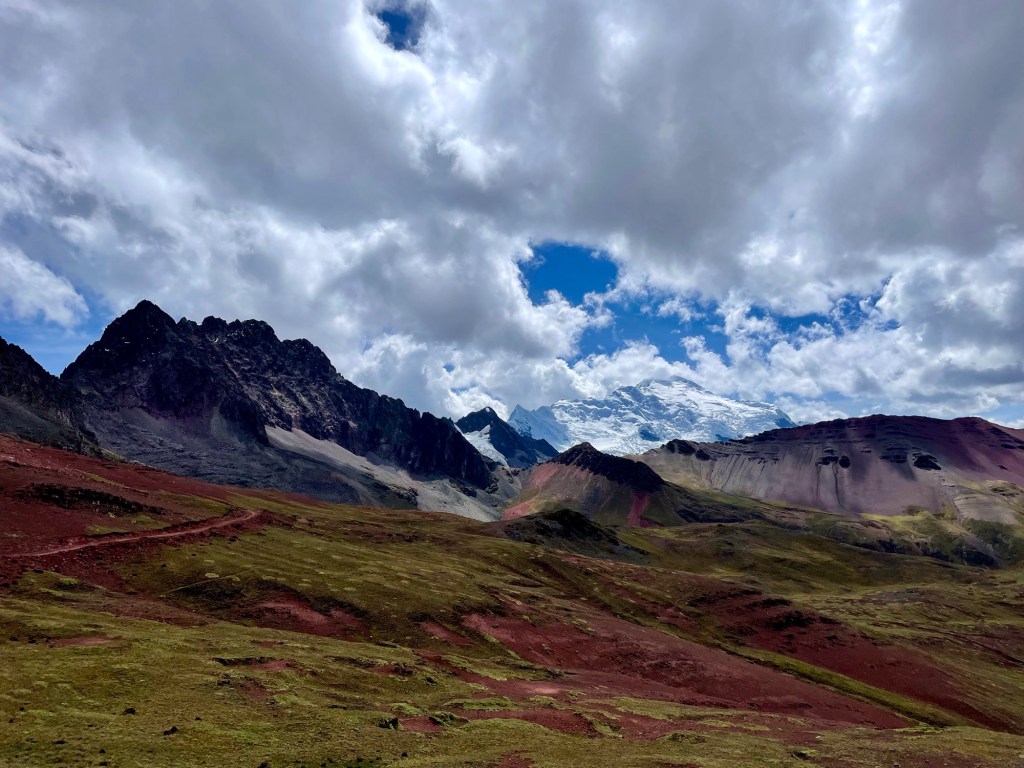
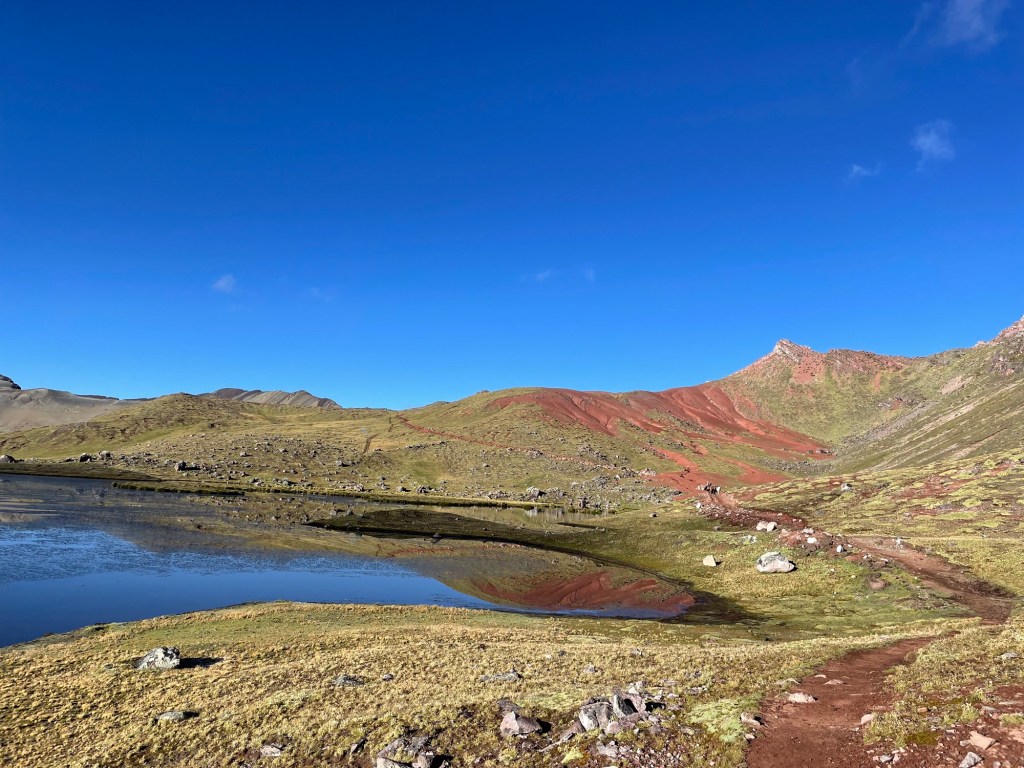
The afternoon was extremely tough with almost 400m to climb, 350m of which was over just 1.7km. Views of snowy mountains and glaciers on the left and red mountains on the right were a somewhat helpful distraction but two of the group were really struggling with the altitude (one of whom was also sick with a fever the next day). As you summitted the pass at 4900m, the view changed into a valley of red and green mountains.
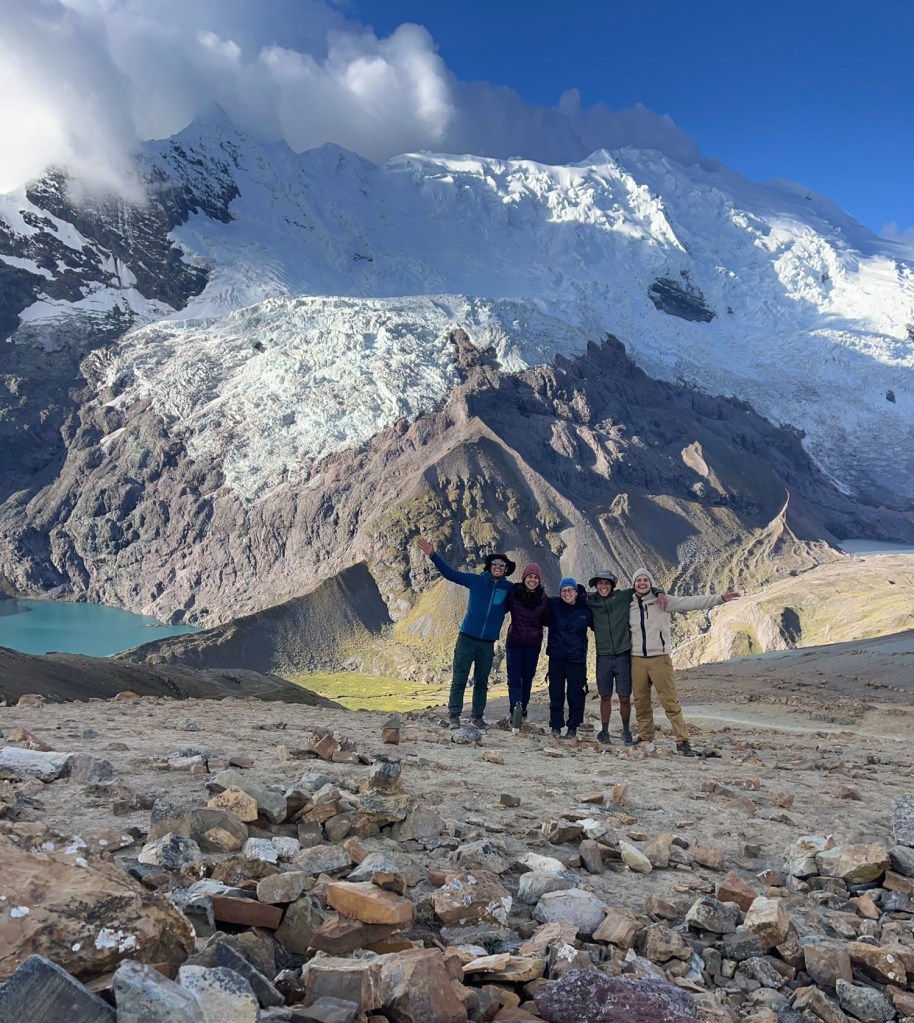
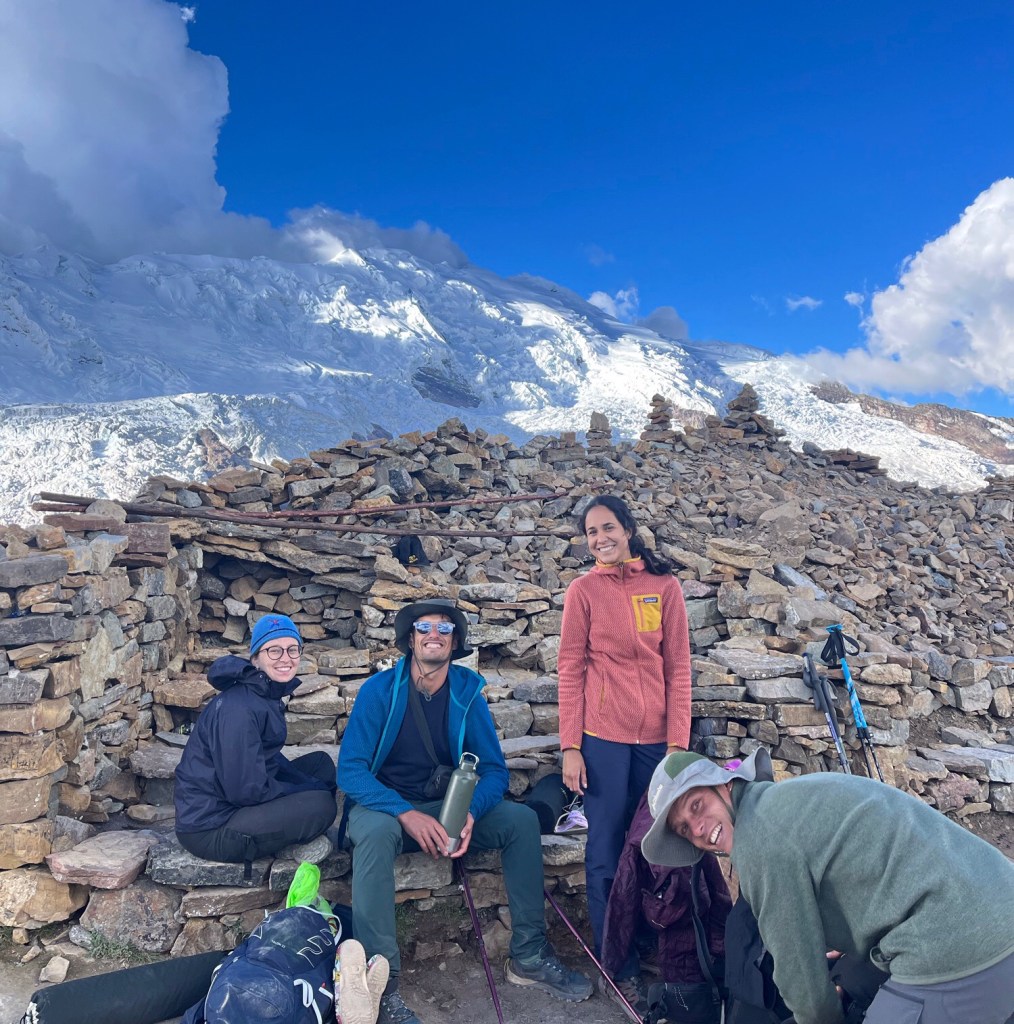
With only a few kilometres until camp and all downhill, speed and morale picked up and we arrived at a campsite at 17:30. There we met an older German couple who were doing the trek with a tour company. Their guides kindly shared the room they had hired at the campsite with us to cook dinner. Whilst we prepared and ate our packet noodles with onions, we shot glances at the soup, spaghetti, and chicken the guides prepared for the German couple. Clearly, they noticed our not so subtle hunger and offered us two large plates of spaghetti that were left over. Eagerly, we accepted – although they did subsequently charge us ten soles!
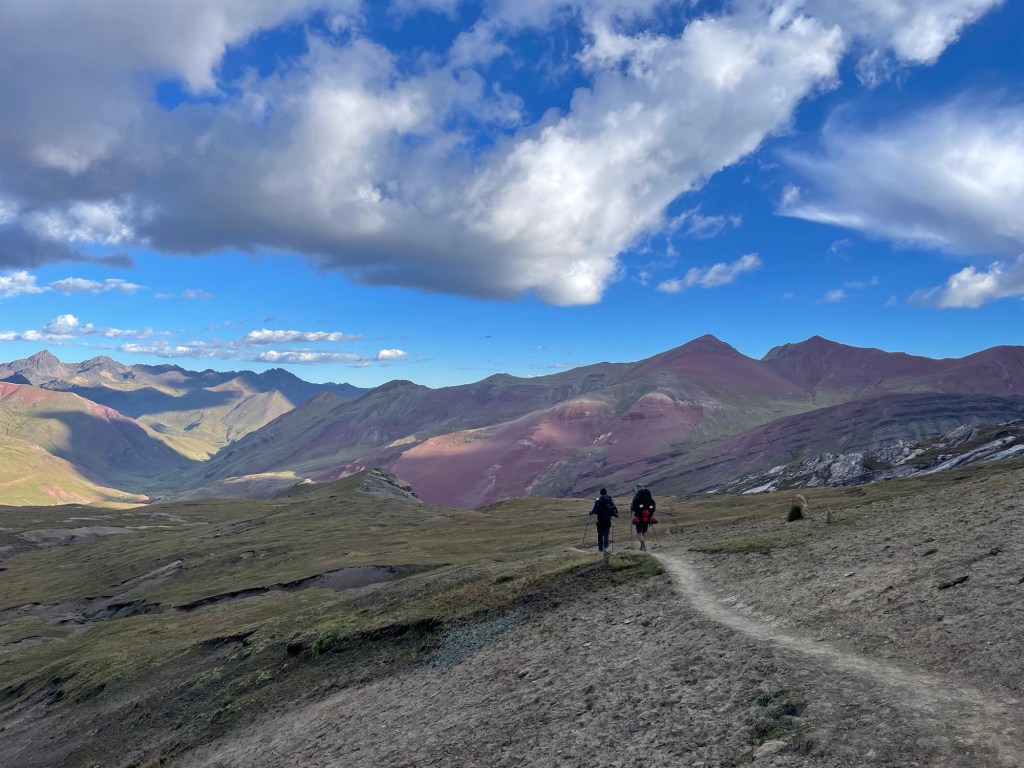
Total: 19km, 880m ascent, 3 remaining packets of Oreos.
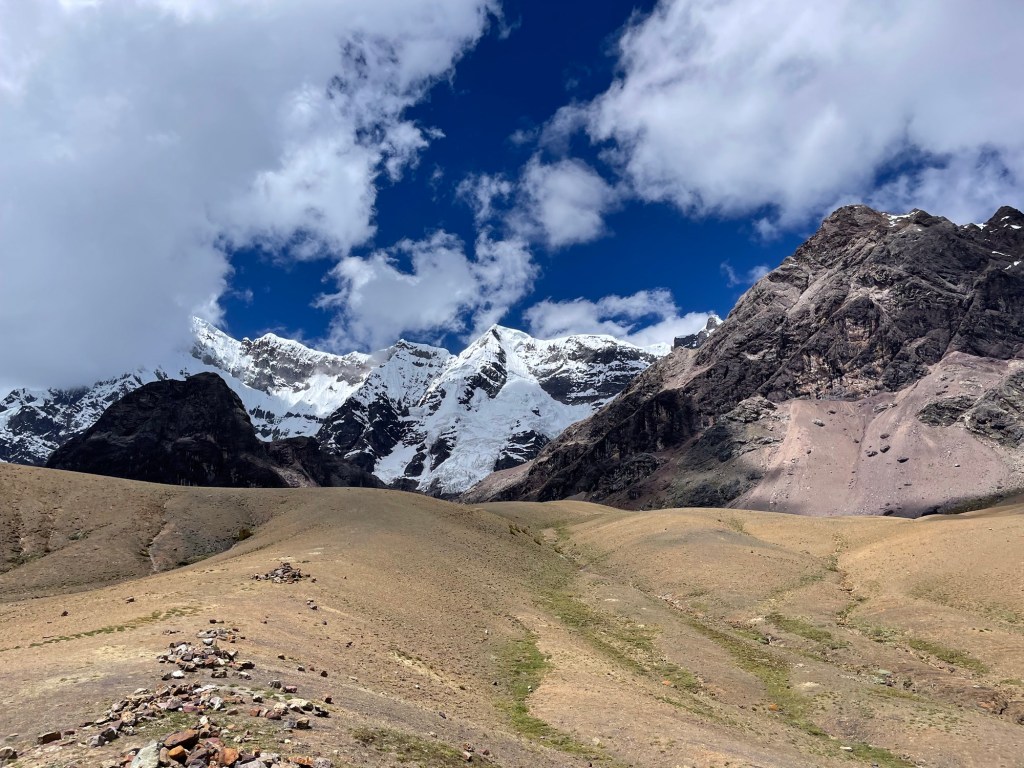
Day Two: Anontapata – Rainbow Mountain – Laguna Ausangatecocha
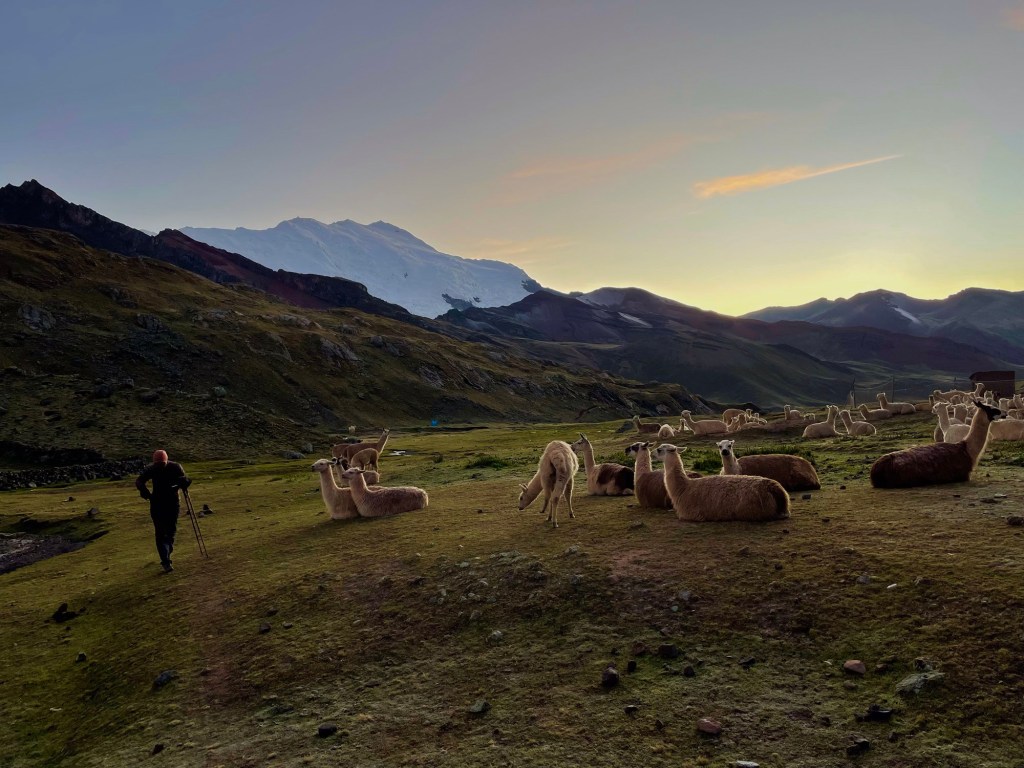
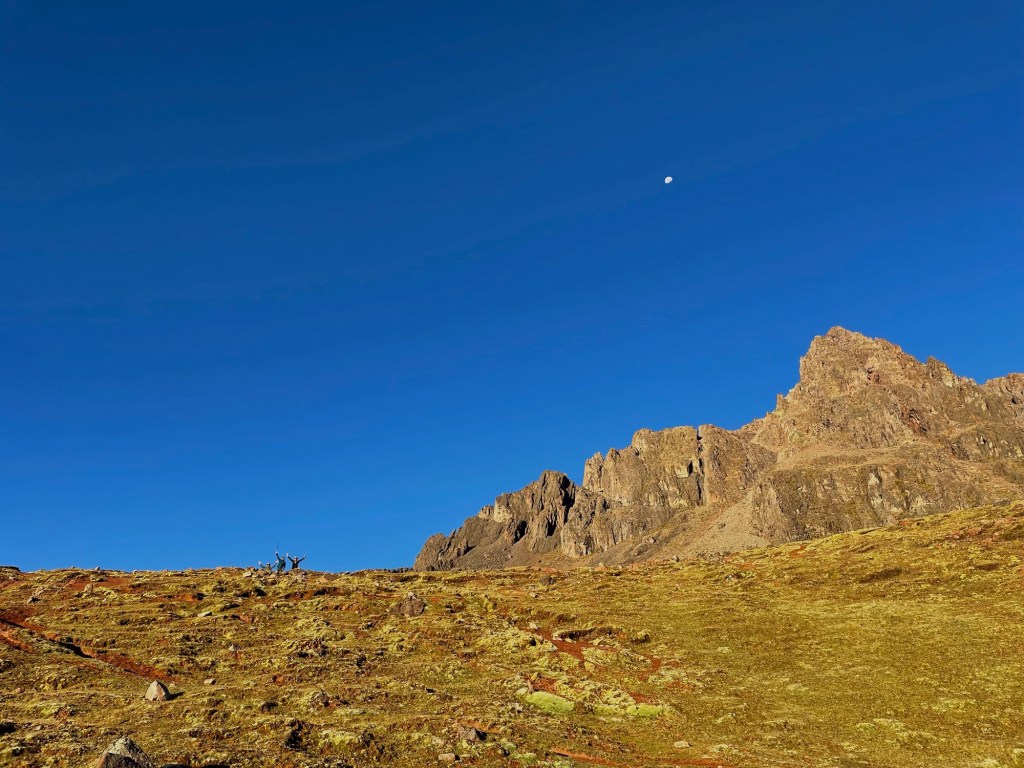
The second day began at 04:30 with oats and coffee. Our campsite was not far from the Montaña de Siete Colores, an incredibly popular tourist attraction for which people get tours from 3am from Cusco to arrive at 8-9am. Leaving our bags at the campsite, we were walking by half five with the sun coming up onto the mountain ahead of us.
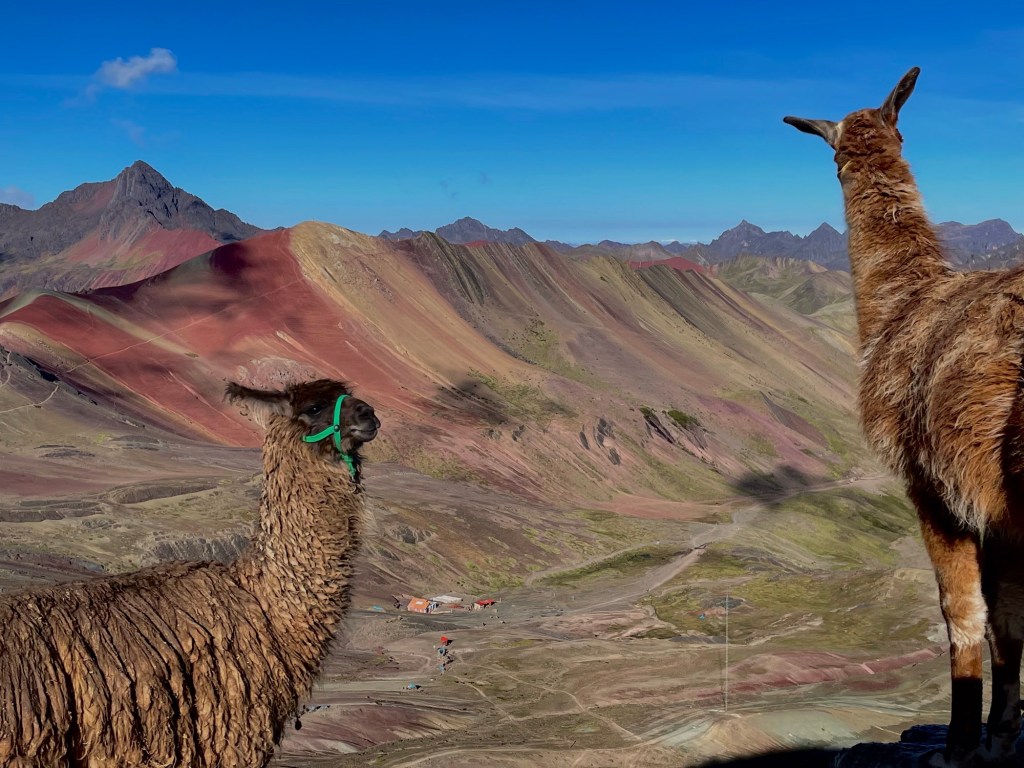
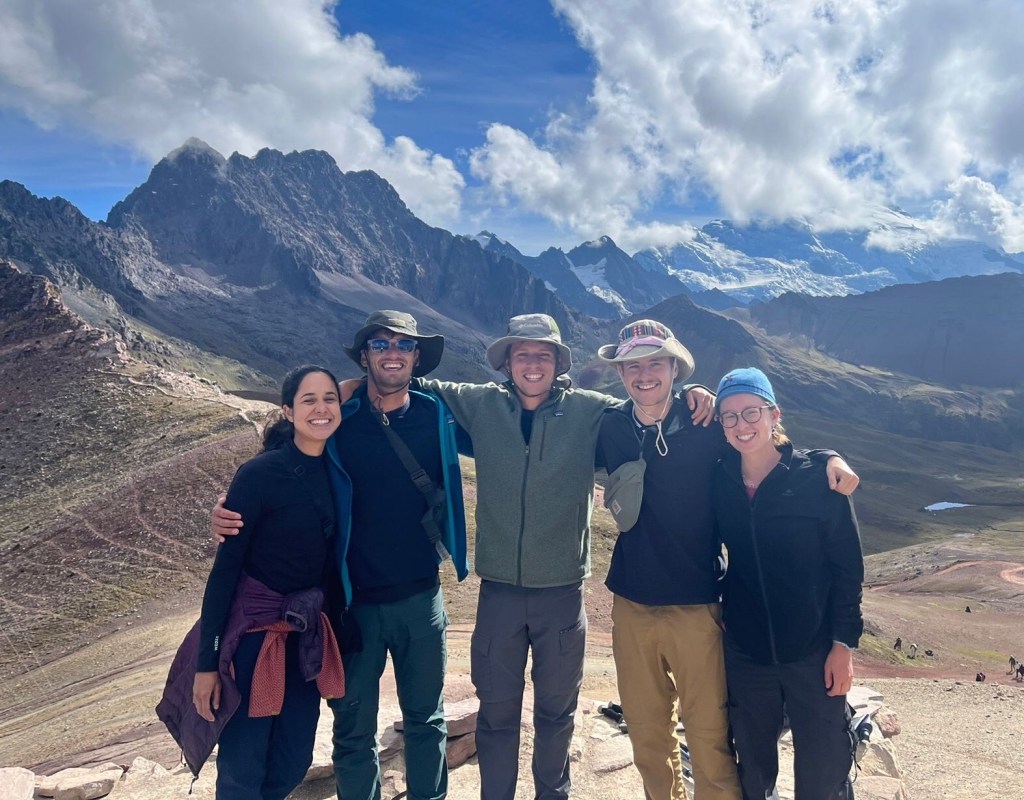
As we got closer to the mountain, tours groups became more frequent although it was still empty compared to Salkantay. We arrived at 07:30, just as the alpacas were being adorned in sunglasses and hats for tourists to take photos with later. Being in a beautiful place before the crowds arrive is very gratifying – especially when you also feel smug about how you got there.
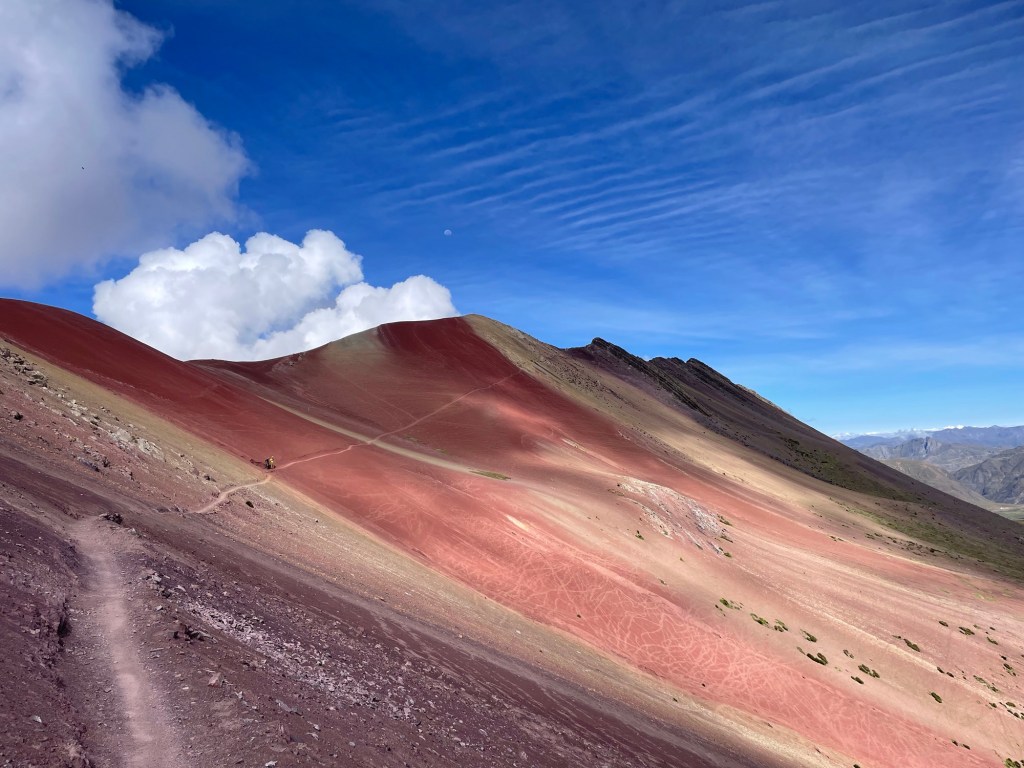
By the time we had taken our tourist photos, the crowds were starting picking up and we continued to climb La Montana Roja. Unlike the path to the Rainbow Mountain, this path was completely empty. Walking in single-file, we had a glacier and a greeny-blue valley on our right with the red mountain ahead. Again, when reaching the pass, an immense of red and green mountains were revealed.
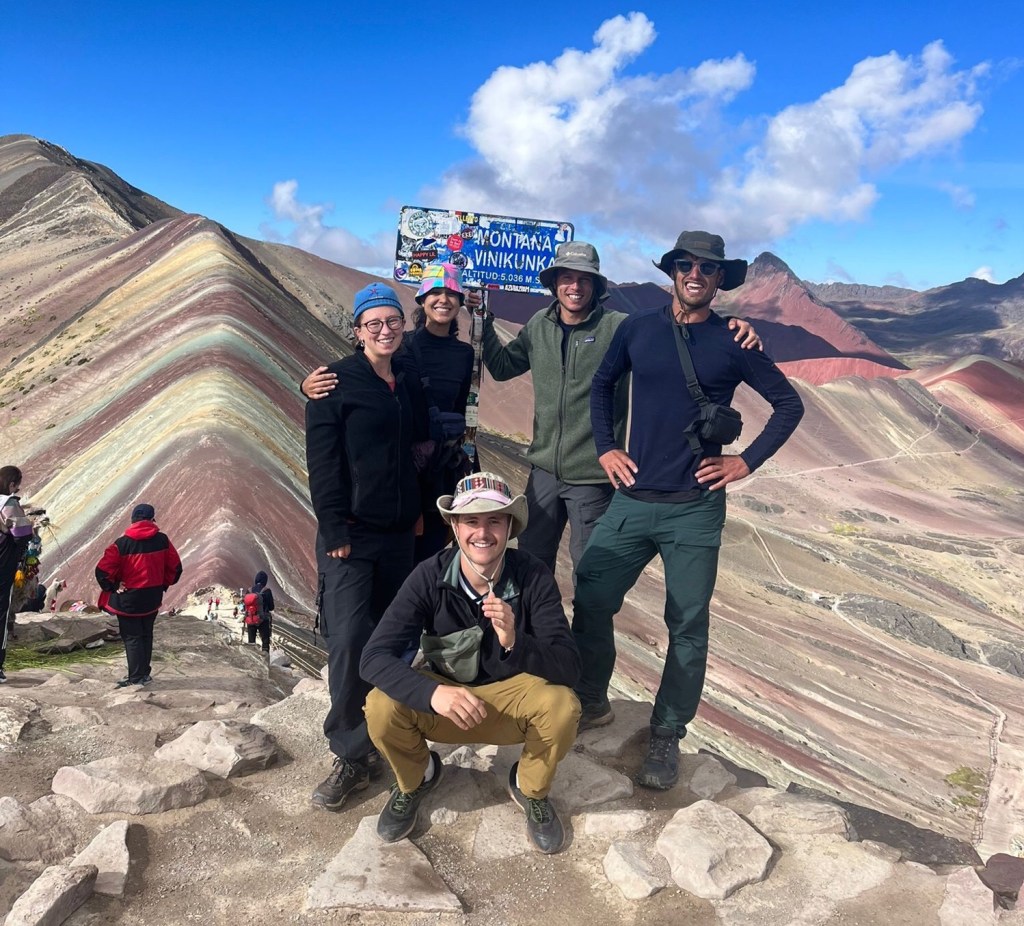
Having enjoyed the views, we retraced our steps, returning to Rainbow Mountain which was now packed with people and then onto our campsite. After lunch in which we had to finish our avocado supply as they had been squashed all over the food bag, we took a nap before rallying to make it the final 6km to our next campsite.
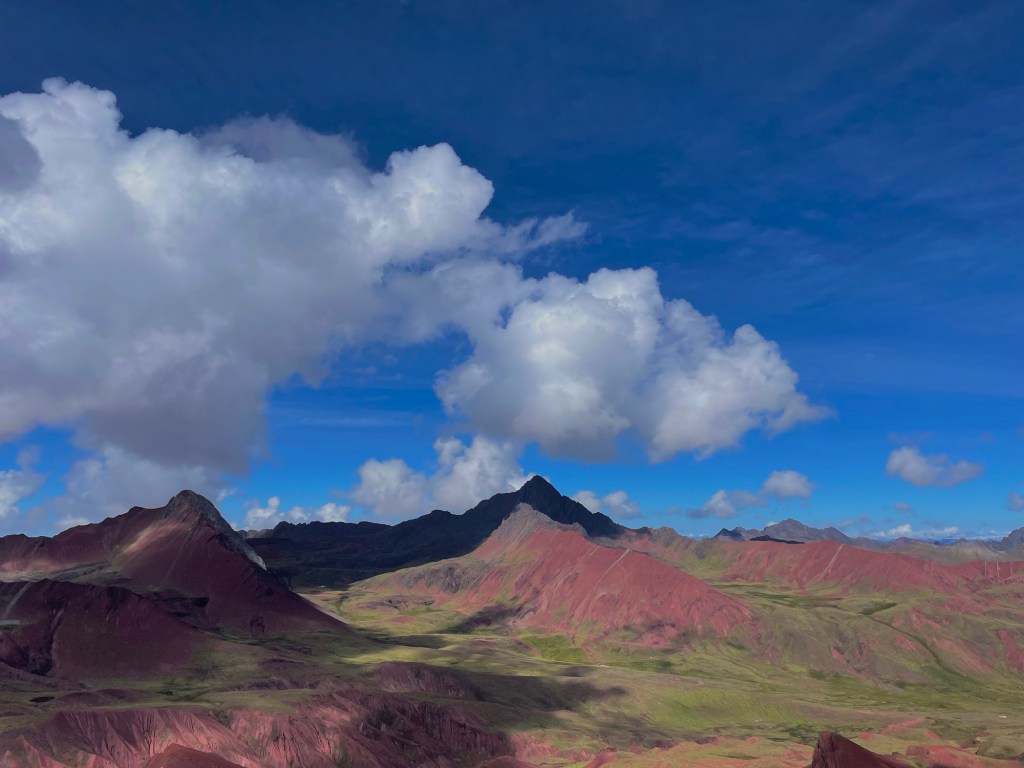
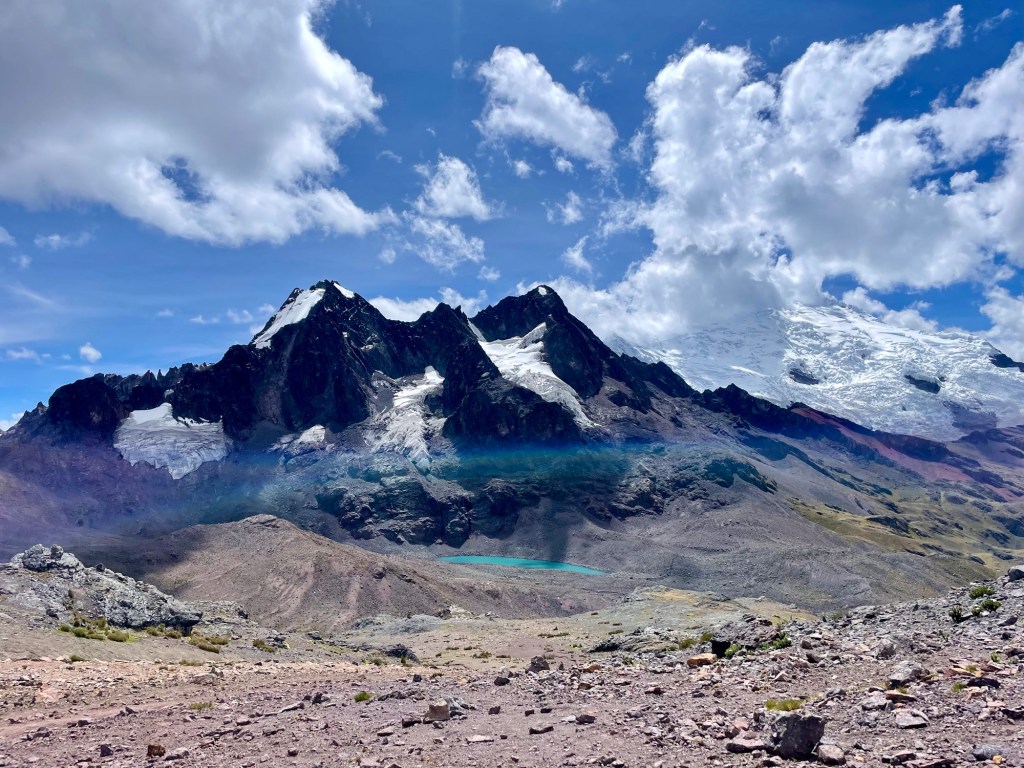
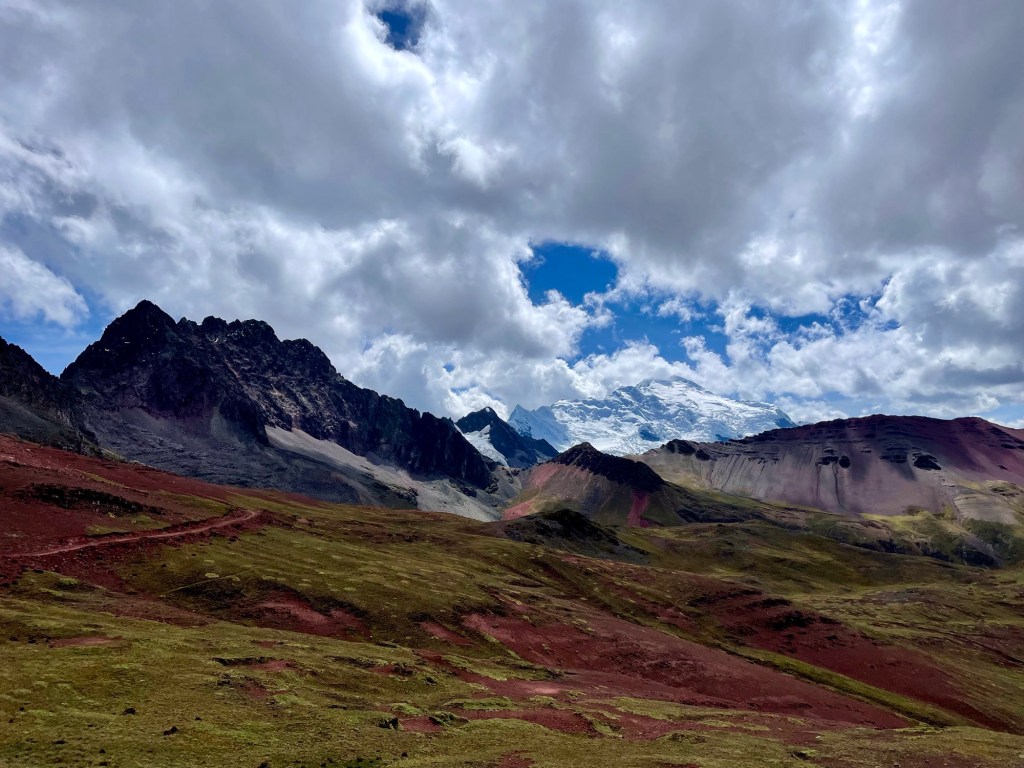
Sleeping at nearly 4800m and just below a glacier was pretty chilly. After a dinner of slightly crunchy rice curtesy of the altitude, we collapsed in bed.
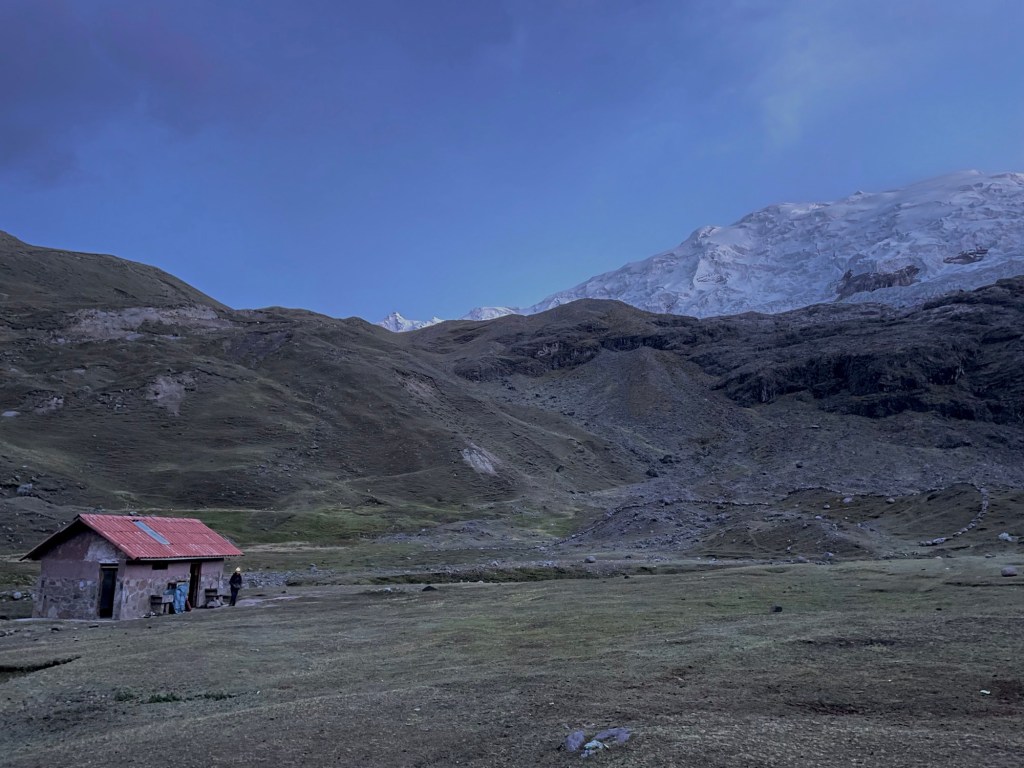
Total: 22.5km, 1230m ascent, two packets of Oreos remaining.
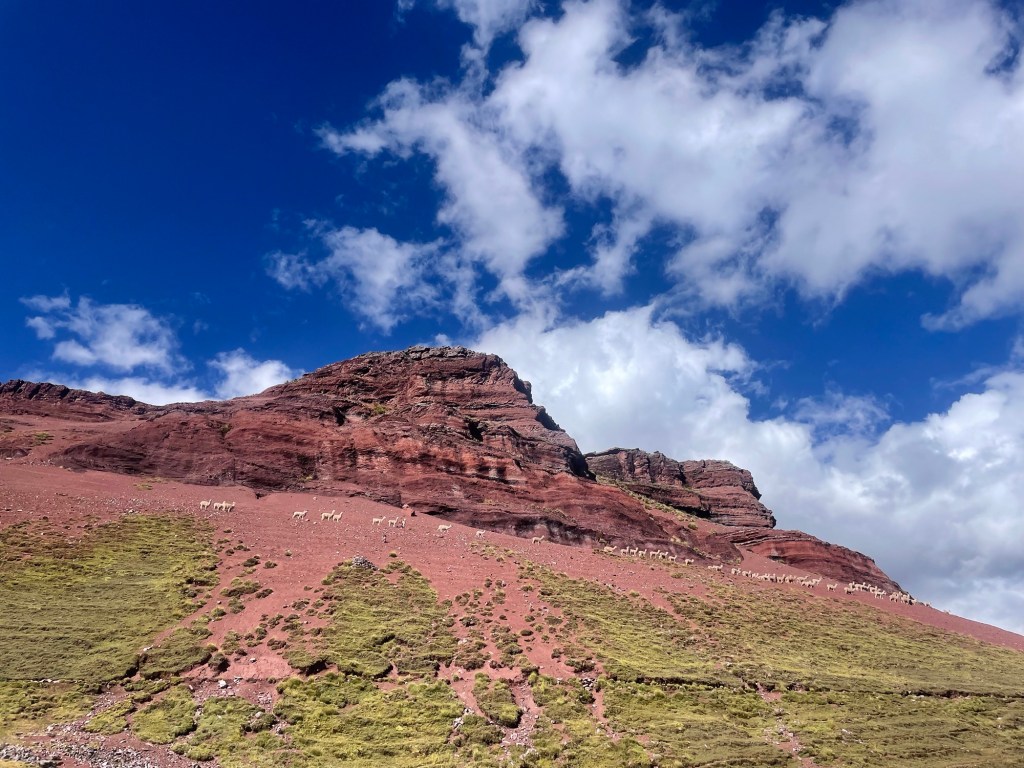
Day Three: Laguna Ausangatecocha – Palomani Pass (5100m) – the valley before Khampa Pass
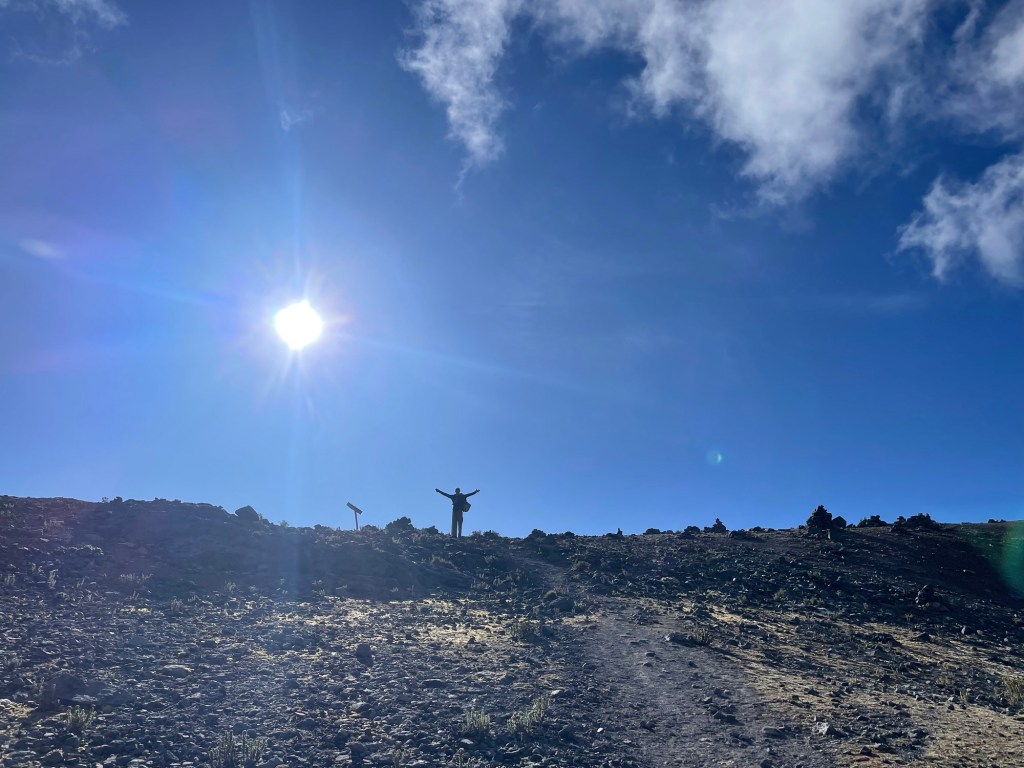
Waking up was difficult. It was very cold and we had a 450m climb to start our day. Again though, walking with the sun rising on the mountains ahead resolved most of my problems.
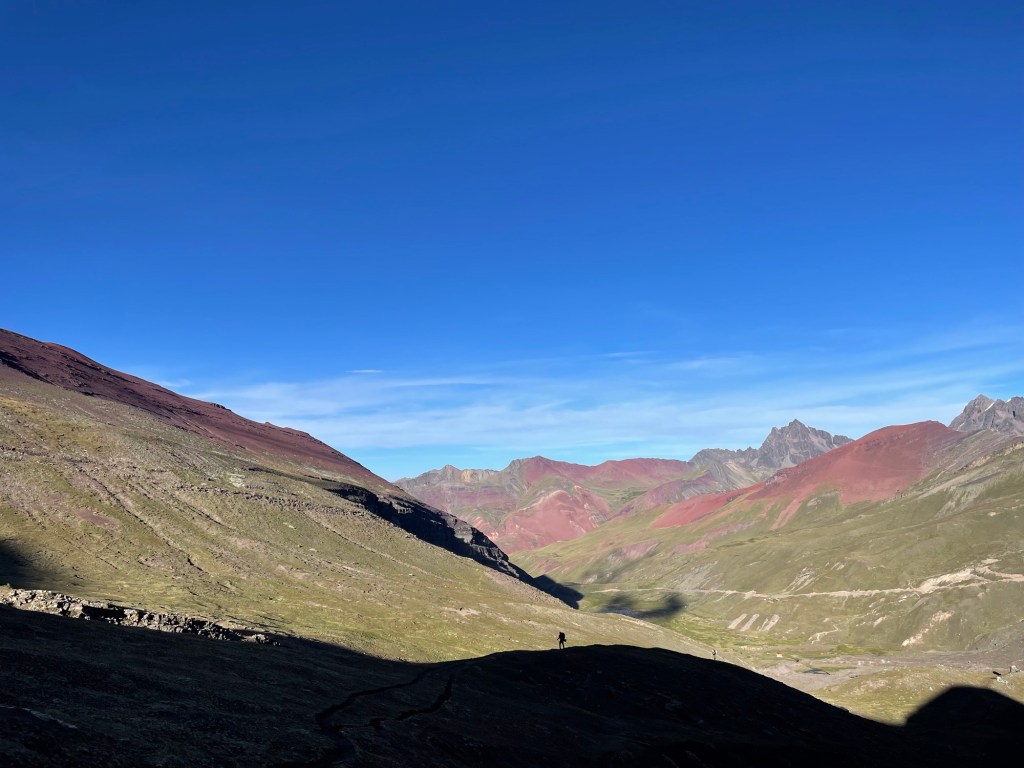
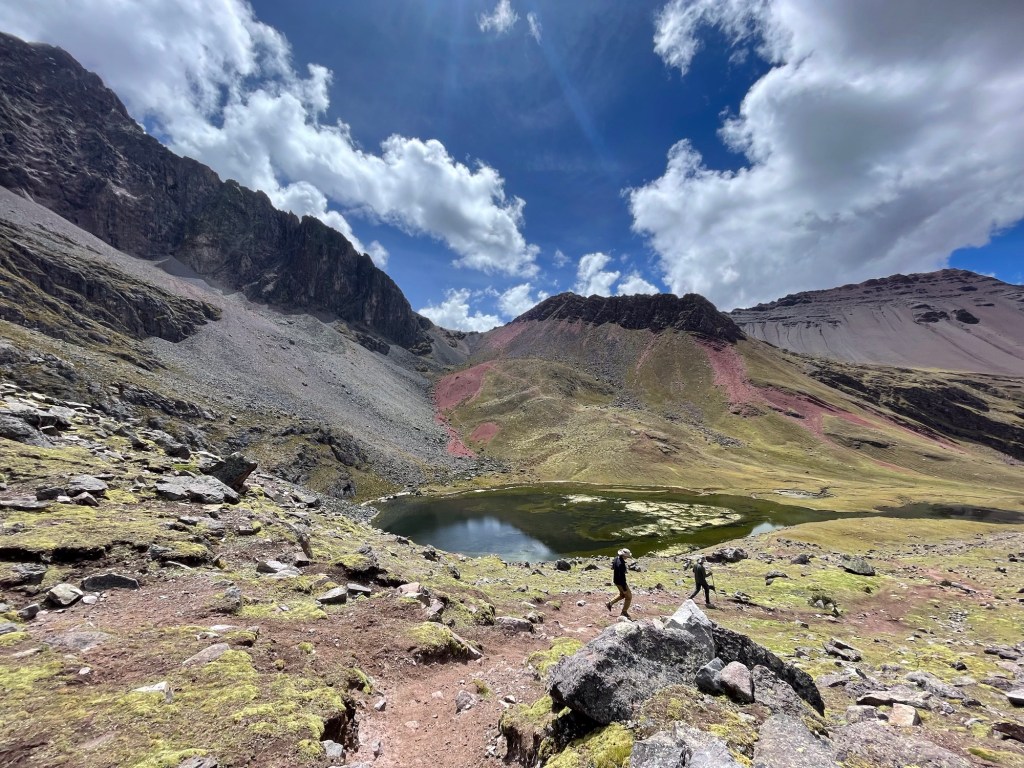
Reaching the pass at 5100m was stunning – although hard to breathe. We left our bags under the watchful eye of Luzia, who stayed put to nap, and climbed up to the peak of the mountain – reaching almost 5200m. From glaciers and lakes to snowy mountains and red ones, it was beautiful.
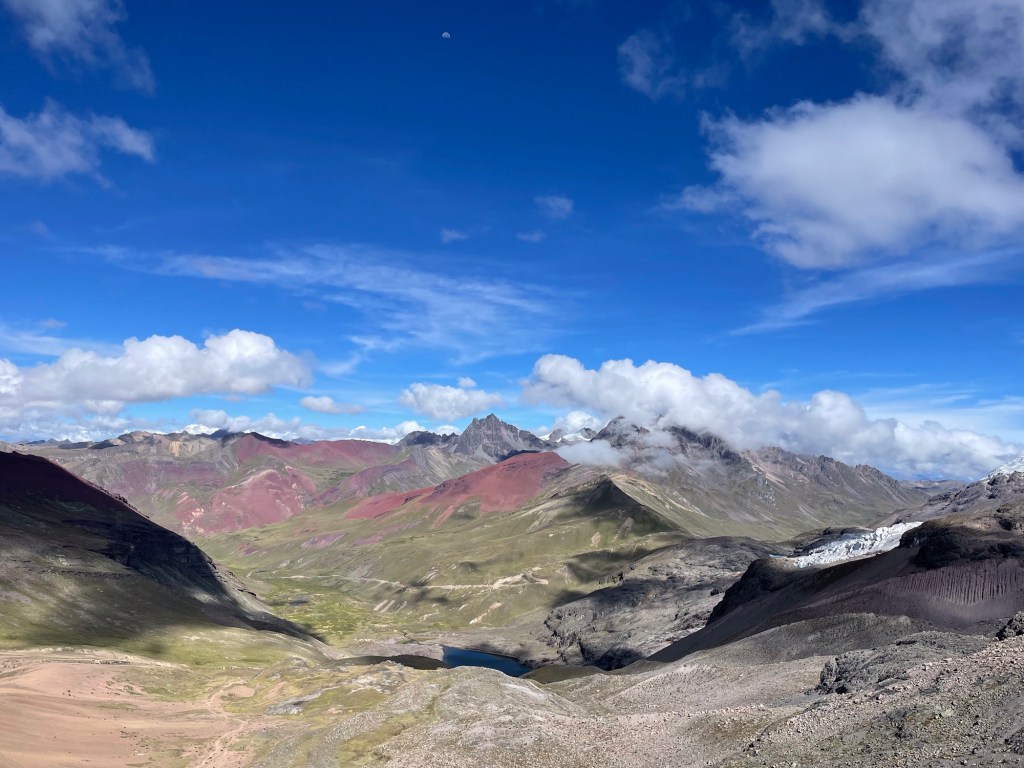
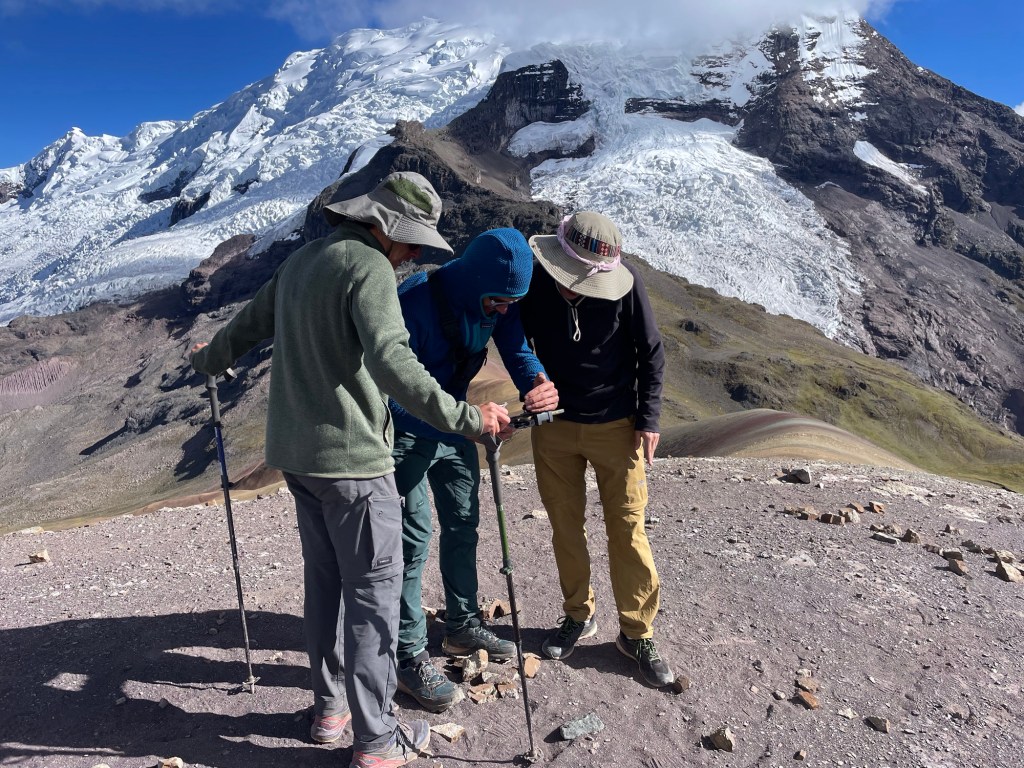
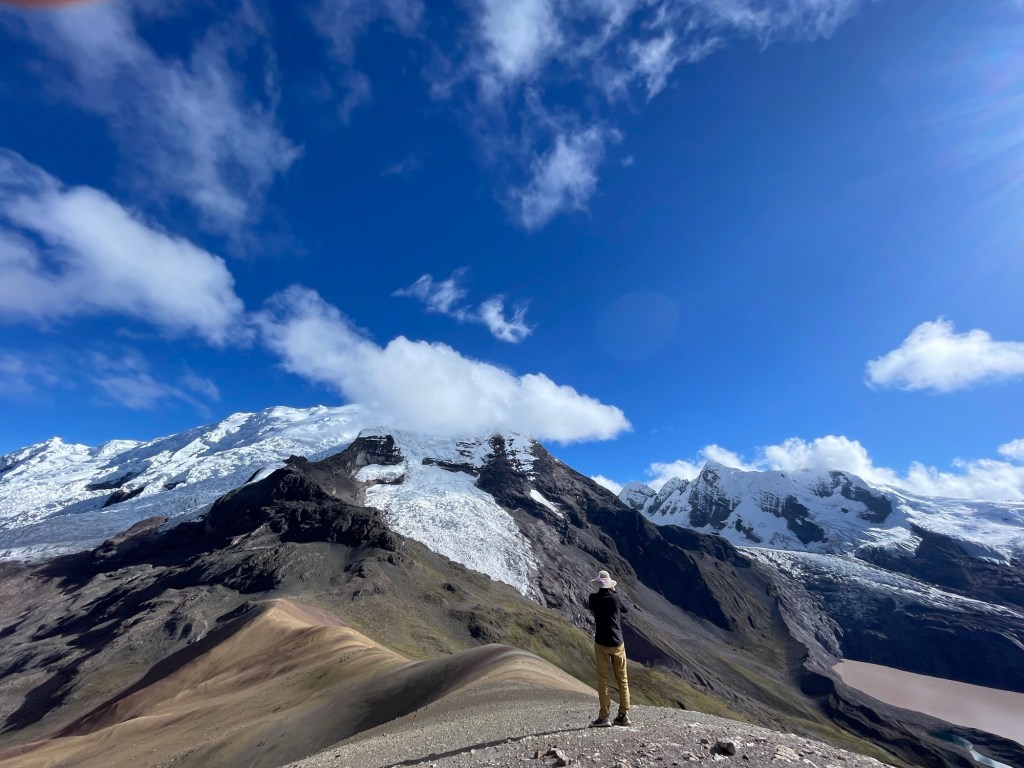
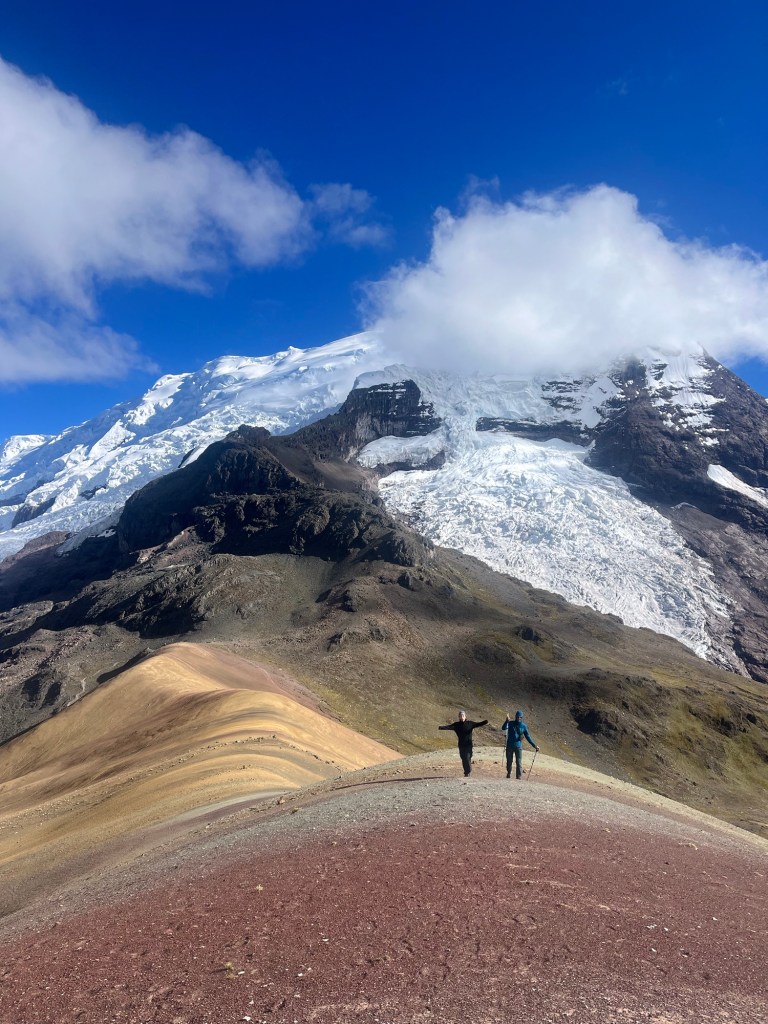

We left the views at the pass and descended into the valley. Hopping across the river at the bottom of the valley, it was time to go up again. The rest of the morning remained pretty high at around 5000m. By lunchtime, we had dropped again to the bottom of the valley. By now we had a choice to make – to finish up the veggies and cheese and have the lunch we wanted, banking on making it to the end of the hike before lunchtime tomorrow, or to save some for the final day. We opted for the former thinking the lack of supplies would not only lighten our bags but motivate us to move quickly the next day. (Note – we were much better at rationing Oreos than cheese).
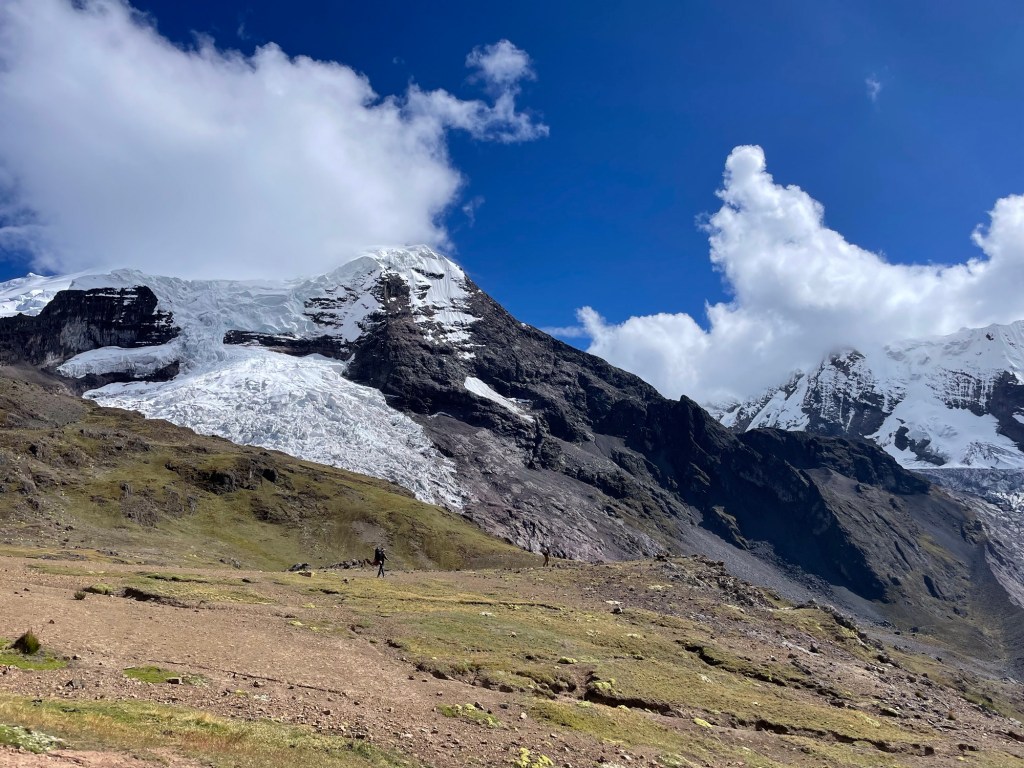
Beginning the walk at the bottom of the valley after lunch, we planned on making it past the next and final pass (Khampa Pass) which would leave us with only 7km to walk on the last day. About half an hour into the afternoon however, it began to hail. Ahead, the mountain we were supposedly climbing was veiled by a misty cloud – not good. We reassessed and turned back to a campsite we’d passed 20 minutes earlier. It was only 14:30 but with the suboptimal weather, nobody fancied continuing.
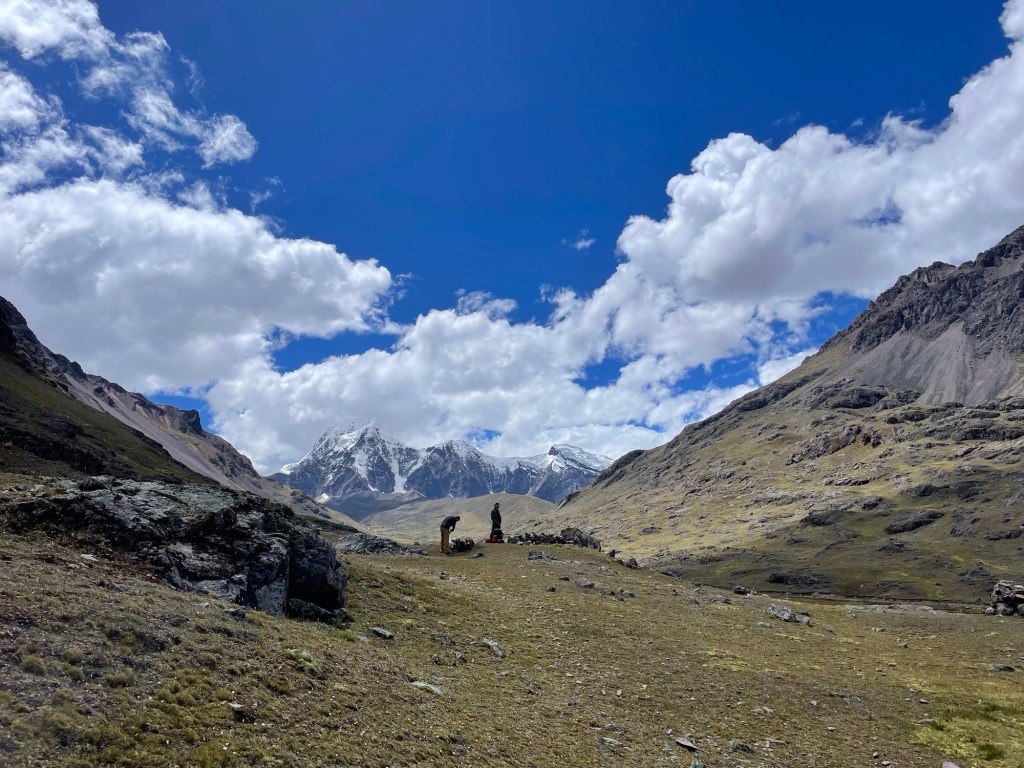
It was time for tea and a nap instead.
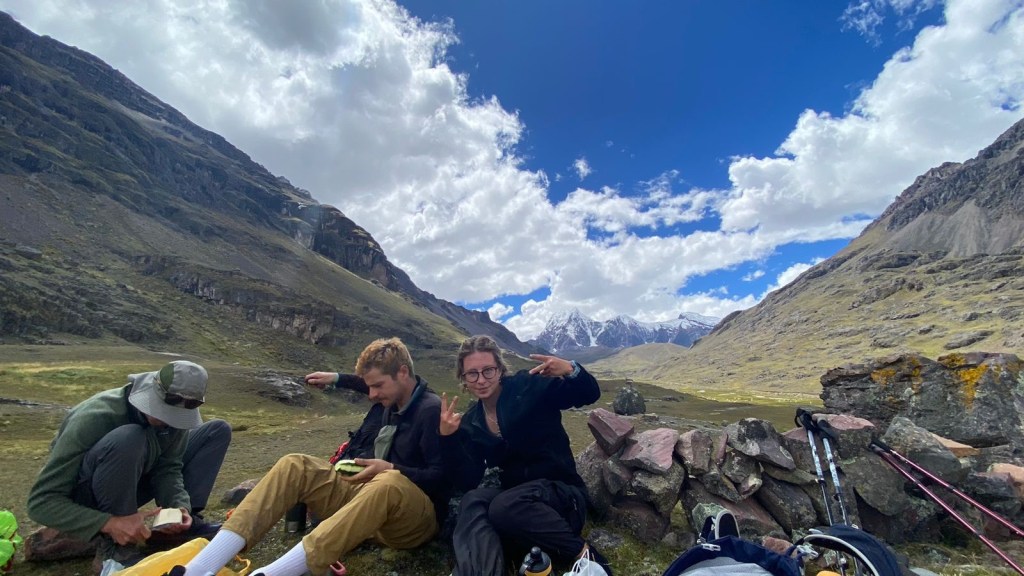
After a relaxed afternoon mainly spent huddled in sleeping bags to stay warm, dinner was prepared (with the addition of a stray aubergine that had been abandoned by previous campers) and when it was eventually cooked, we crawled into bed at 18:55 very cold and tired.
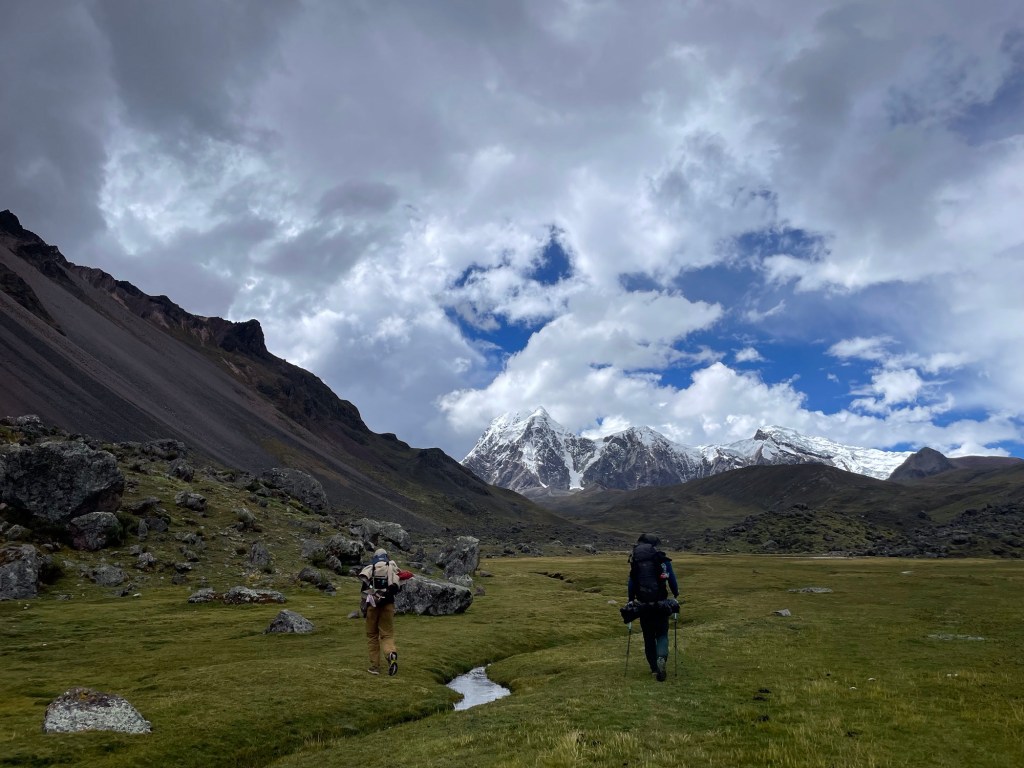
Total: 16km, 800m ascent, one packet of Oreos remaining.
Day Four: the valley before Khampa Pass – Khampa Pass (5000m) – Siete Lagunas – Pacchanta
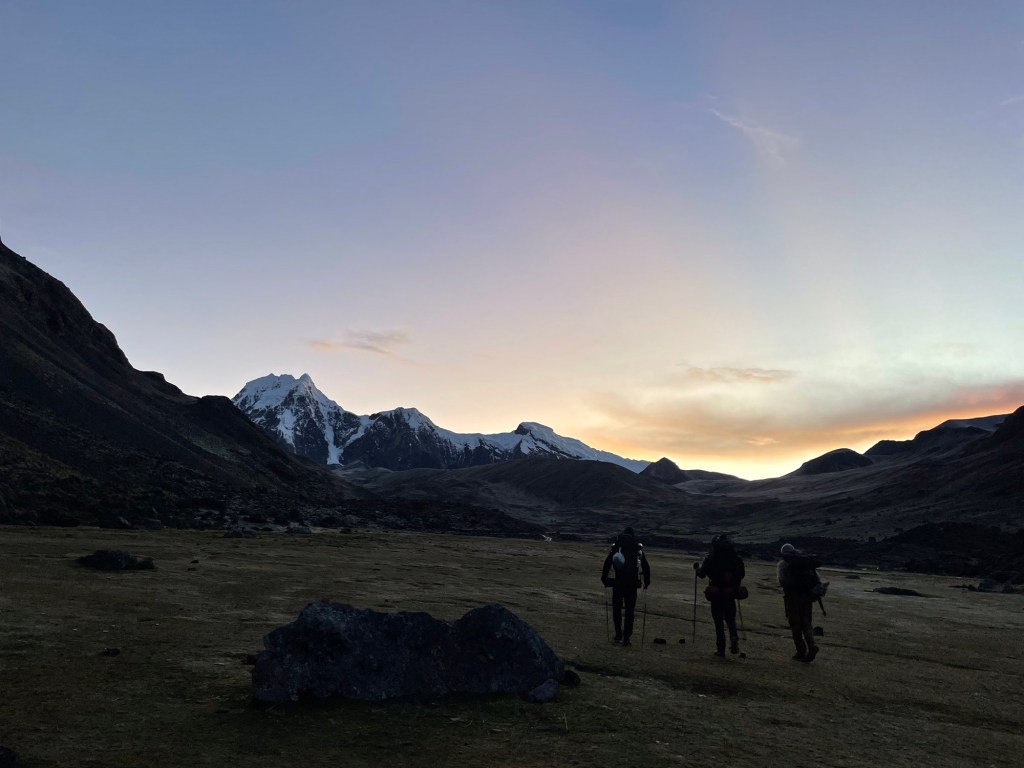
Alarms went off at four and we were traipsing across a frosty bog by 05:30. We were apprehensive about the weather which we had been warned would be terrible today. The morning however was clear and sunny, although cold. Walking with frost on the ground was definitely preferable to walking with hail in our faces. However, after misestimating a stepping stone across a river, one of the guys was walking with frozen shoelaces.
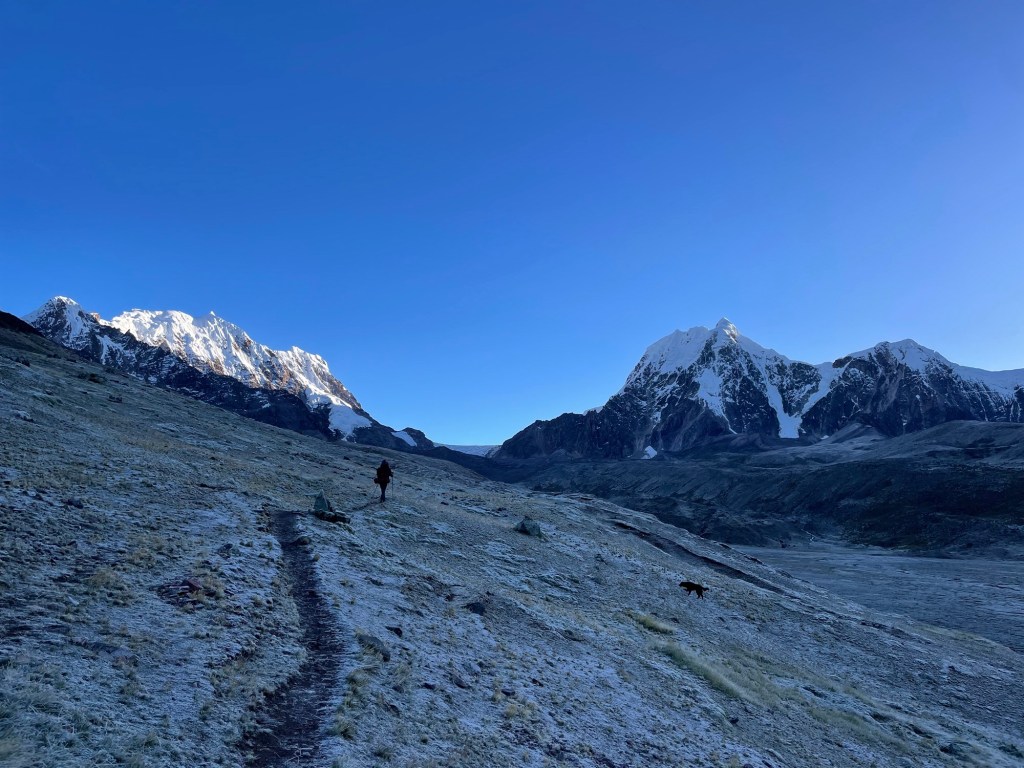
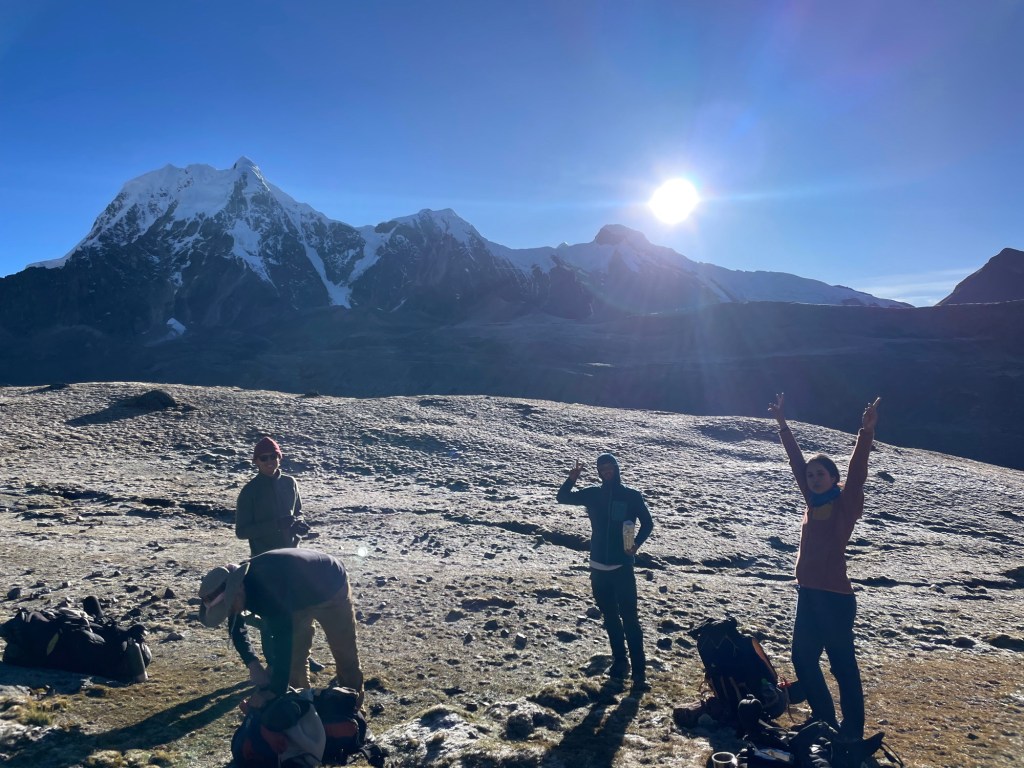
We powered through the 400m climb to the final pass which was notably less striking than the rest but was accompanied by the sense of achievement of finishing.
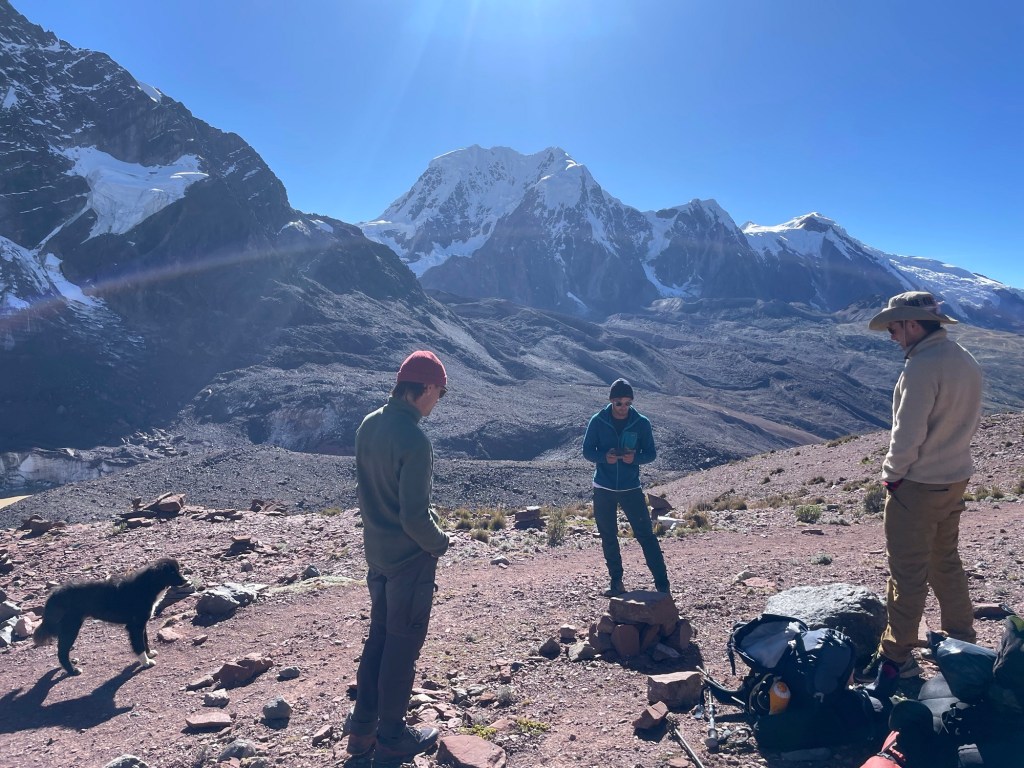
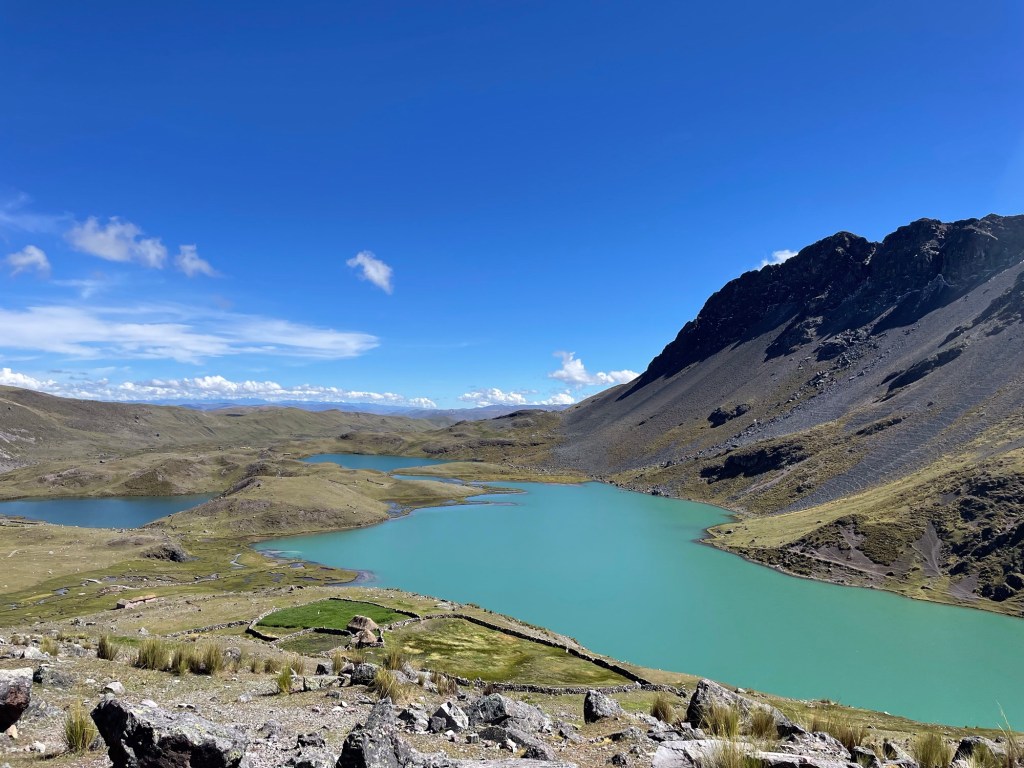
The finally 10km was downhill and passed through the Siete Lagunas, another popular day trip from Cusco. Foolishly, with over 8km left to go I sat down to wait for two people behind to catch up. That was it. I was spent. My entire energy sapped out of me immediately and I was exhausted. The next 5km felt like double. At 11am I checked my phone once again – I had walked 400m since I last looked at it. I needed something to get me moving – Donegal by Fontaines DC was the answer.
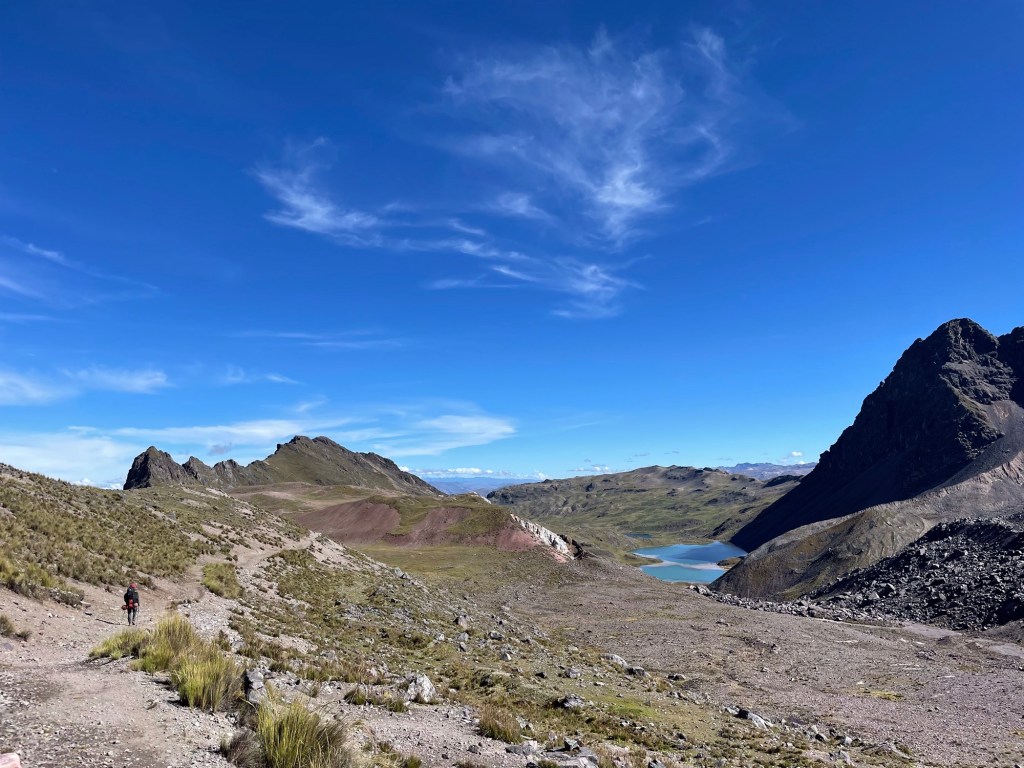
Music blaring, the final 3.5km took only 40 minutes (the previous 3.5km had taken 1.5 hours). There was Pacchanta, our finishing town, and I saw the boys loitering around the back of a taxi, flip-flops on.
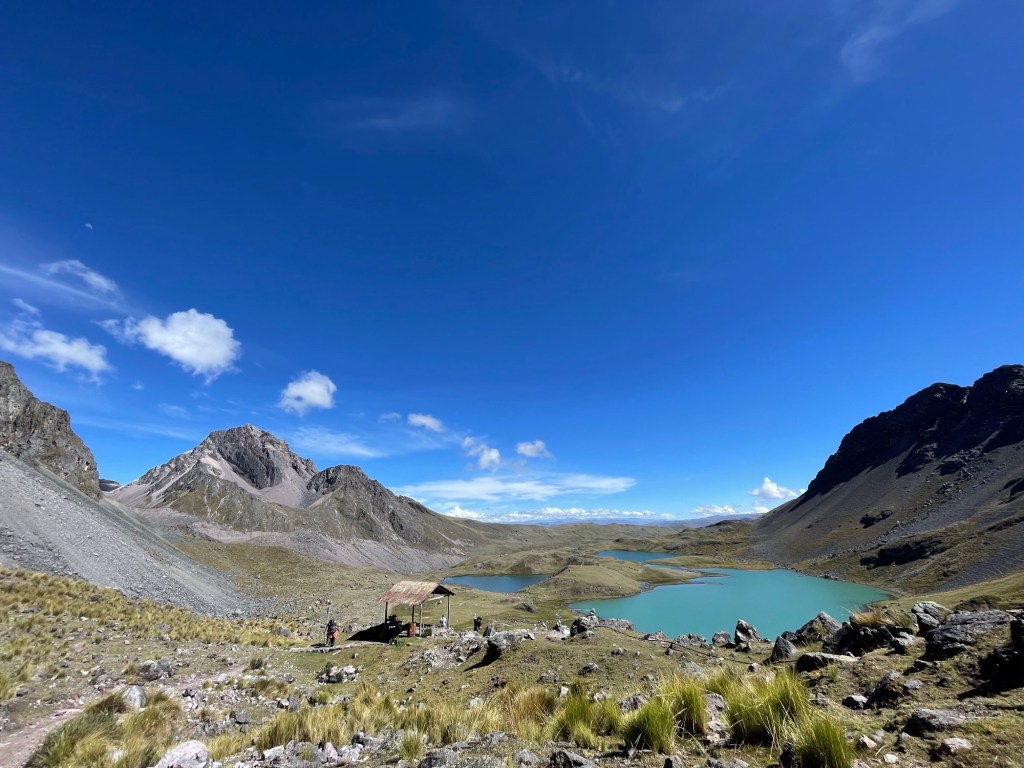
Thankfully, we had finished in time for lunch and headed back to Tinqui for a menu del dia before getting the bus back to Cusco.
Total: 17km, 500m ascent, no surviving Oreos.
The whole trip cost around £60, including replacing half the food!
Oh, and we found the cheese untouched although slightly mouldy when we got back to Cusco – it made a wonderful brunch the next morning.
 A Year in Nepal