An Unexpected French Bakery
Altitude sickness left me feeling pretty unwell following Huayna Potosí but after a few days steering clear of street food in La Paz, I found myself on another night bus. This particularly cold and uncomfortable bus was to Rurrenabaque, a small town in the north of Bolivia on the edge of the Amazon. We arrived at our hostel a little after 8am, took a shower and headed out to find a coffee, thus bringing us to the titular French Bakery. Bizarrely, a French expat had moved to the town and opened up shop, selling the most delicious pan au chocolate I’ve had in my life – not something I would’ve expected to attribute to northern Bolivia.
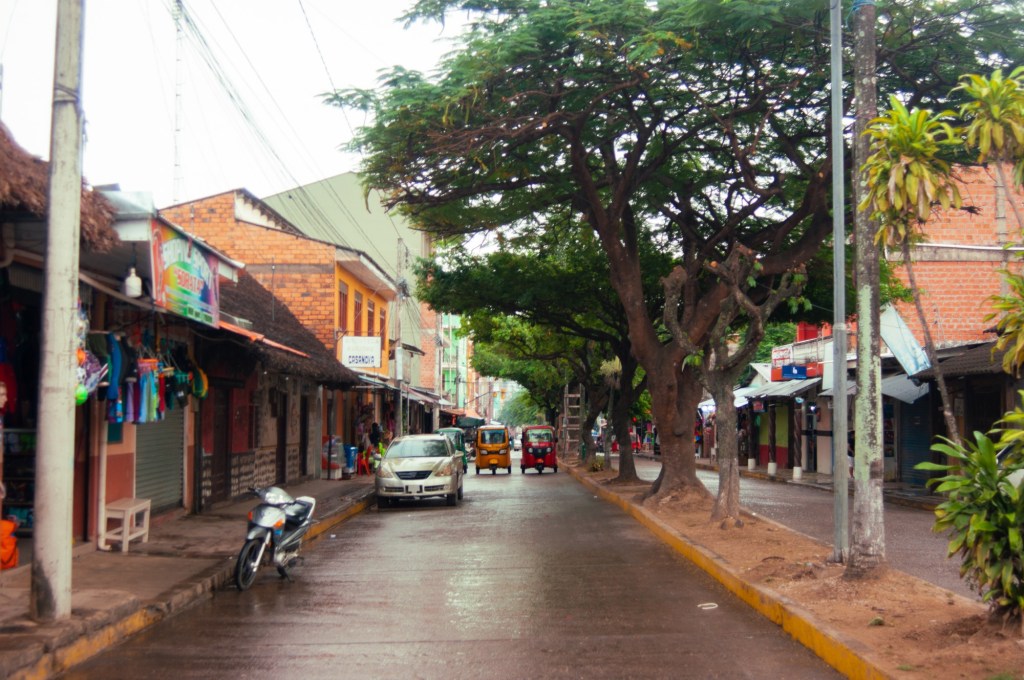
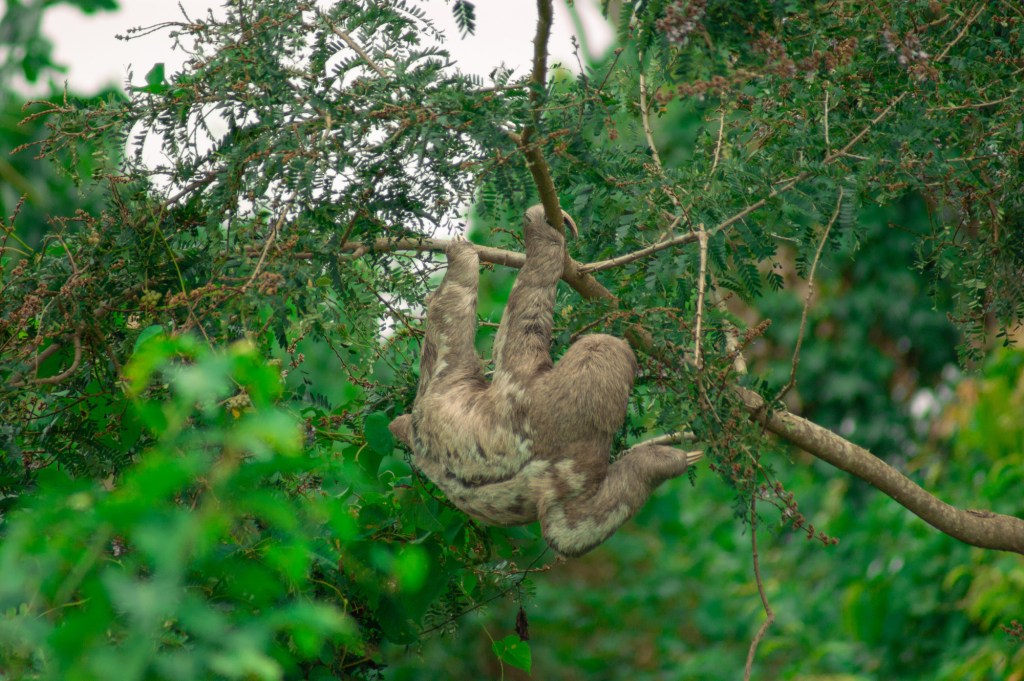
After running into some friends from La Paz in the bakery, we spent the rest of the day scouring tour agencies and booked a four day tour for both the pampas and the jungle for the next day. The next morning, with more pan au chocolates purchased, we began driving to the pampas. An hour or so into the drive our driver suddenly pulled over and got out the car. Whilst driving down the highway he had somehow spotted a sloth hanging in a tree.
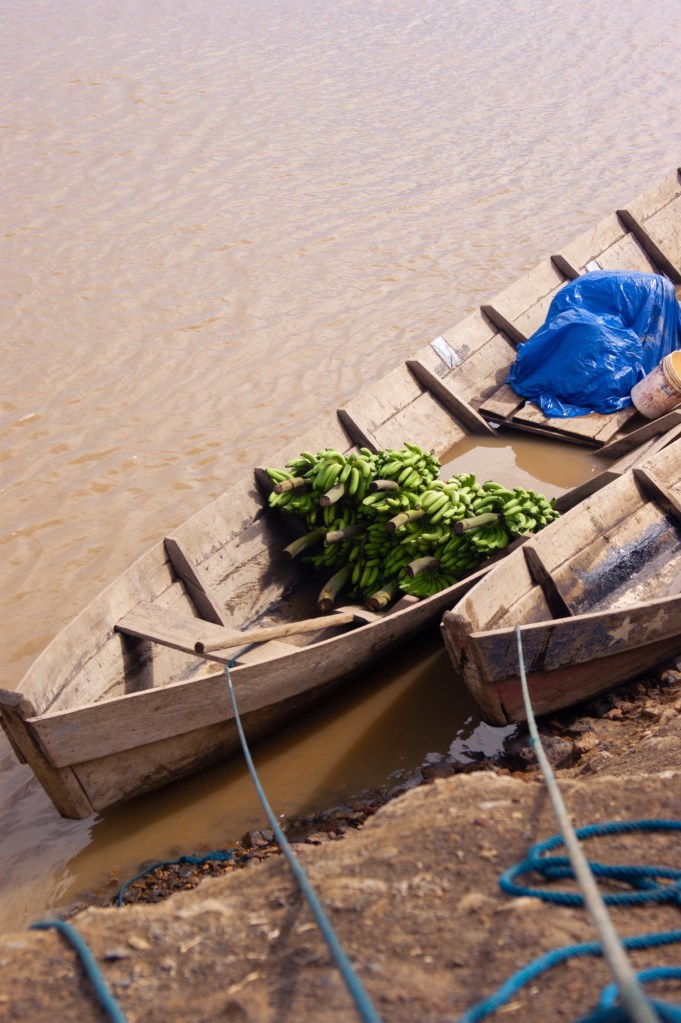
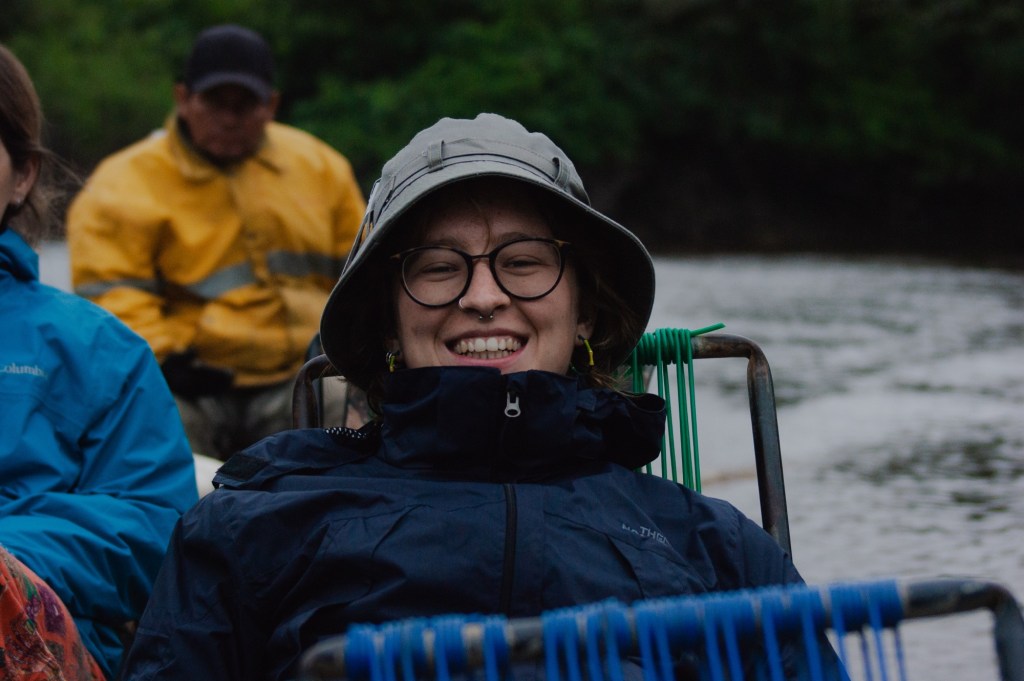
The two days in the pampas mainly consisted of boat rides up and down the Alto Beni River which is filled with alligators and river dolphins whilst small yellow monkeys and countless species of birds populate the banks. After a leisurely tour up the river to the lodge, our informative and highly entertaining guide Jackie took us back out on the boat in the evening to spot alligators. In the dark, their eyes reflect the torchlight and whilst we had seen a lot that afternoon, at night every bunch of reeds was alit with eyes.
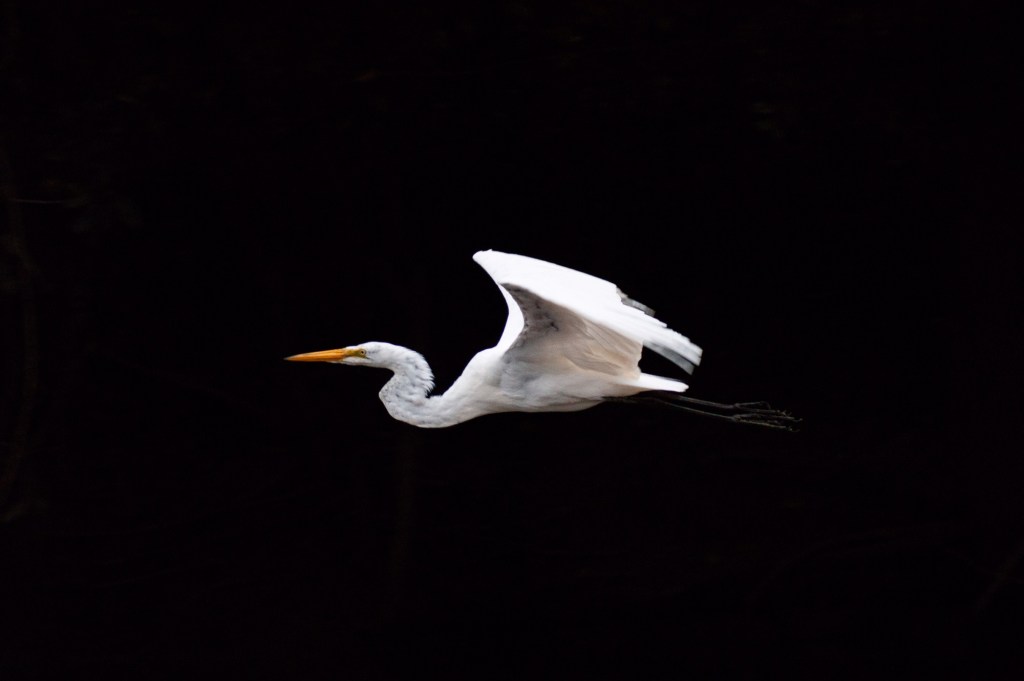
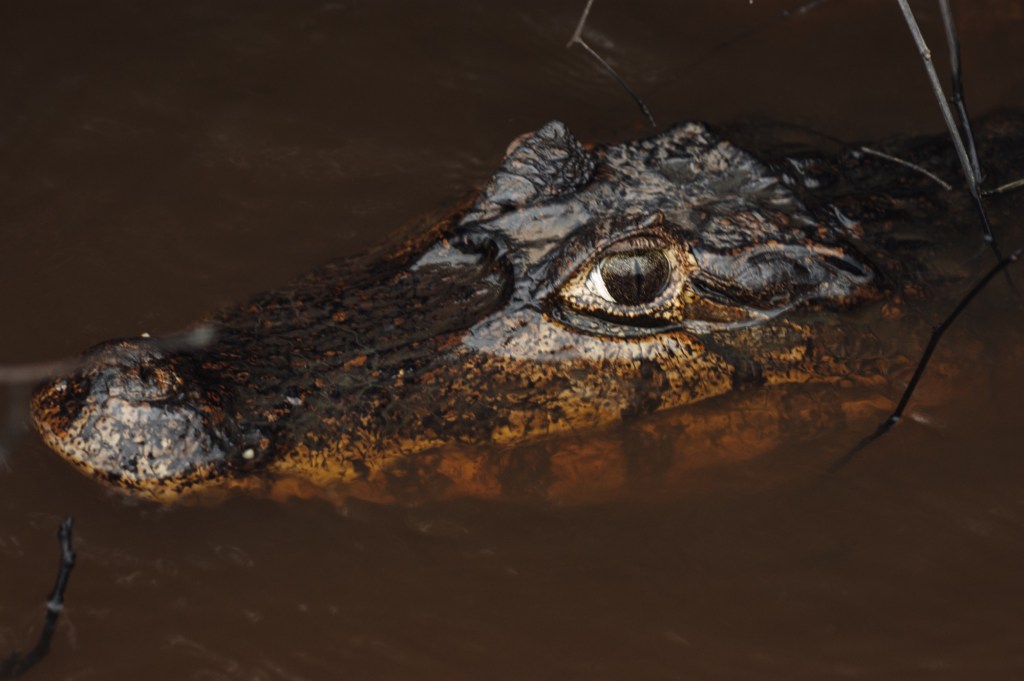
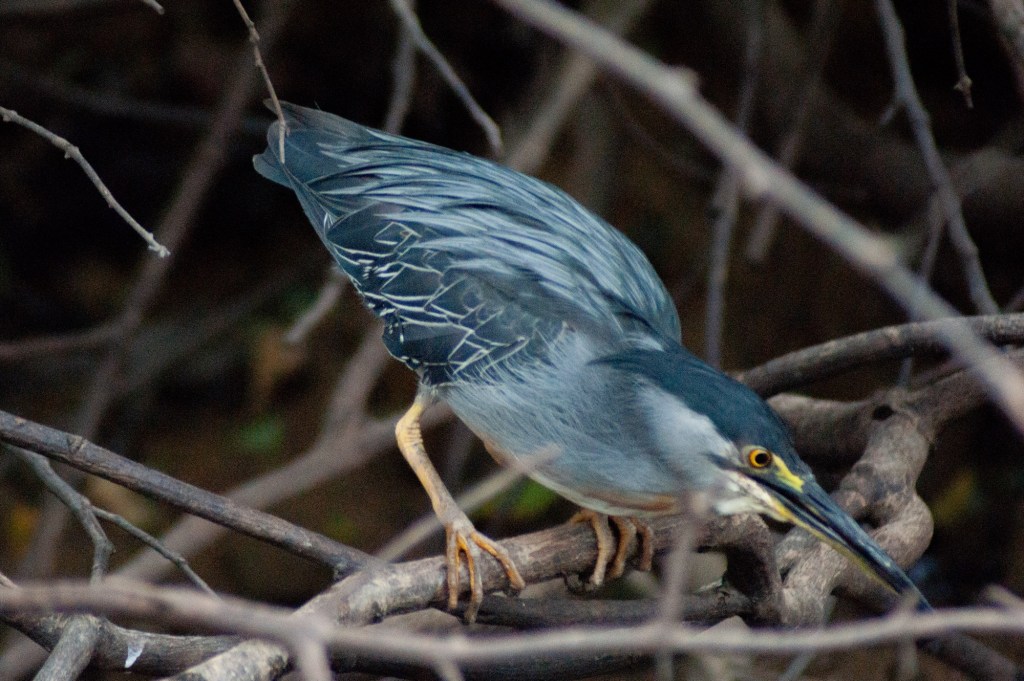
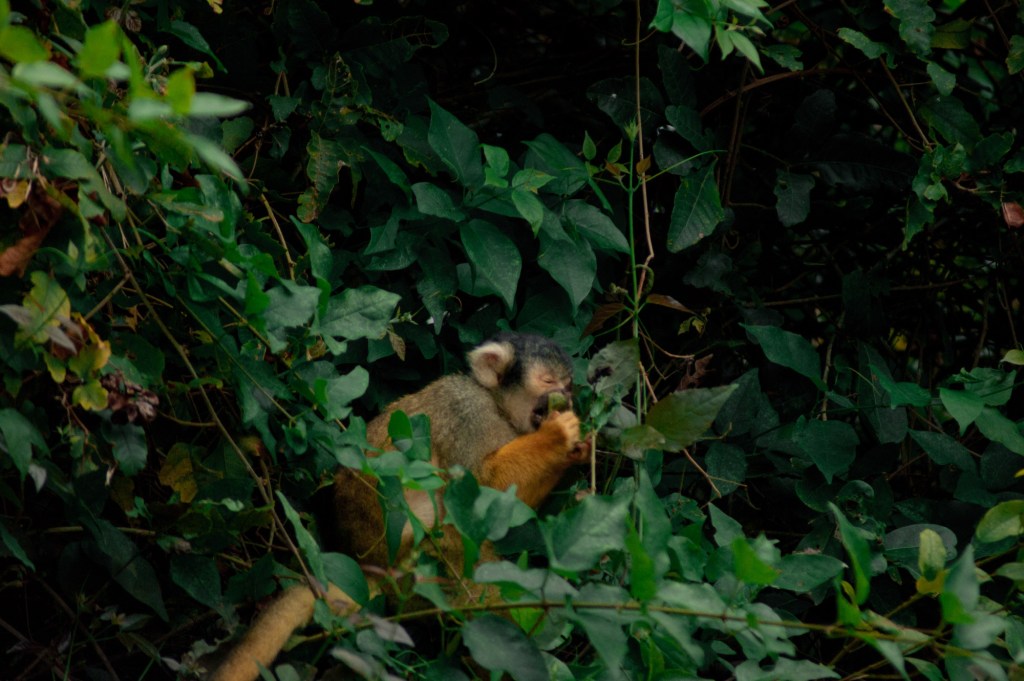
Our second day in the pampas consisted of a sunrise boat ride followed by a spot of piranha fishing. We gave our catches to the chef and spend an unsuccessful hour traipsing through the pampas looking for anacondas.
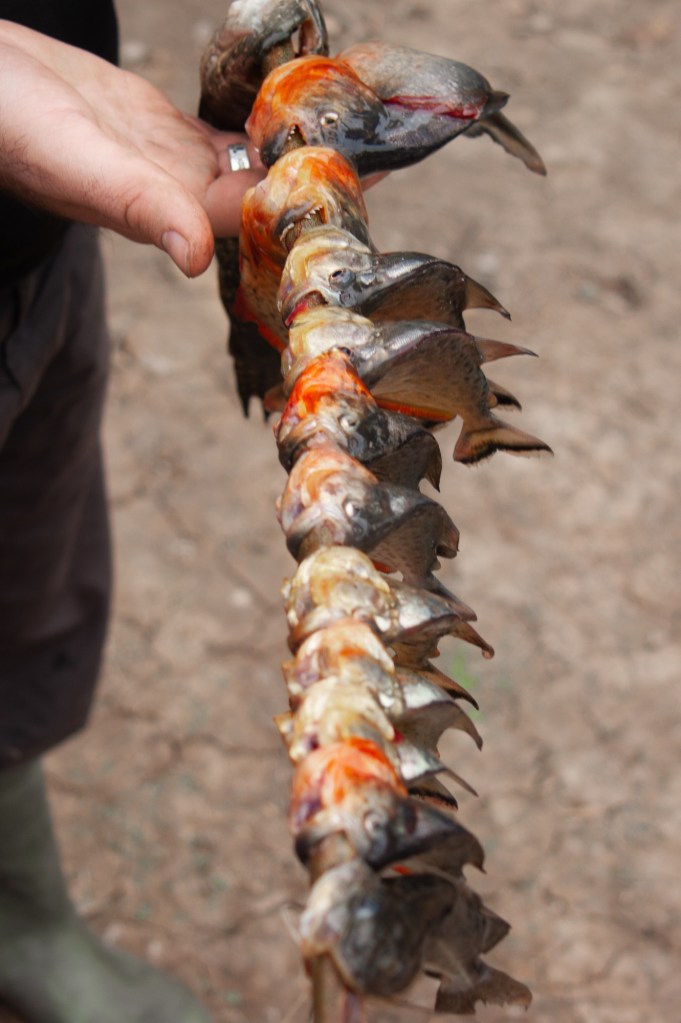
Piranhas do not have a lot of meat on them but they made a nice and crunchy side to our lunch.
After lunch it was back by boat and car to Rurrenabaque to get another boat to the jungle.
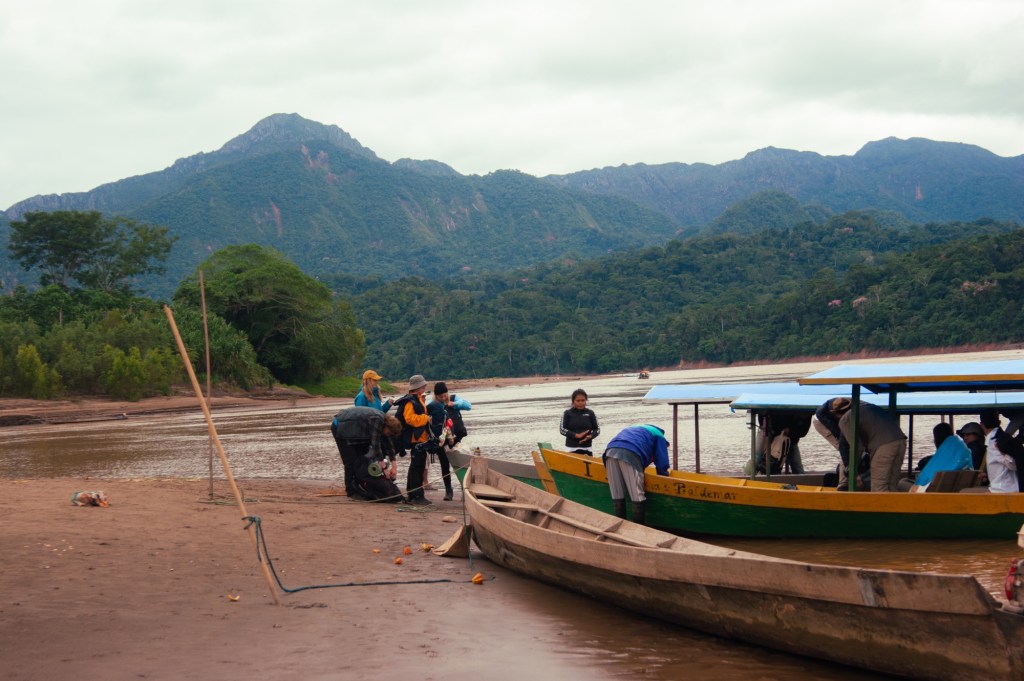
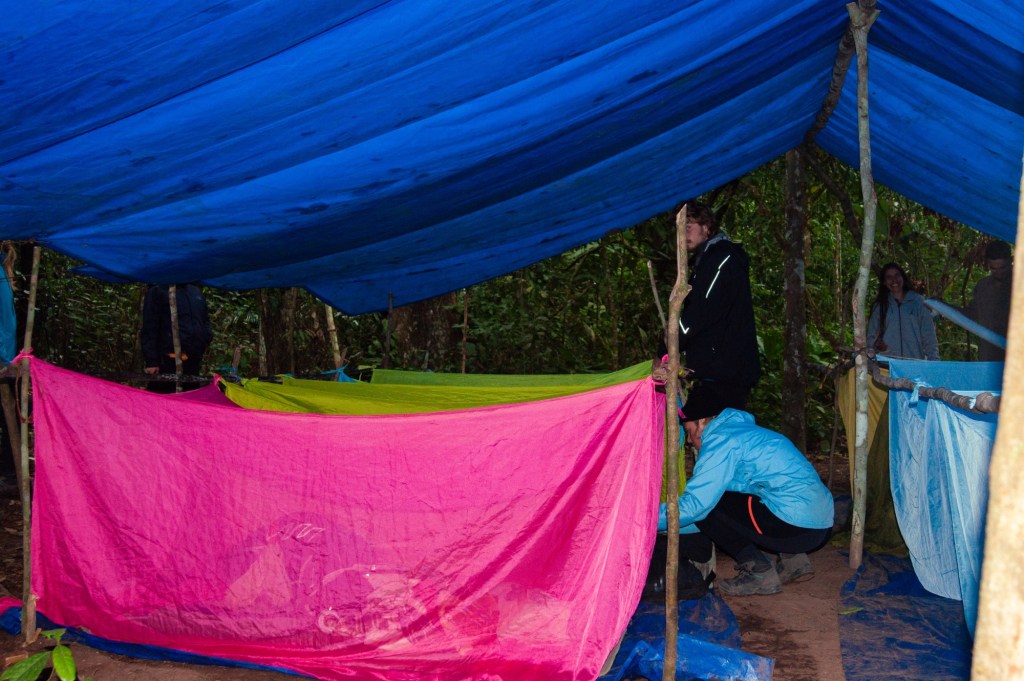
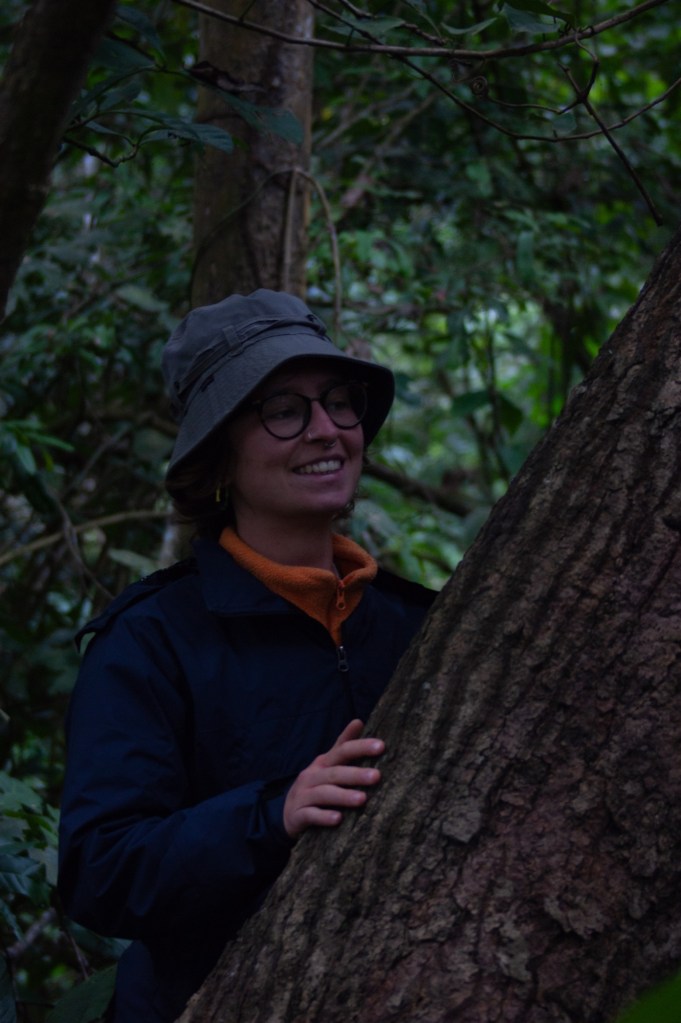
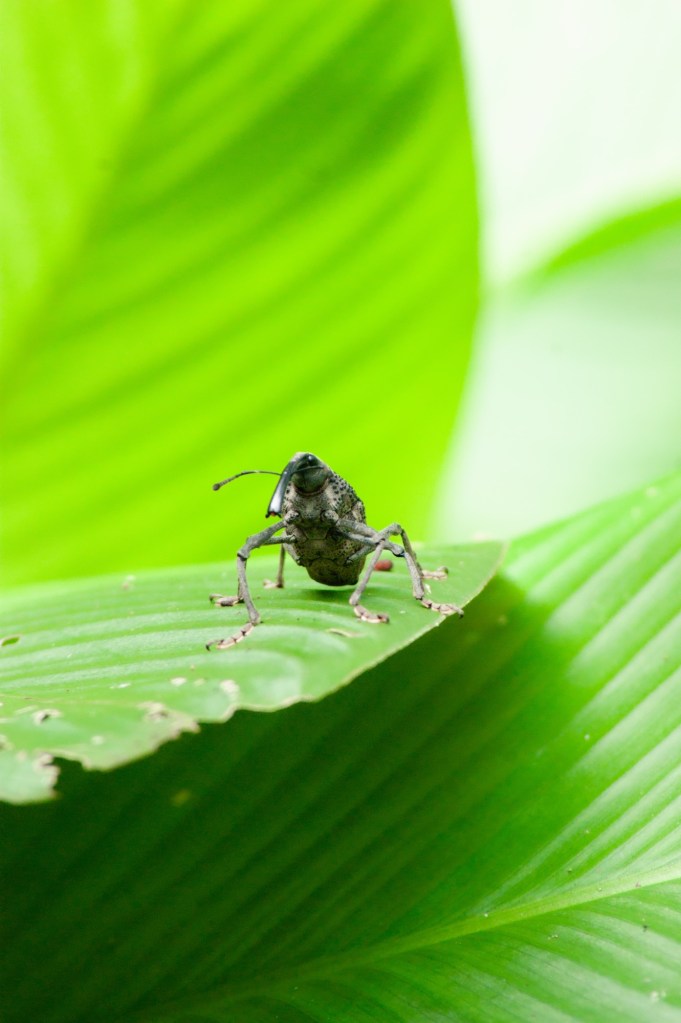
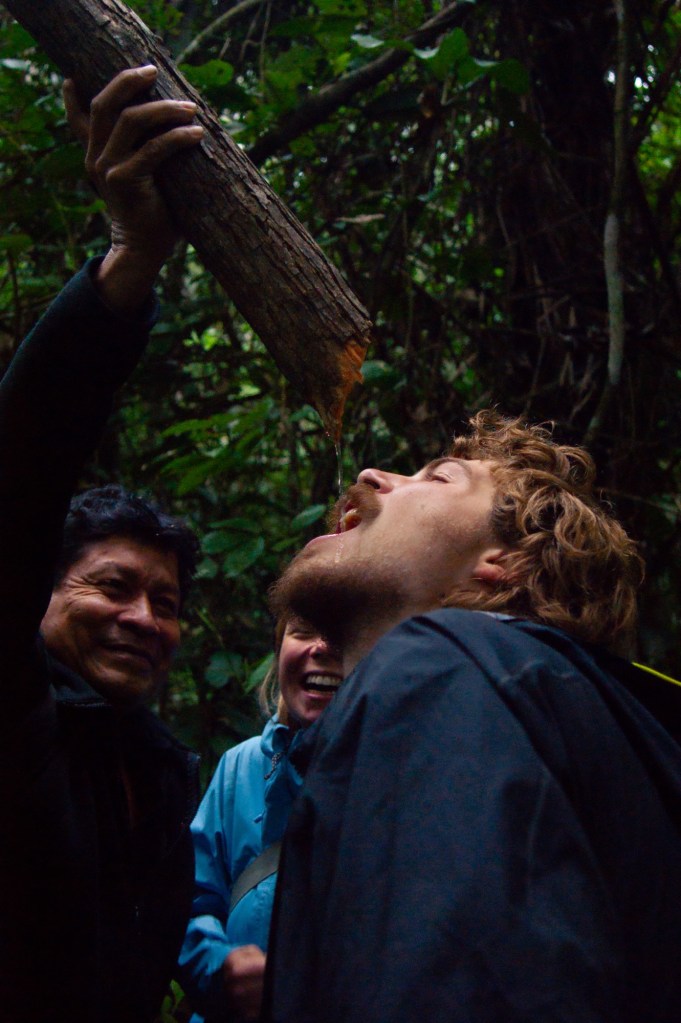
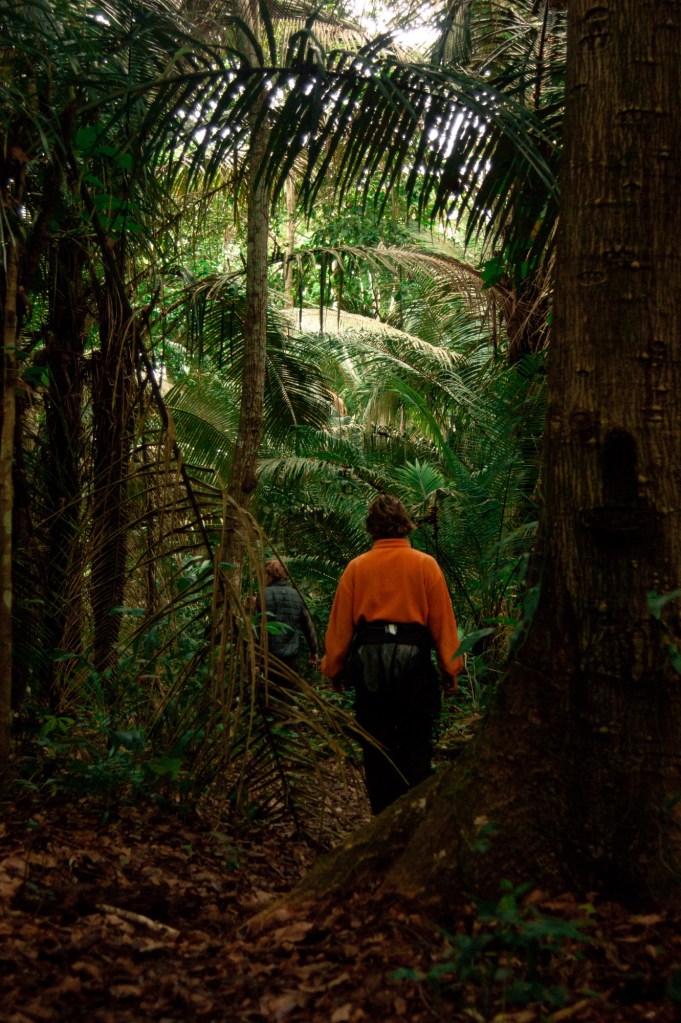
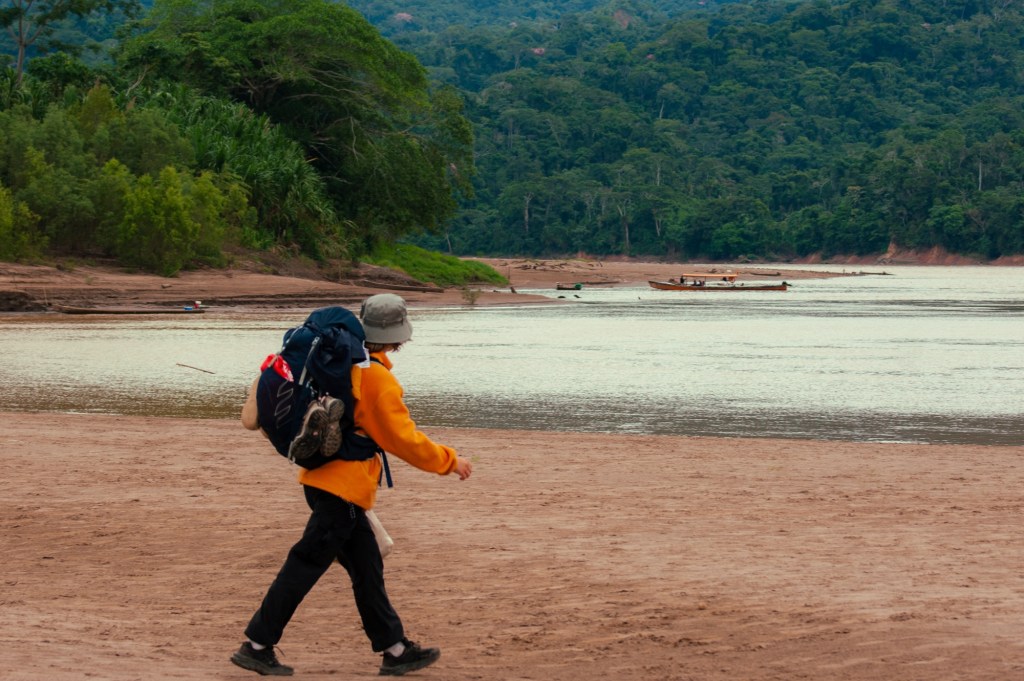
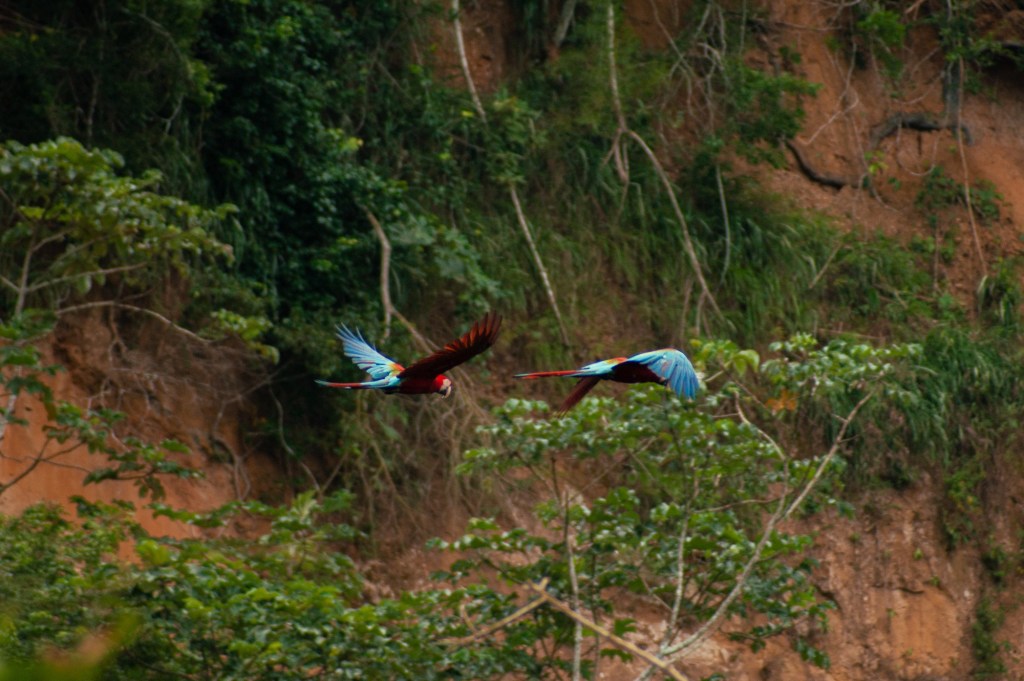
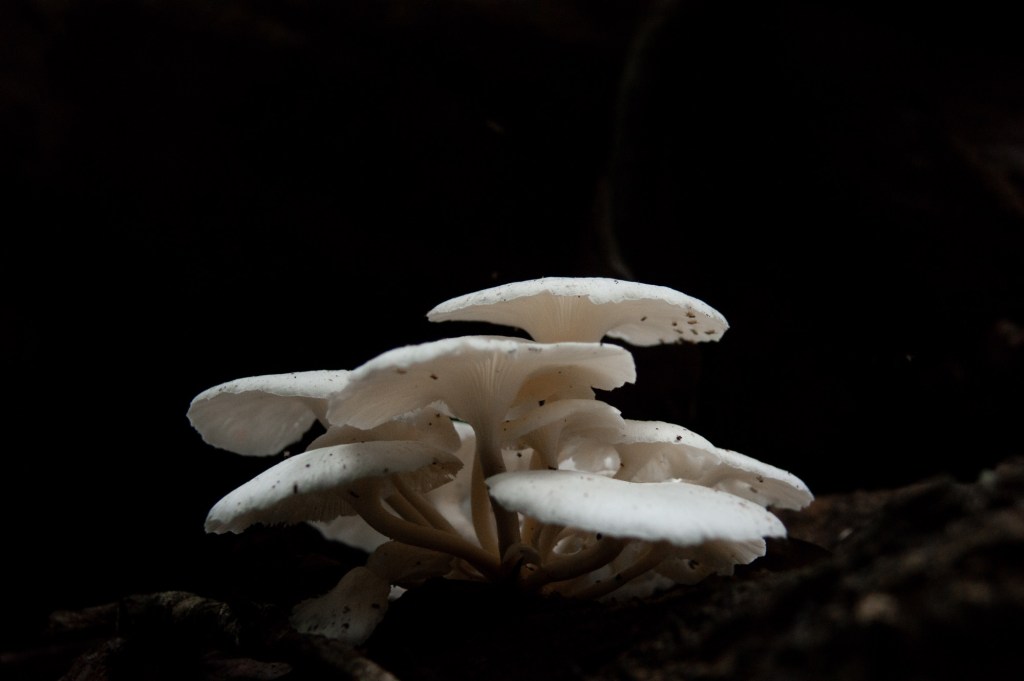
Previously, I’d have assumed the Amazon to be a pretty warm place however, it seemed we had arrived on the two cold days of the year. This did reduce the wildlife we saw but also the mosquito population – count your blessings, I suppose. Our guide Juan took us on numerous walks through different parts of the jungle, showing us trees growing within other trees, parrots, woodpeckers, cappuccino monkeys, and lots of funky mushrooms. Whilst the jungle was most certainly not warm enough to sleep under only a tarp (it was a very cold night), the experience was pretty cool not least as we finished up on the second day making chocolate from cocoa pods.
Heading South
Safely returned to Rurrenabaque, my friend and I took two consecutive night buses, firstly to La Paz and then on to Sucre to catch up with two other friends. As a group of four, we explored Sucre and then Potosi, a mining town further south that was one of the most exploited areas by the Spanish. Within 150 years, 8 million Latin Americans died in the Potosi mines, mining for silver. The area was socially and economically devastated.
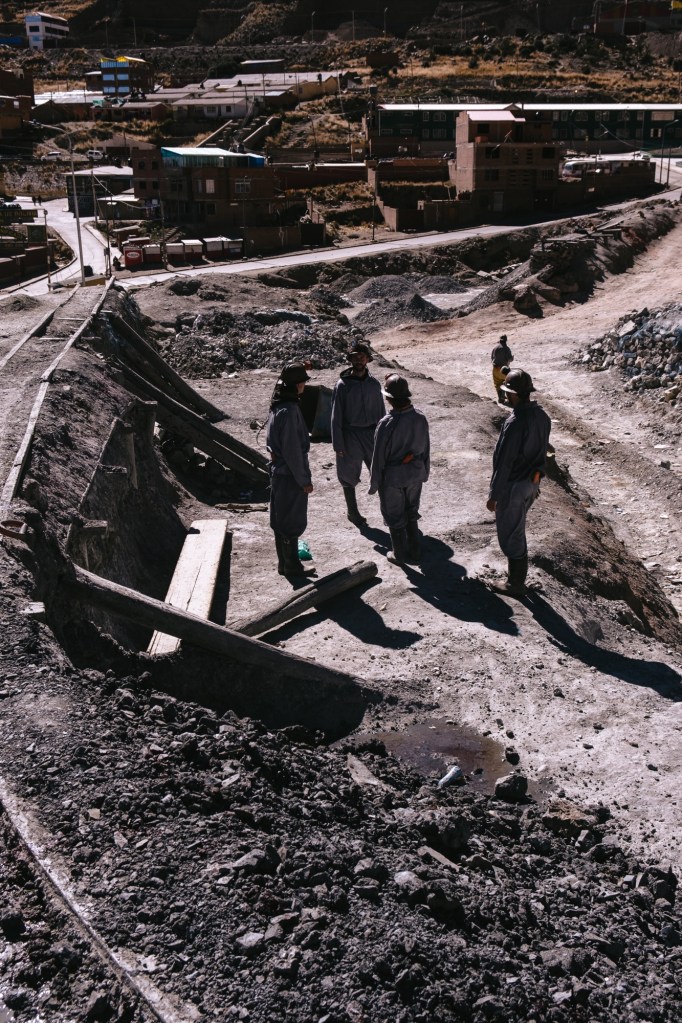
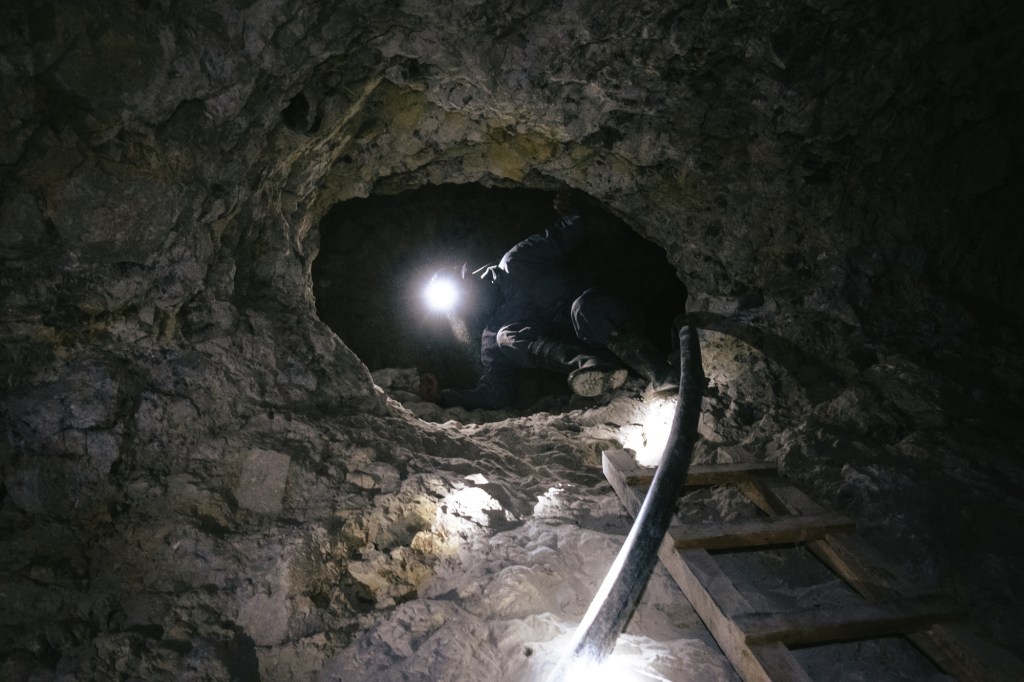
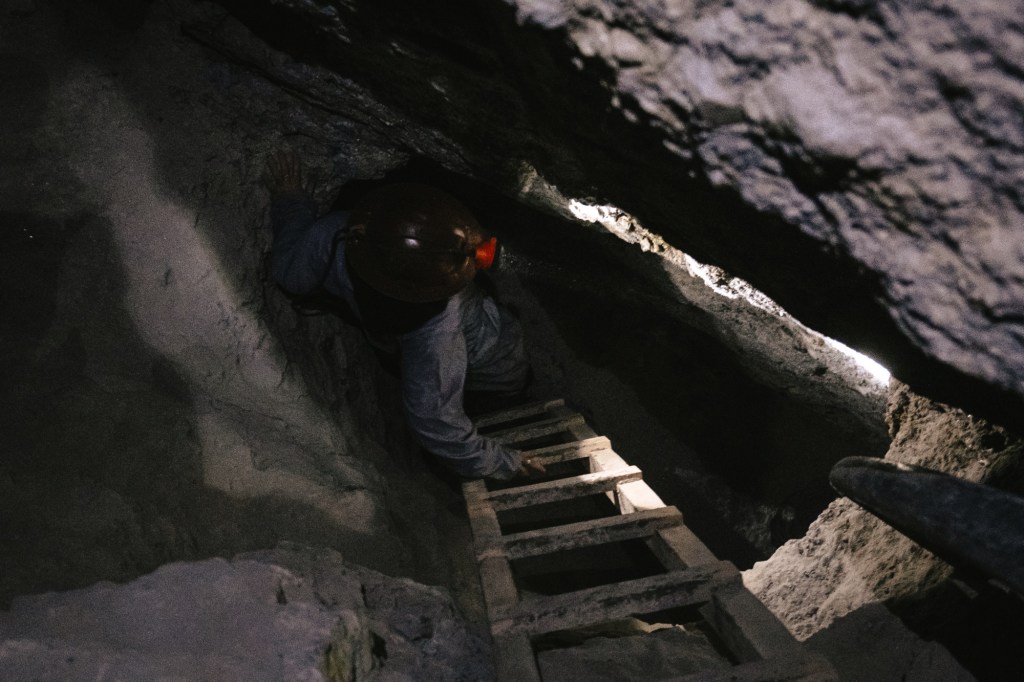
The mines are still in use today and tourist agencies take groups to see them. We were unsure how we felt about going to see the active mines, but eventually decided to take a tour. We ended up going on a Sunday meaning no one was working but typically when tourists visit during the working week they are expected to bring small gifts for the miners. The tour was harrowing as we climbed up and down steep rickety ladders that weren’t fixed to the walls. It was incredibly dusty and claustrophobic with sulphur covering the walls. Our guide explained miners are not provided safety equipment and have a life expectancy of 45 years. After a few hours we were relieved to return to the surface, aware we had only seen the parts that were deemed safe enough for tourists.
Uyuni and the Salt Flats
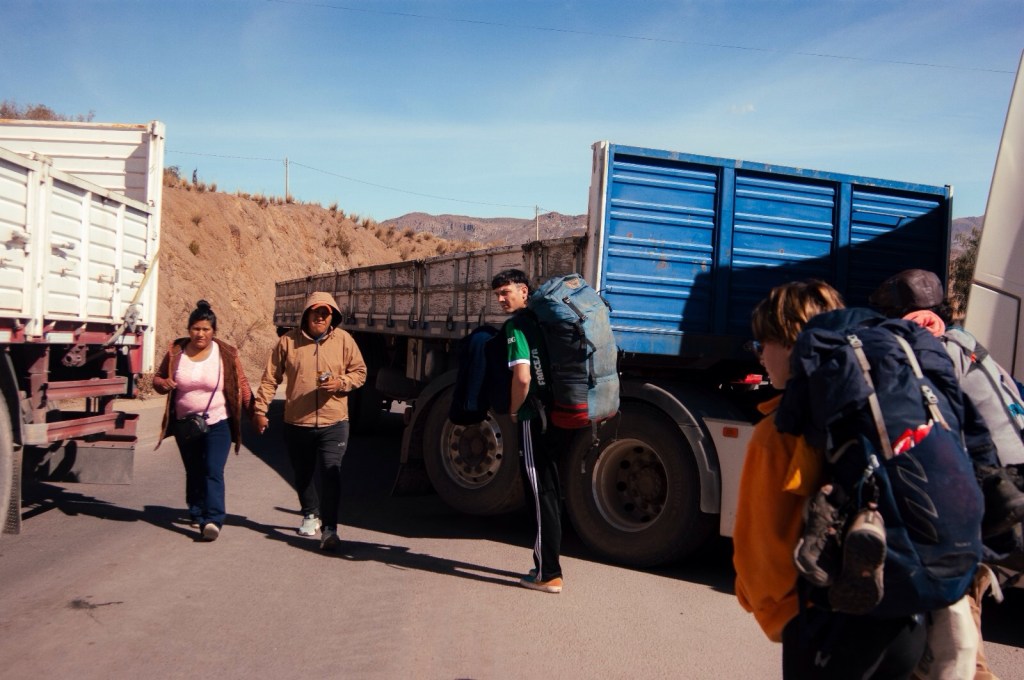
On the morning we had planned on leaving Potosi to head to Uyuni, a town an hour or so from the salt flats, we were sat on the street outside a cafe when we saw someone from our tour in the jungle. We went over to say hello and he asked us if we had heard the news. No, we hadn’t. Apparently Bolivian truck drivers had declared a 48 hour national blockade over fuel costs and no one was getting out of any cities. We headed to the bus terminal anyway and manage to find a bus that was driving to the blockade which we could walk across and find another bus on the other side which would take us to Uyuni – relief.
Uyuni was a pretty quiet and incredibly dusty town where I had the best empanada of my trip so far. Sadly, I could not retrace my steps and find the same street corner again.
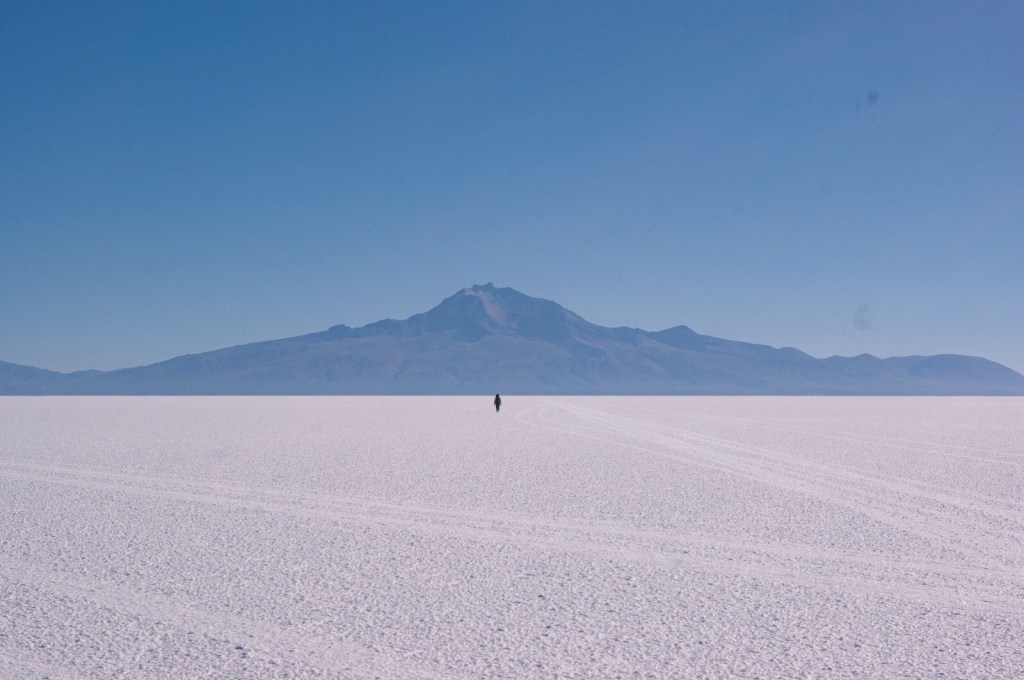
Instead of booking a tour to take us to see the salt flats, we had another plan: to walk across them.
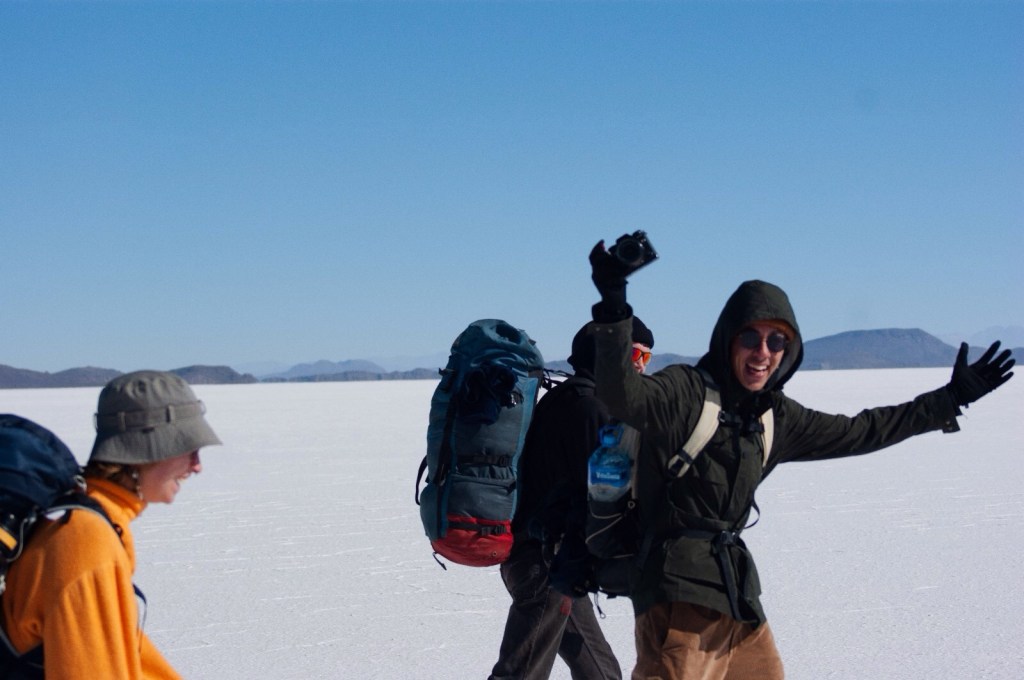
Having found one blog about hiking the salt flats, we deemed it possible and began asking around Uyuni how we could get there. Initially we planned on started at the north and walking to the south however no one could provide us with an answer of how to get there. We changed course and began asking how to get to Chuvica, the village to the south of the flats. This was more promising although we were first offered a lift with a tour agency for $140 each and then found out we had missed the only bus that day meaning we would have to spend another day waiting if we wanted to go by bus. Fate intervened: a taxi driver by the name of Lucio saw us on the side of the road, looking despairing and pulled over.
Did we want a lift somewhere?
Not right now but we are trying to get to Chuvica for tonight.
No problem, he could take us at 4pm today for 500 bolivianos (around $70).
Perfect.
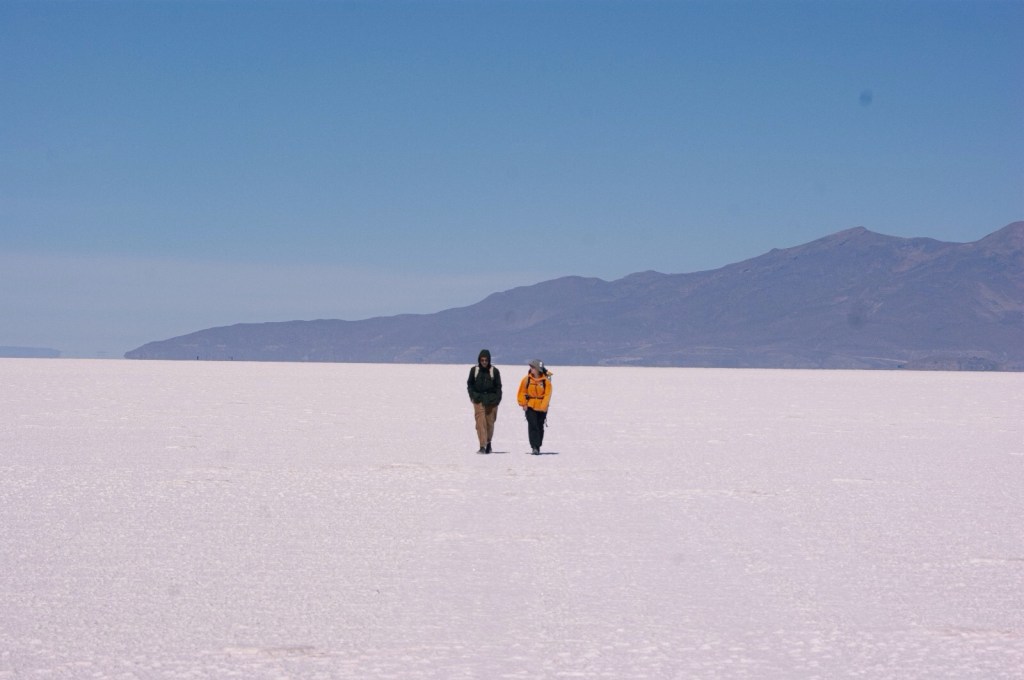
With transport arranged, we spent the afternoon buying food and a compass (which we later learnt wouldn’t work due to the lithium in the ground) before heading back to our hostel to rent sleeping bags. Two of the four of us got back at 3:30pm to find the hostel had just rented out their last sleeping bags to a tour company. Stressed, we called the other two: go and find somewhere to rent sleeping bags as fast as you can! Thankfully, a tour agency was able to rent them some but they weren’t in the shop so did they mind waiting for someone to bring them over? In a completely unexplained turn of events, as the sleeping bags arrived at the shop so did Lucio and brought the two guys and the sleeping bags back to the hostel to collect the rest of the stuff and us two.
Besides a minor car crash severely damaging Lucio’s paint job, the drive to Chuvica went smoothly. Lucio even hooked us up with a friend of his who owned a hotel there – a salt hotel, meaning the walls are salt bricks and the floor is just loose grains of salt, almost like fine gravel.
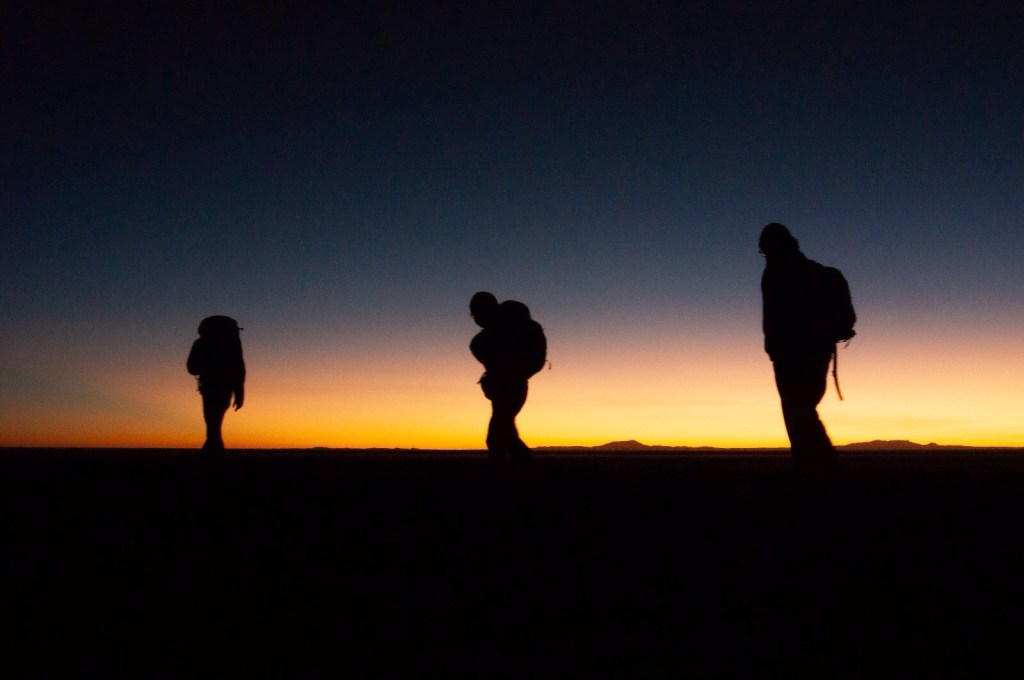
Our plan was very simple: walk 80km in a straight line across the flattest place on earth. We knew there was an island, Incahuasi, directly in the middle where we were hoping to sleep. Other than that – well that was pretty much the whole plan.
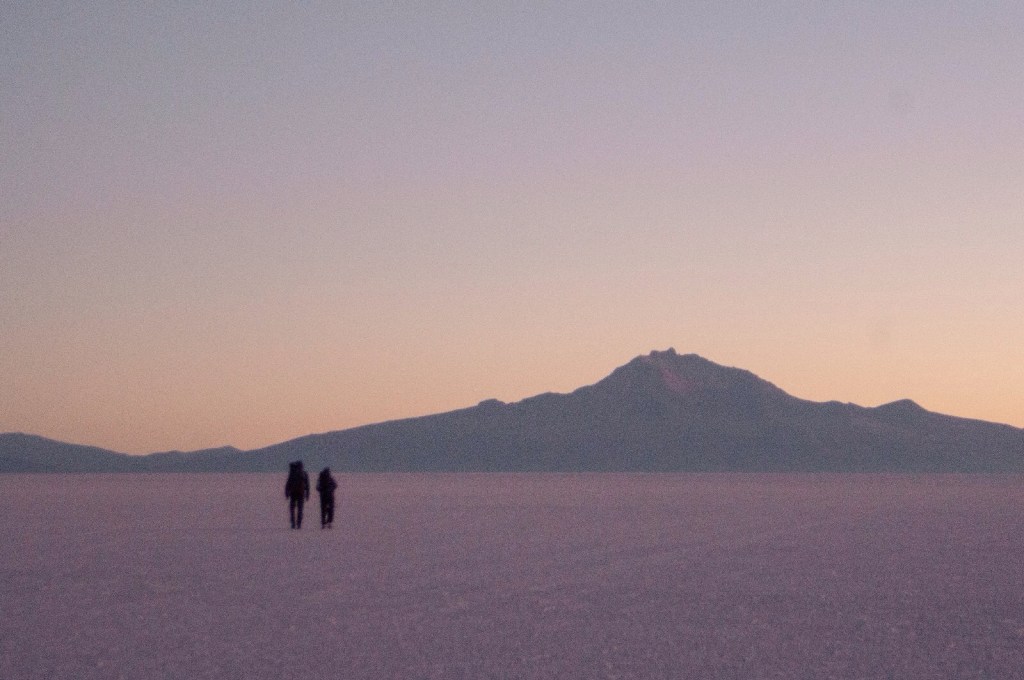
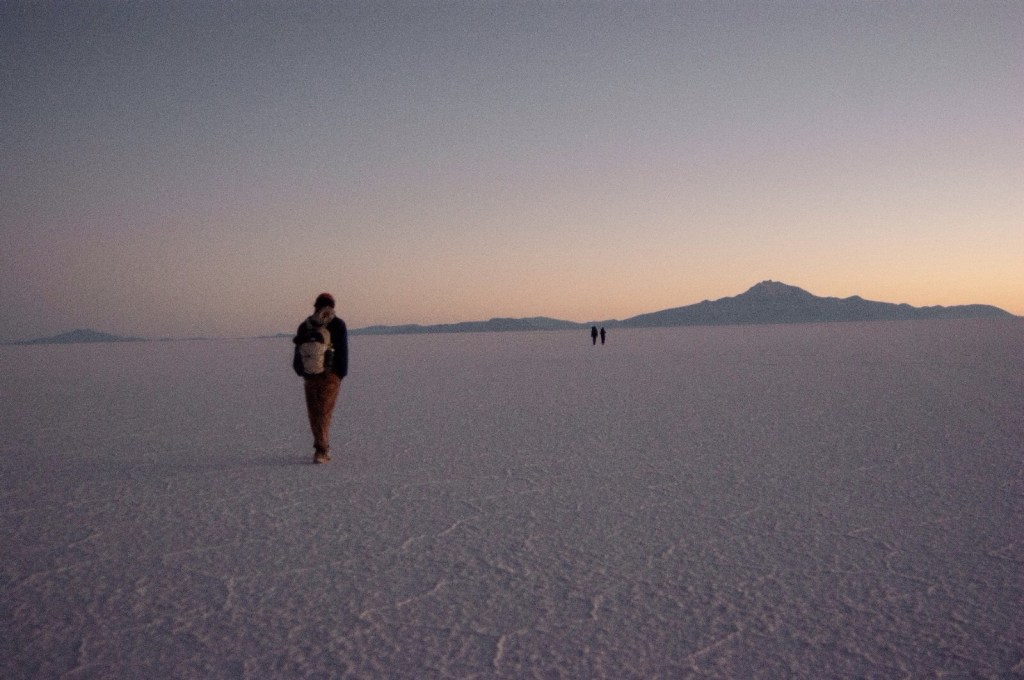
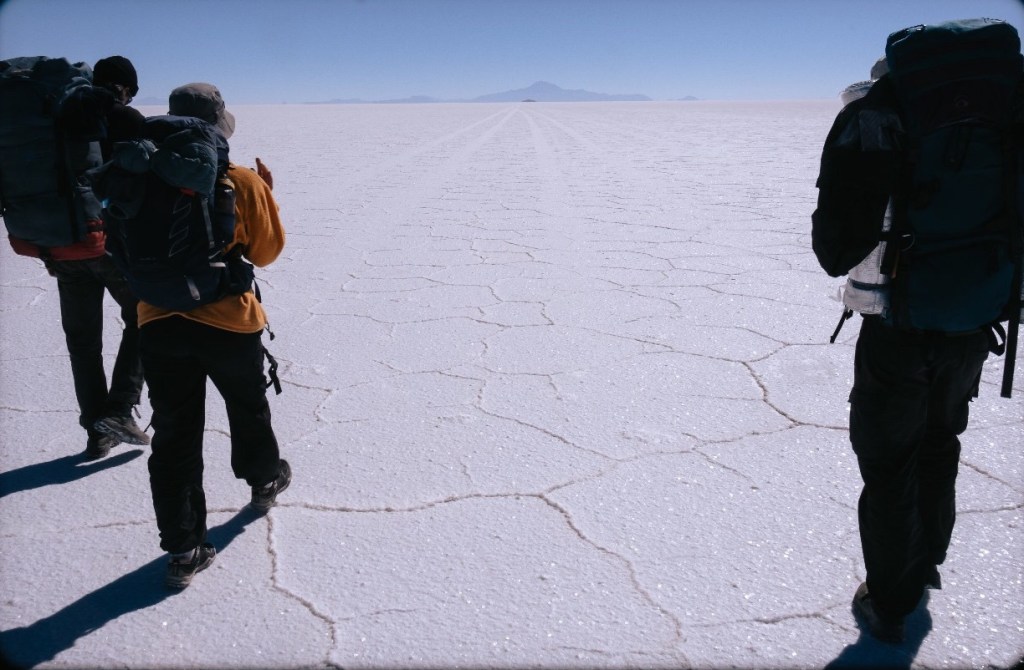
The visability across the flats was pretty mind boggling. At 6am on the first morning, before we had even set foot on salt we could see the volcano 80km away that marked our finishing point. At this point there was pretty much nothing else to do but start walking. Miles and miles of salt stretched out in every direction with only a few distant mountains or other islands against which we could track our progress.
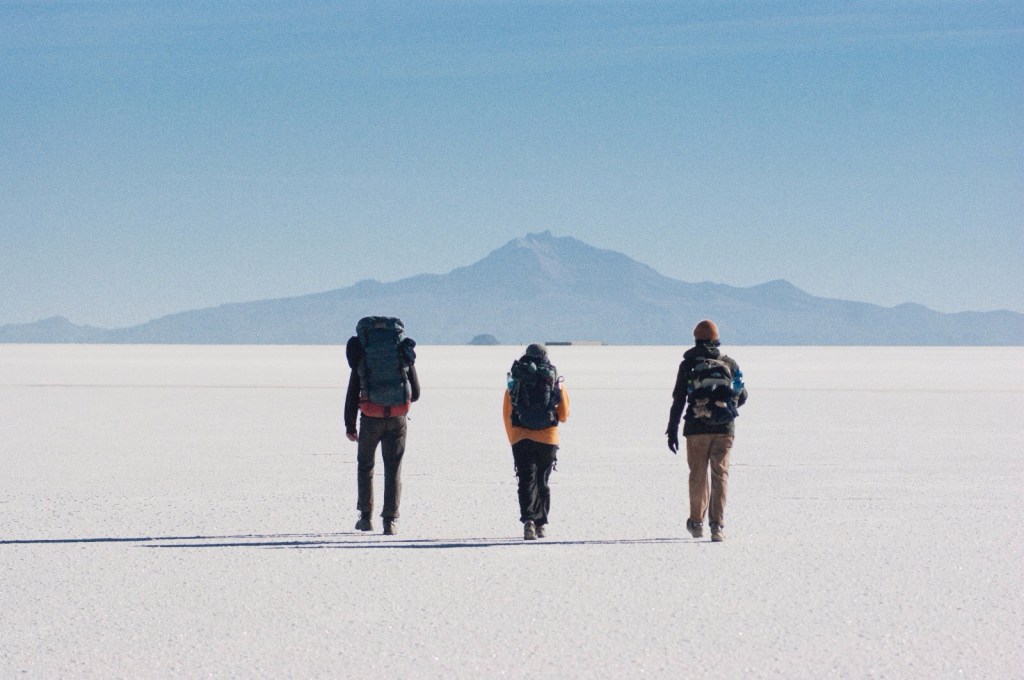
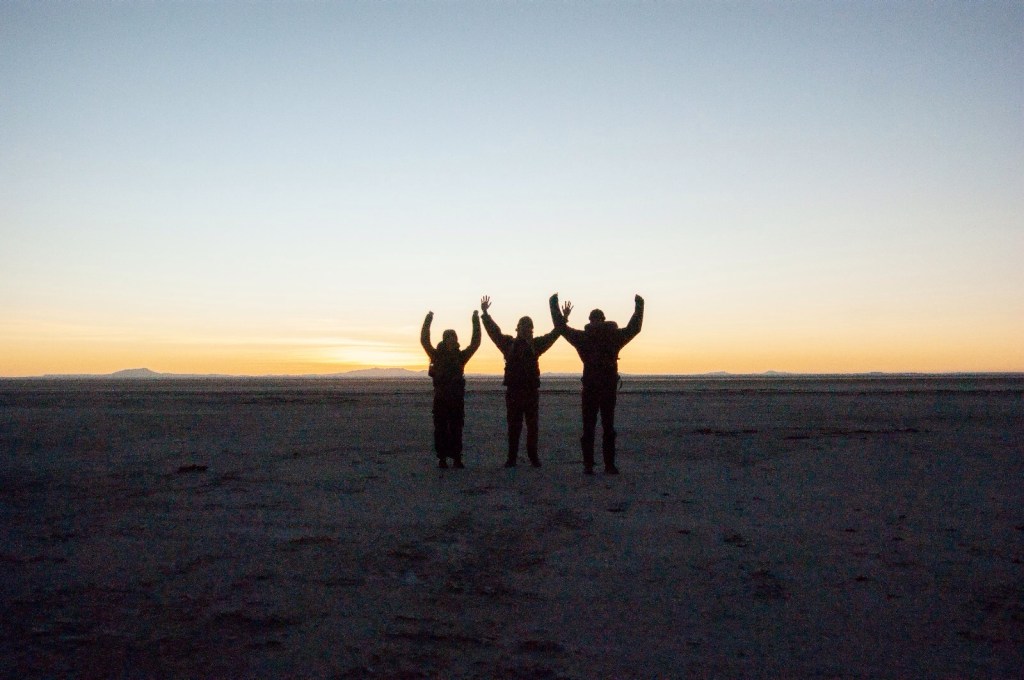
Although the vast expanse of salt drove us slightly crazy, it made for insanely beautiful sunrises and sunsets, helping us cope with the cold.
On the first day, we took the morning slowly, breaking every 5km to sit down and eat something. After a few hours of walking, we notice an unexplained structure on the horizon. We hypothesised for around 10km about what it could possibly be – but none of us guessed a labyrinth built out of salt with surrounding picnic tables (also built out of salt).
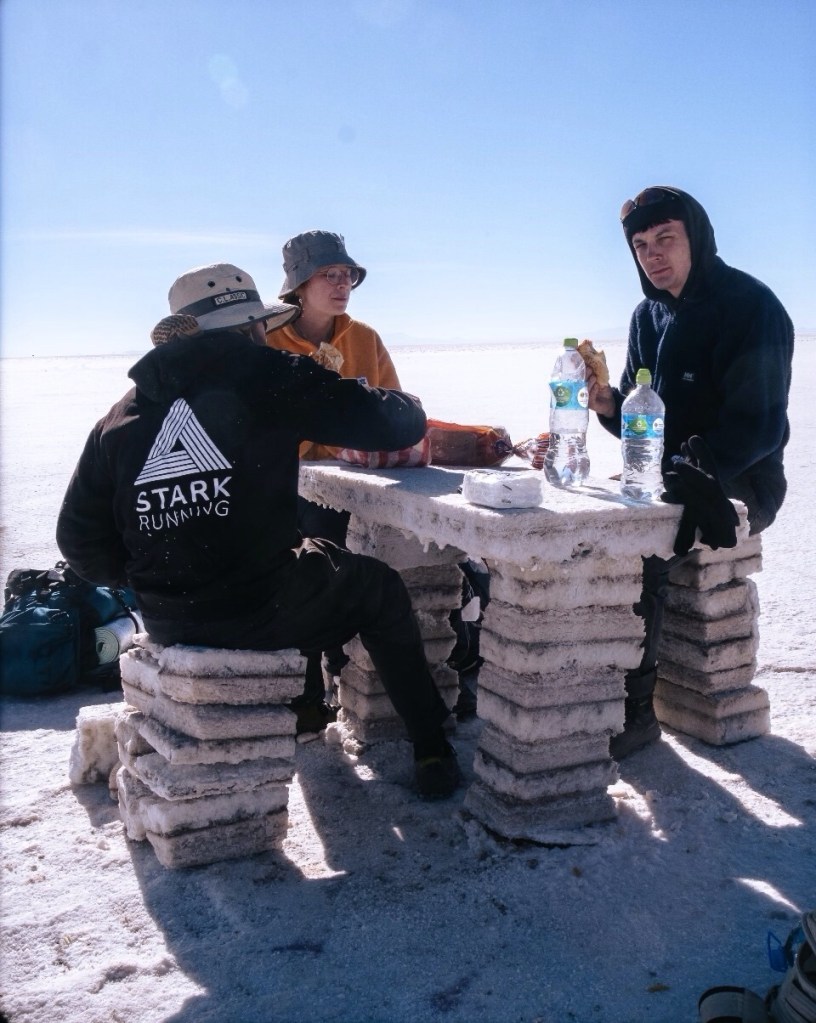
After the labyrinth nothing else disrupted the expanse of salt over the next two days. On the first day, we occasionally looked up from the floor to check what size the island was in the distance. At 30km we had a lunch break – avocado and cheese sandwiches (with plenty of salt of course)!
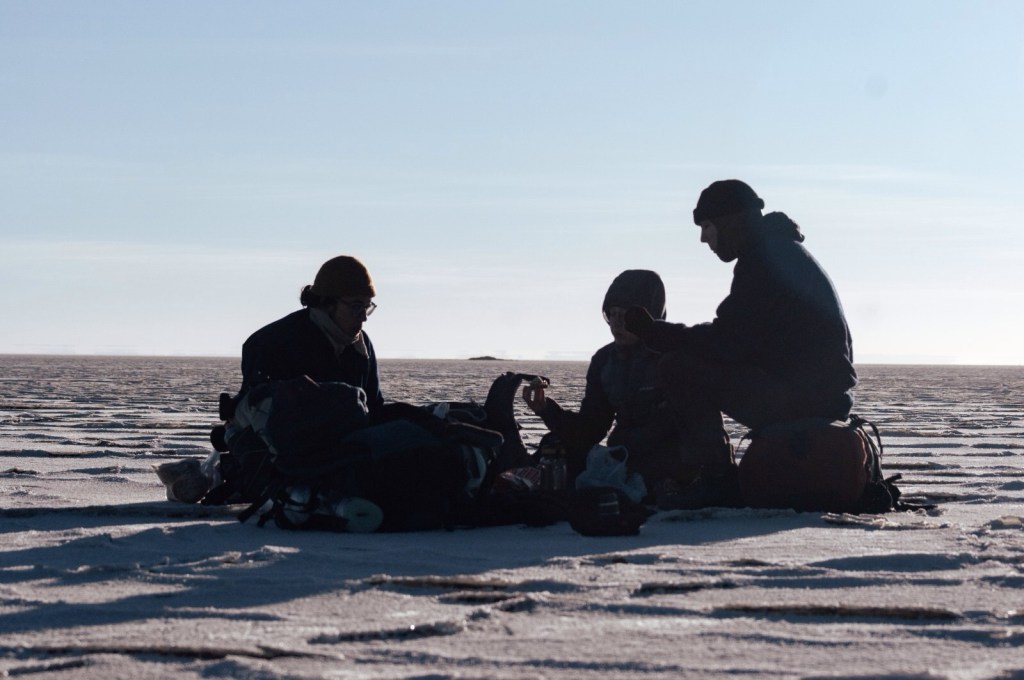
The first 5km after lunch felt pretty good however, then we took a fatal water break at 35km. Afterwards my previously somewhat recovered sprained ankle was suddenly somewhat unrecovered and really quite painful. The island still seemed far away and everything hurt for the final stretch.
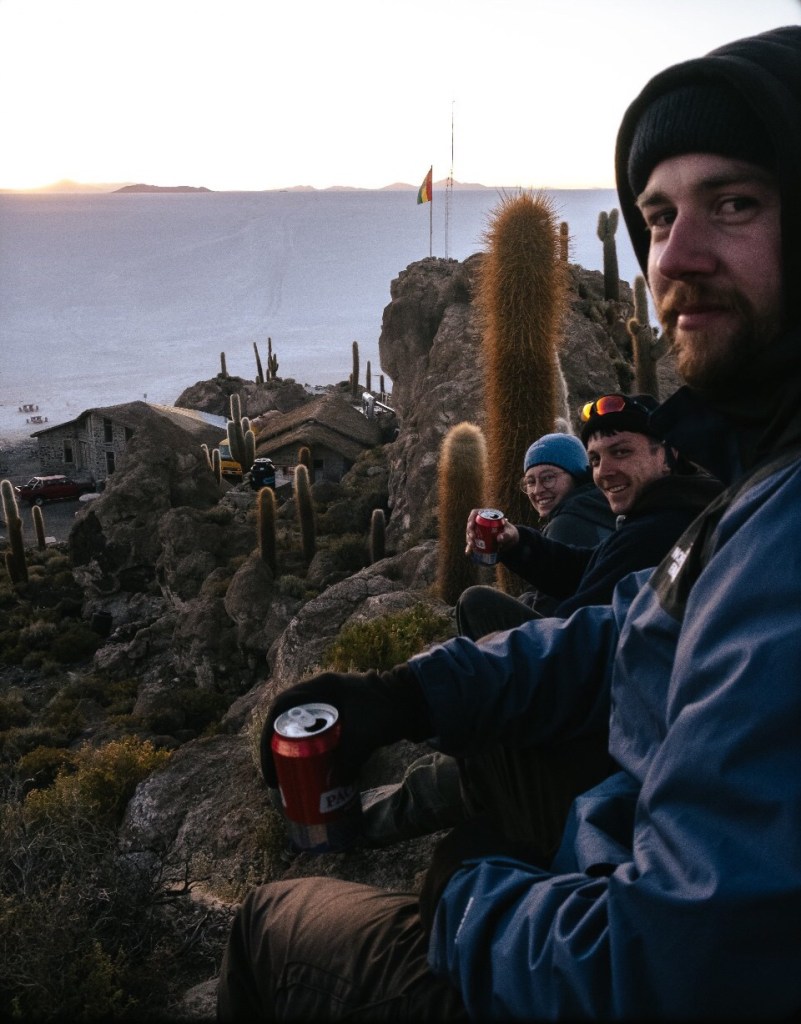
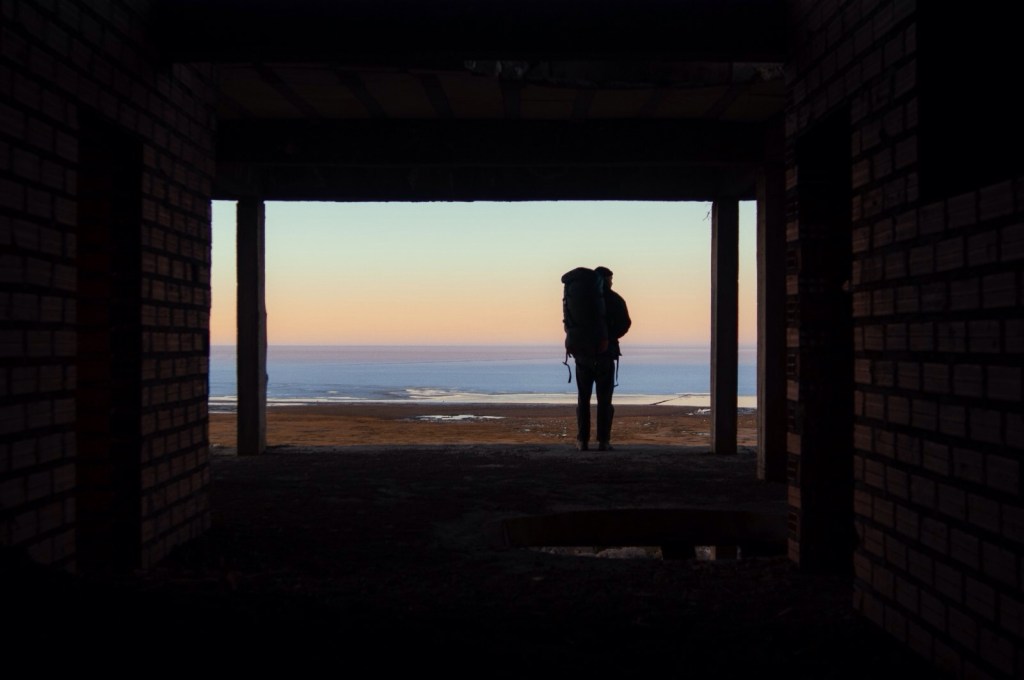
When we did at last reach the island, we were incredibly relieved to find a small shop selling coffee and snacks. The owner would later make us dinner for 15 bolivianos. We each paid the 30 bob entrance fee to the island and were told we could sleep in a derelict construction site for free. With four walls and a roof, it was perfect although chilly.
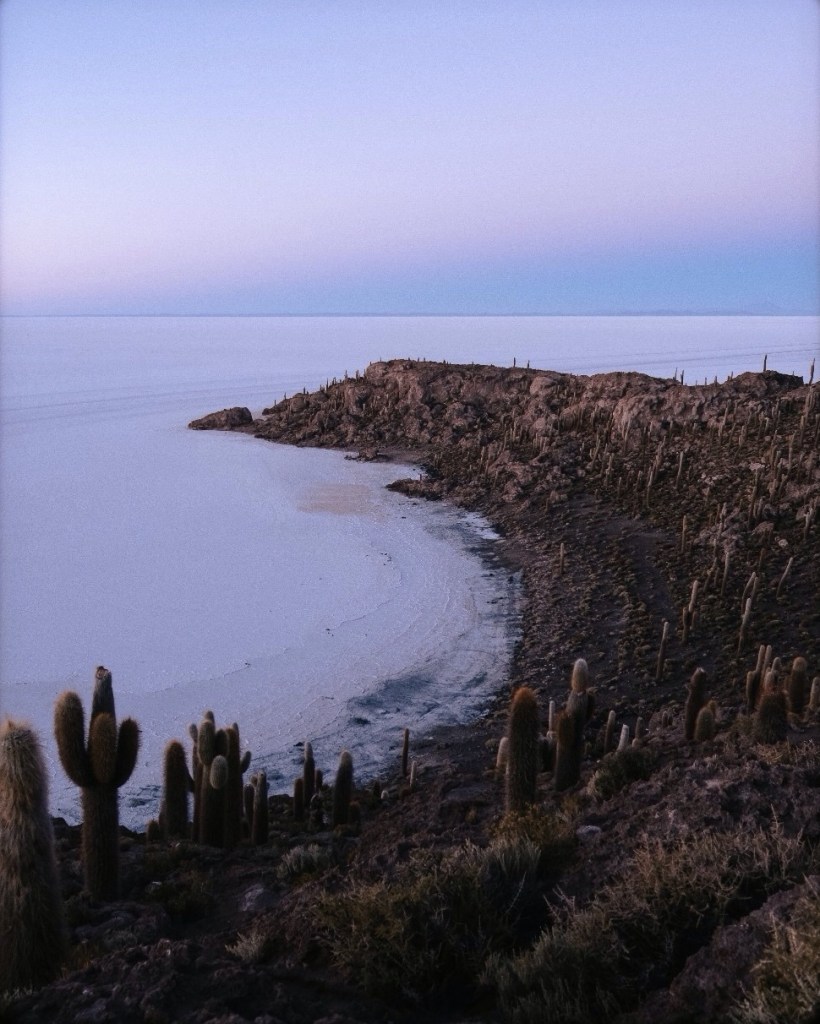
The second day began with the realisation that my ankle was very much not in optimal condition. Stubbornly (and stupidly), I decided to start walking and see how I felt. Bad was the answer. However, we started the second day off with longer splits, breaking at 10km and then again at 20km by which point I was over halfway and had to finish.
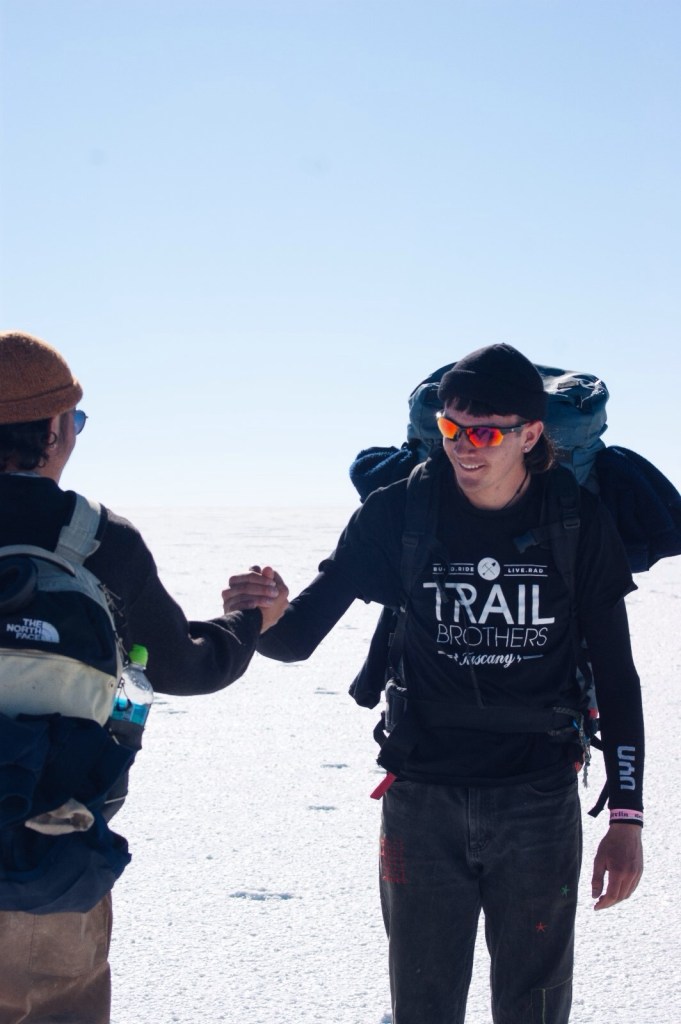
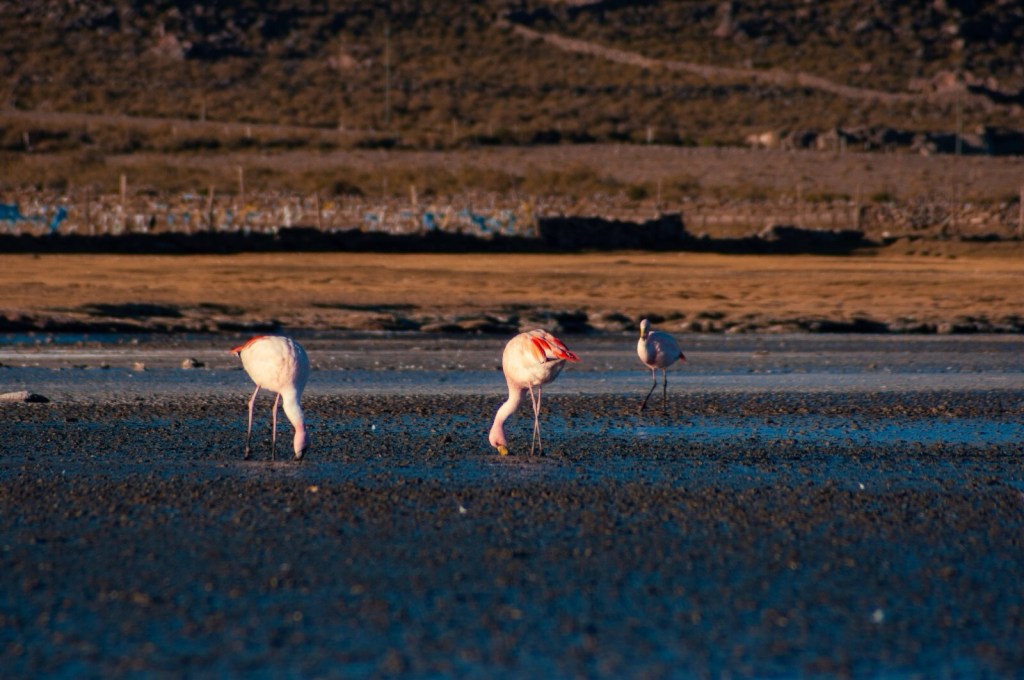
We followed up with a long 7km split and then another 5, at which point we finally had lunch with under 10km left. Morale picked up significantly after lunch and stayed high until the end. At around 36km my ankle became extremely painful and hard to walk on. Kindly the others slowed down to my limping pace and we finally saw the end of the salt. As we reach Coqueza, the village directly north of the flats, there was a flamboyance of flamingoes hanging around.
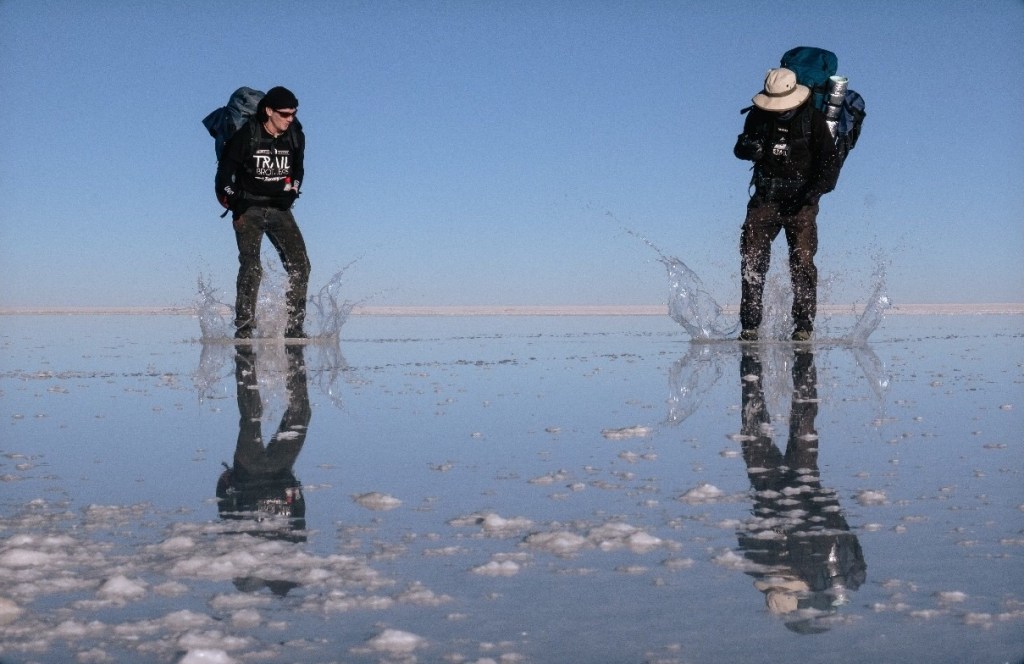
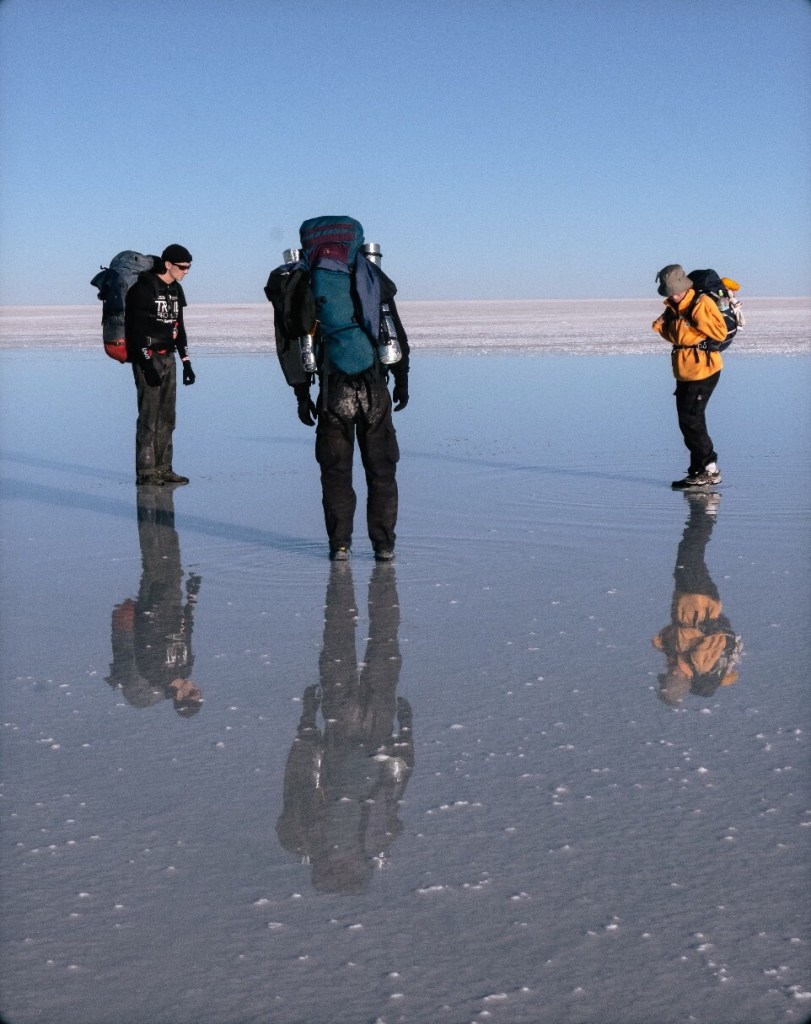
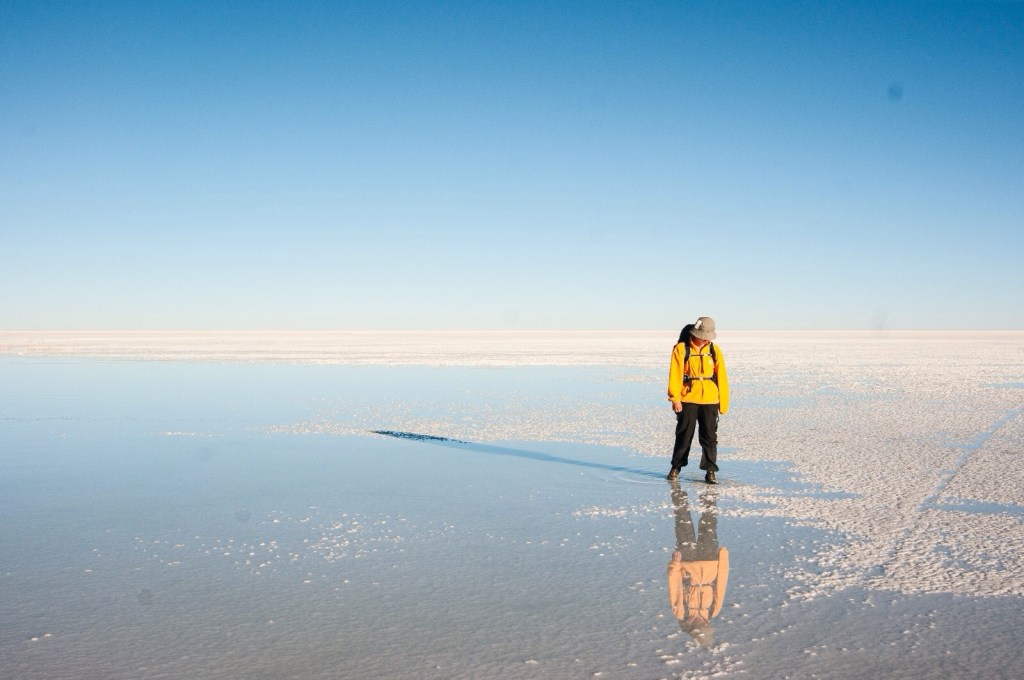
Relieved, we dragged ourself through the town which appeared to be entirely deserted. Eventually we found a hostel with a woman running it. She said we could stay but she needed to fix some beds for us. Grateful we had caught her before she headed off for the night, we collapsed outside. A few moments later, a white Nissan pulled up in this otherwise deserted town and none other than Lucio appeared! By complete chance he was meeting another group of tourists in the village that evening. We were pleased to see him again and told him all about our walk.
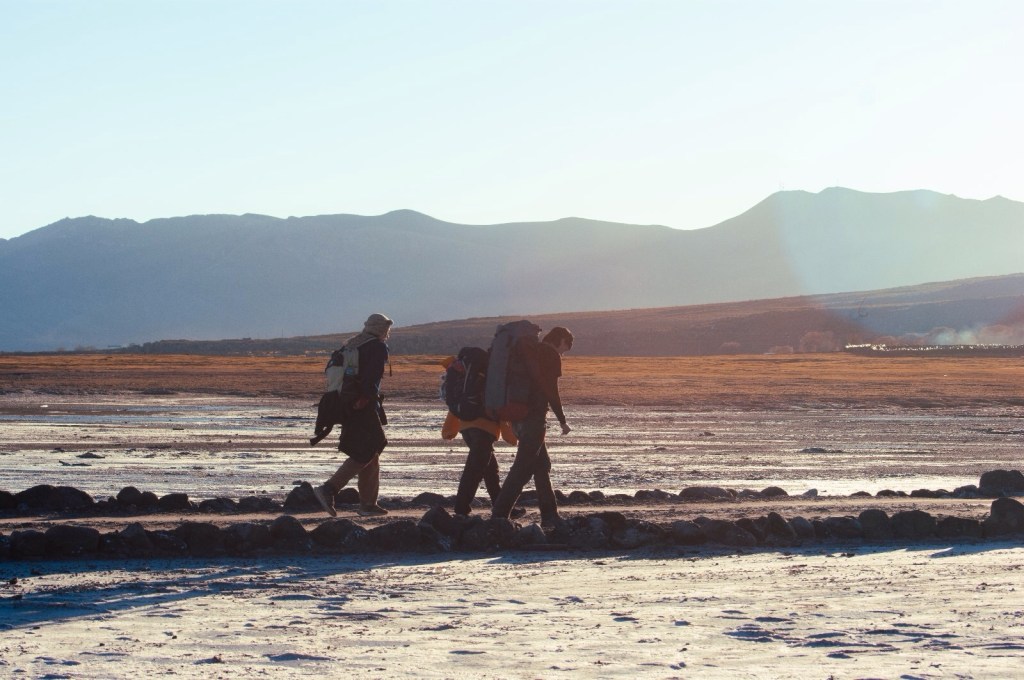
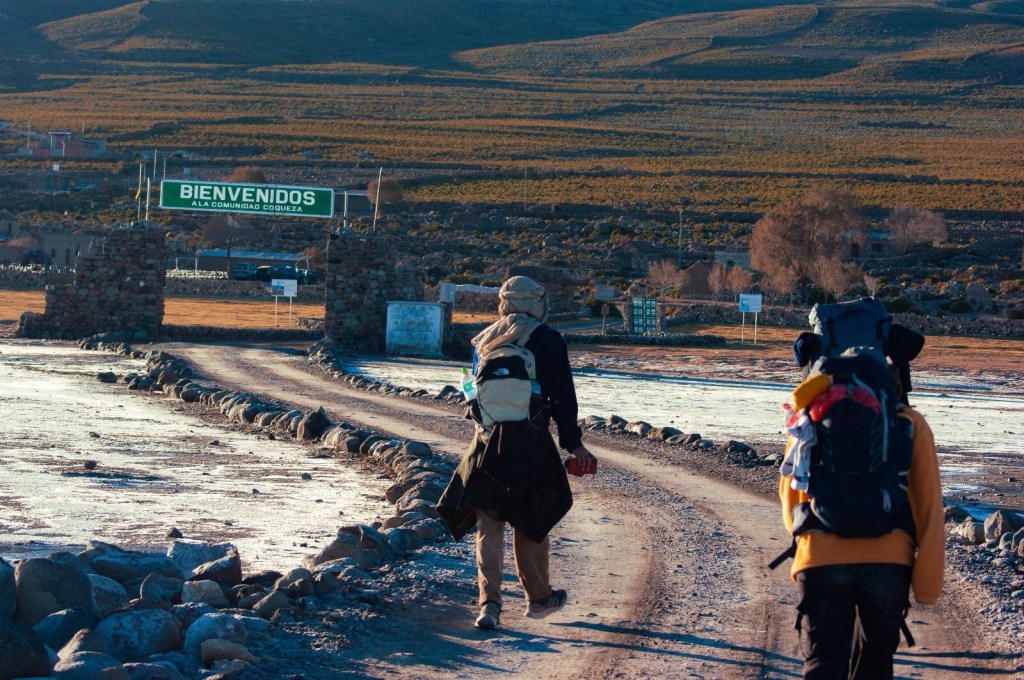
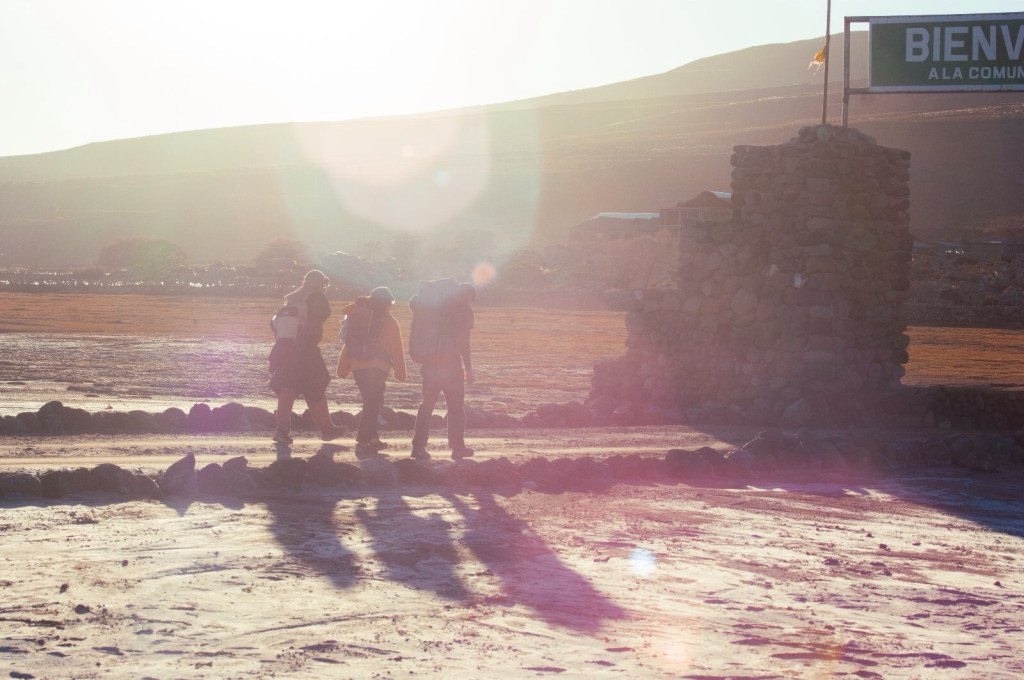
Dinner and a well earned beer later, we collapsed into beds that were much warmer than those of the night before. We were asleep immediately.
 A Year in Nepal