Having completed Salkantay and Ausangate within two weeks relatively unscathed, an uncovered drain managed to twist my ankle on my penultimate day in Cusco.
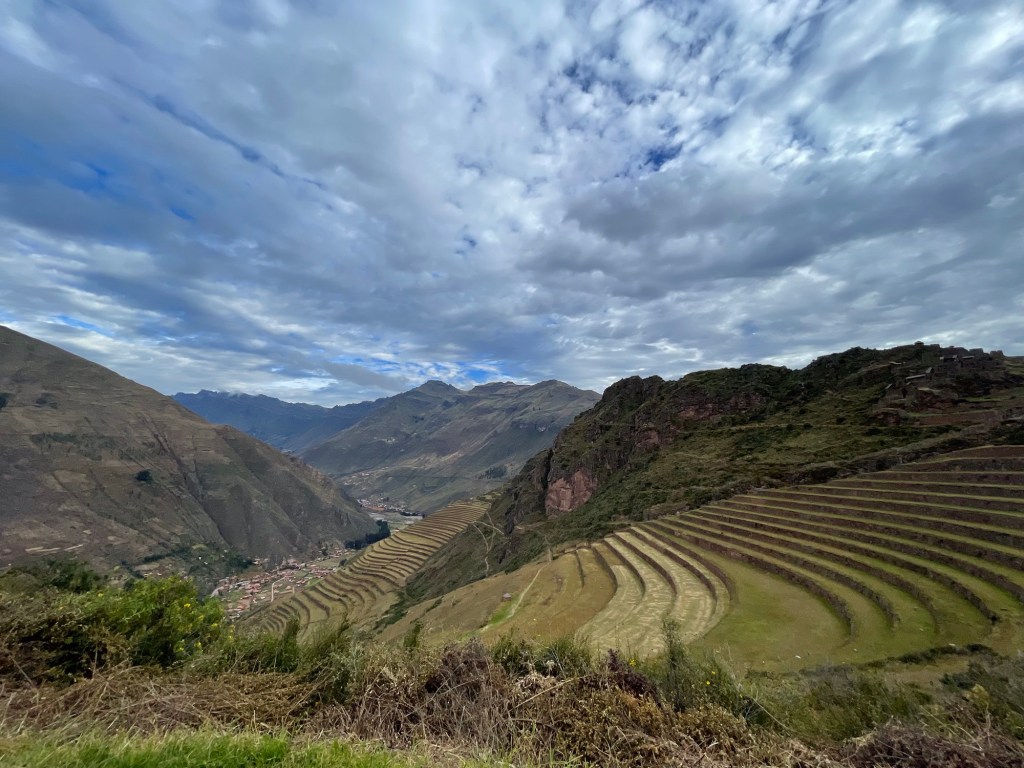
With more hiking off the cards for the moment, I spent a few nights in Pisac, a small village in the Sacred Valley near Cusco. Pisac was a strange place full of hippies, bougie cafes, and some ruins on top of the hill (so maybe a little more hiking). Whilst the change of pace from Cusco was nice, I didn’t quite discover the village’s pull that keeps tourists there for weeks on end.
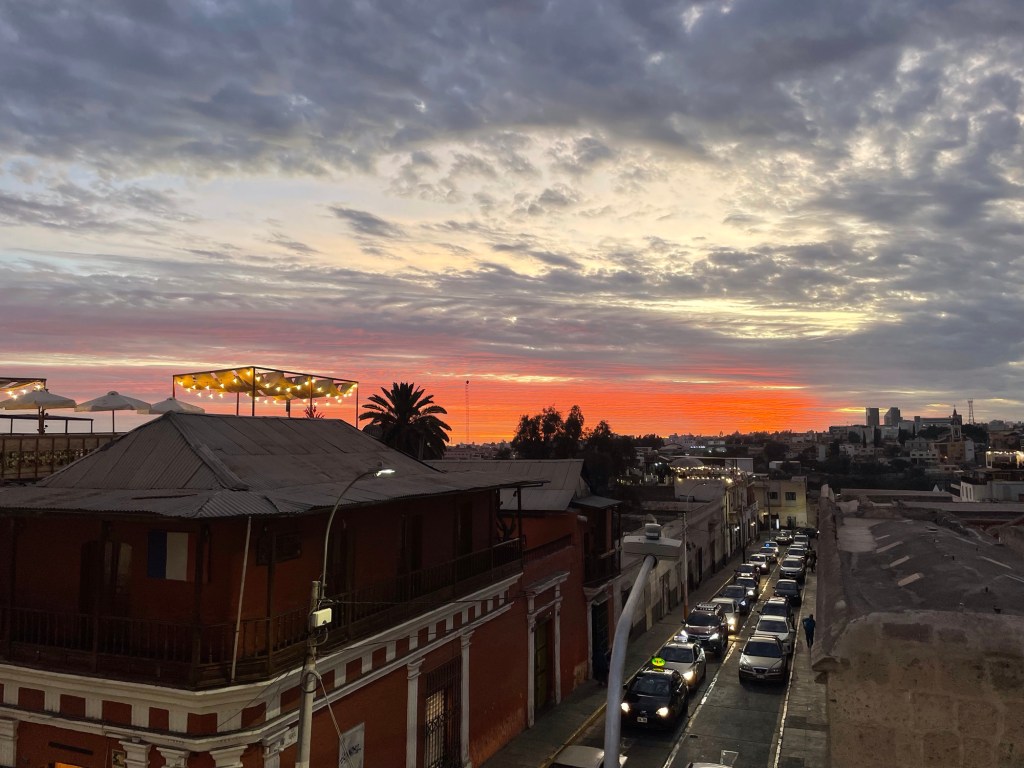
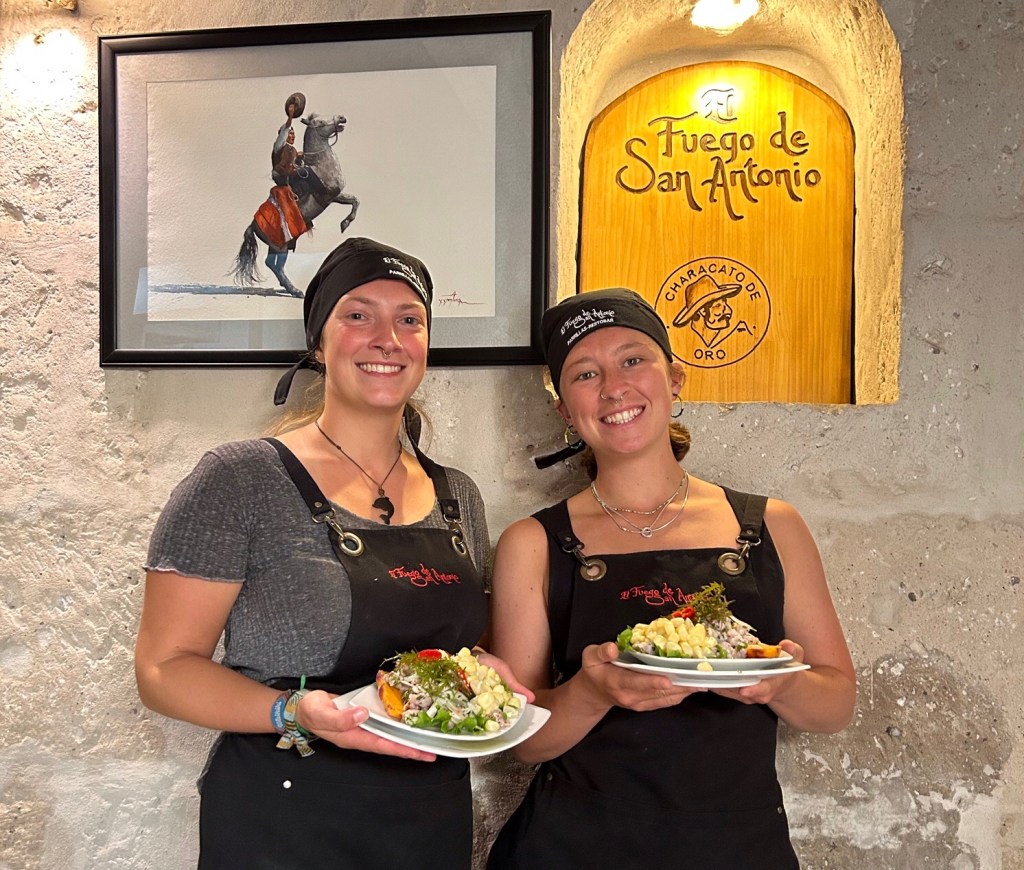
Having met a friend in Pisac, we headed back to Cusco and the following day I went on to Arequipa, a city in the south of Peru, alone. With a very swollen ankle and general exhaustion from my trip so far, I did not do very much in Arequipa. The area is famous for the hike through the Colca Canyon which is twice the depth of the Grand Canyon. Instead, I went to a Peruvian cooking class and learnt to cook ceviche and lomo saltado – two dishes I have eaten plenty during my trip. After four nights, I decided it was almost time to move on from Peru.
Usually I try to take night buses when travelling both to pass the time by sleeping and to save booking a bed for the night. But as the journey from Arequipa to Puno, a small town on Lake Titicaca bordering Bolivia, is only six hours there are only daytime buses. So instead of putting my headphones in and eye mask on, I found myself chatting to Glendy, a university student in Arequipa who spoke much better English than my Spanish. She was going home to Juliaca, the next door town to Puno, for Mother’s Day. After six hours, Glendy and I were good enough friends that she invited me to spend the weekend with her family. So the next morning, I took a colectivo from Puno to Juliaca and joined her family for church. Afterwards she took me to supposedly the best trucha spot in town. Trucha is salmon with different types of potatoes. Peruvian cuisine is very specific about potato variety and the trucha came with what I would call new potatoes and chuño (freeze dried black potatoes). We spent the evening at their church social which involved a lot of games and was pretty exhausting but a good time.
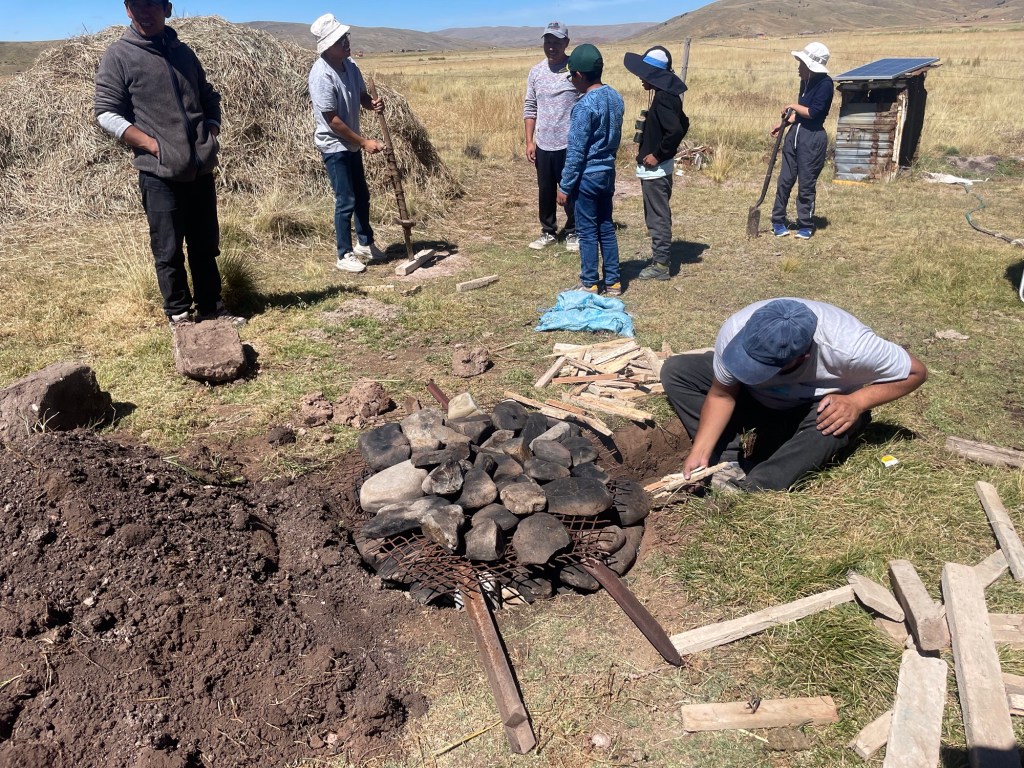
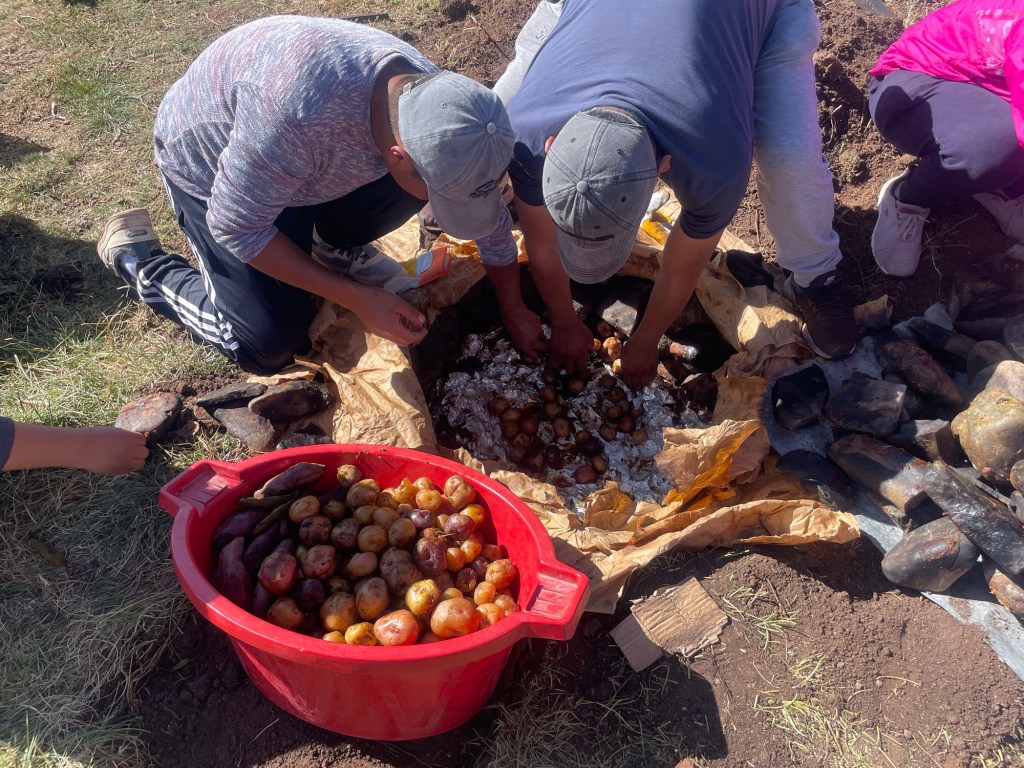
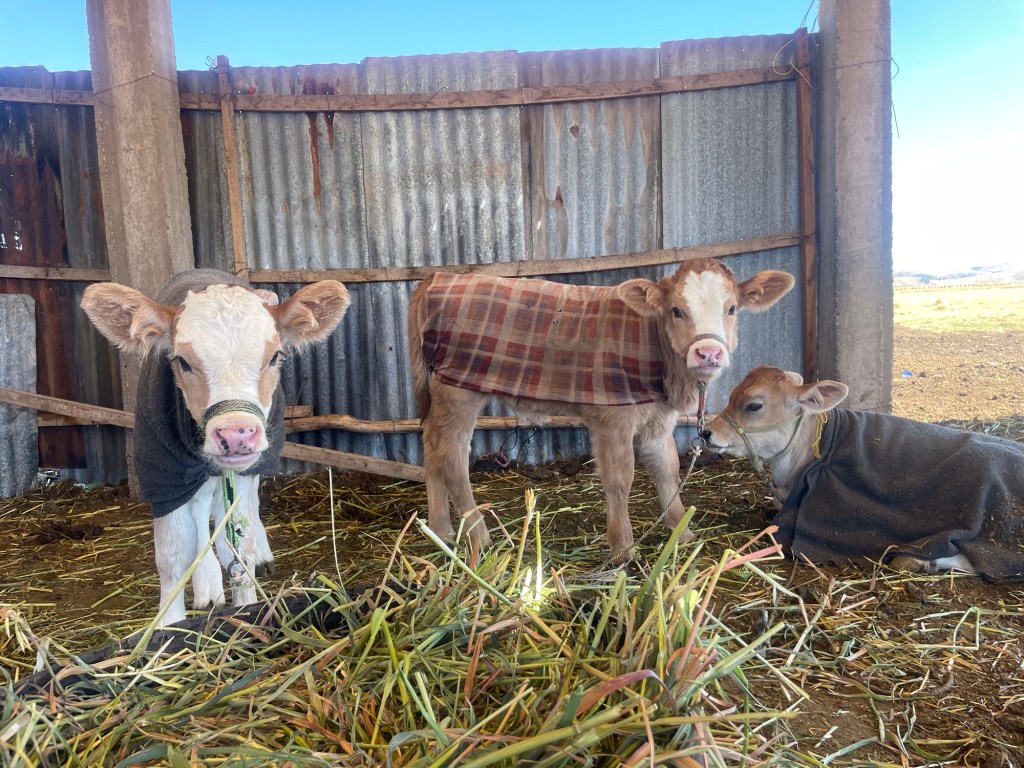
The next morning we drove four hours to the countryside to Glendy’s grandmother’s house for Mother’s Day itself. Glendy’s family are Quechua, the indigenous people of South America, and for Mother’s Day they were having a pachamanca which is a traditional Quechua method of cooking. First they dug a hole outside and lined it with stones washed in salt (to stop them exploding). Then they made a fire and left it to heat the stones for an hour or so. Once hot, they removed the fire and filled the hole with potatoes, meat and green beans, re-covered it with hot stones and wet brown paper to keep the food moist, covered it with earth and left it to cook for another hour. The result – some delicious chicken, beef and veg. The rest of the day was spent playing volleyball.
After Glendy’s parents had driven us back to Juliaca, I decided to head back to Puno for the night and to cross into Bolivia the next morning. Despite barely having seen Puno, I had spent three nights around the area and wanted to head on to Copacabana, just the other side of Lake Titicaca.
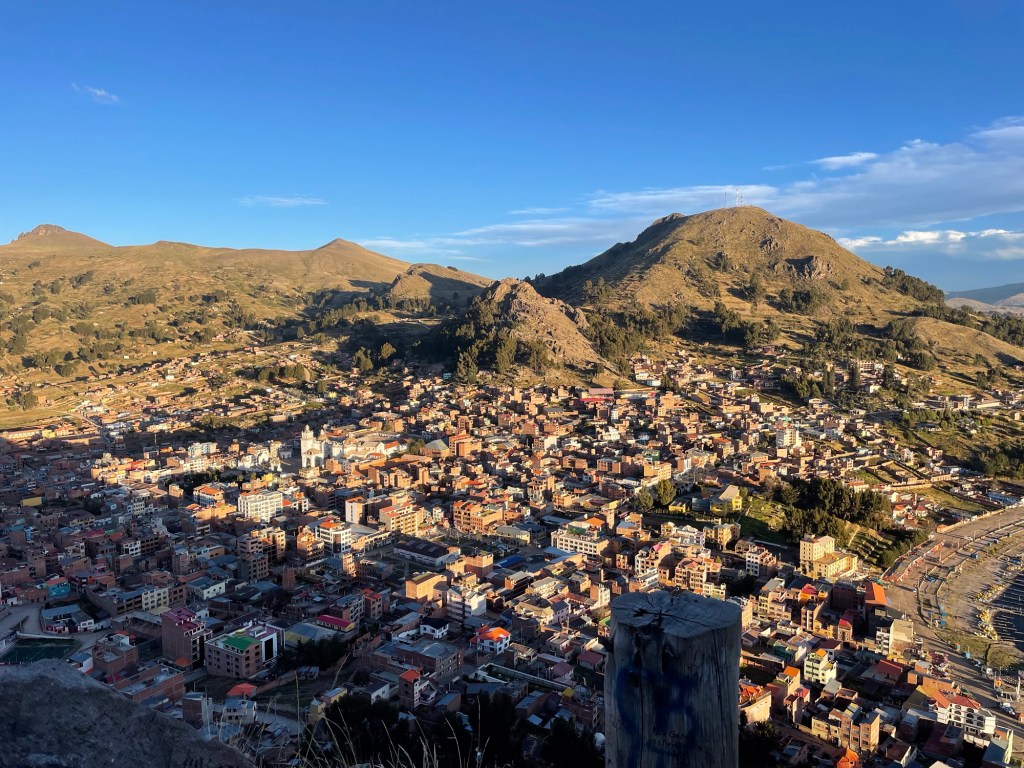
My 5:30am bus arrived in Copacabana at around midday. Although I only saw Puno at night and am not therefore a reliable judge, Copacabana felt much more touristic with its central street lined with coffee shops and cocktail bars. Nonetheless, it was a nice town where I met a really nice group of people I would spend the next week with.
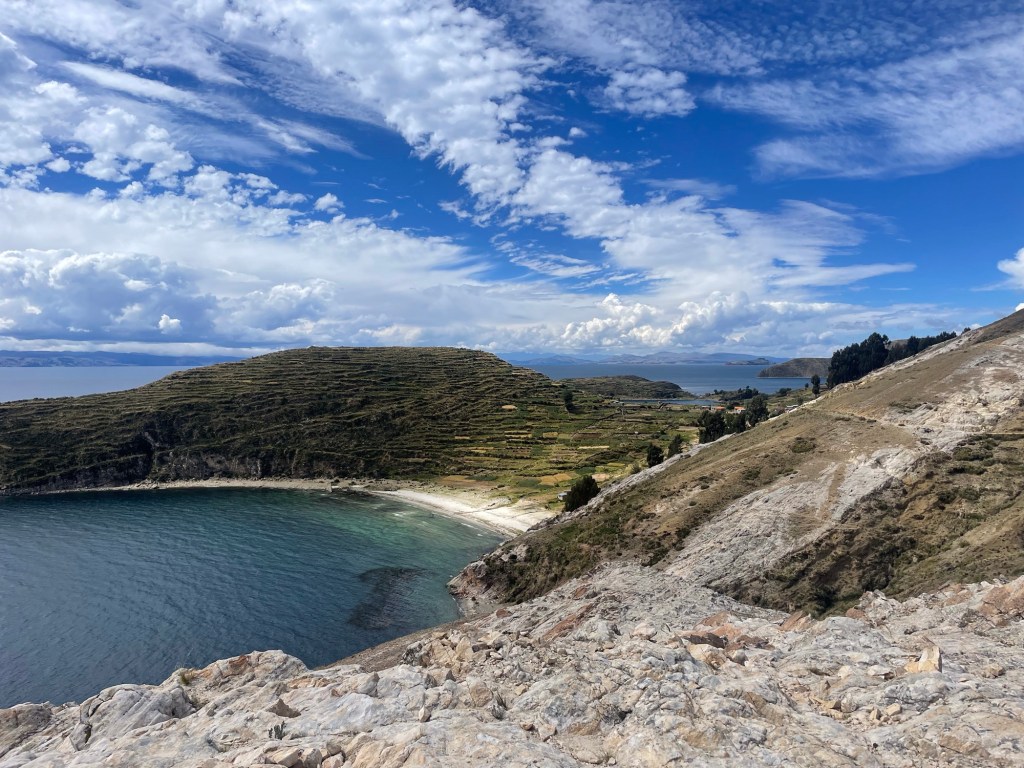
After a night in Copacabana, I visited Isla del Sol, an island on Lake Titicaca about two hours from the mainland by boat. The island was beautiful and calm. Immediately I regretted booking a bus that evening, wishing I could spent a night on the island. But alas, ‘twas not the plan. Instead I spent the day hiking across the island (ankle still swollen) from the north to the south with two English girls I met on the boat.
I arrived back in Copacabana with 15 minutes to make my bus and then I was on my way to La Paz. With a slight detour involving everyone getting off the bus and onto a speed boat whilst the bus was loaded onto a raft to cross poorly placed lake, I arrived in La Paz at about 10pm and ran into the group I had met the day before in my hostel.
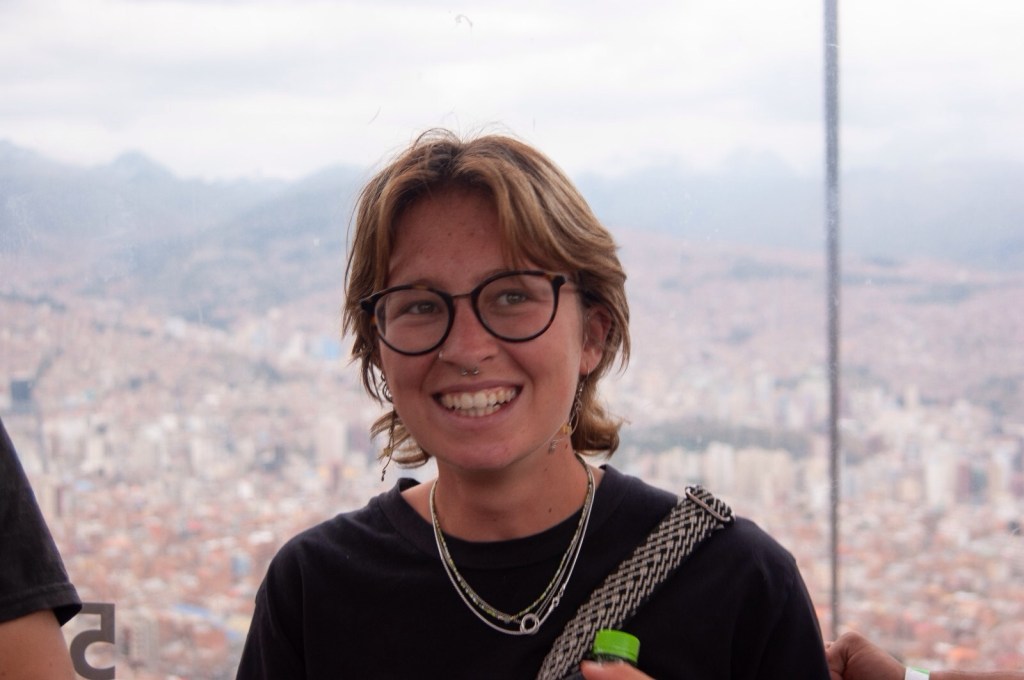
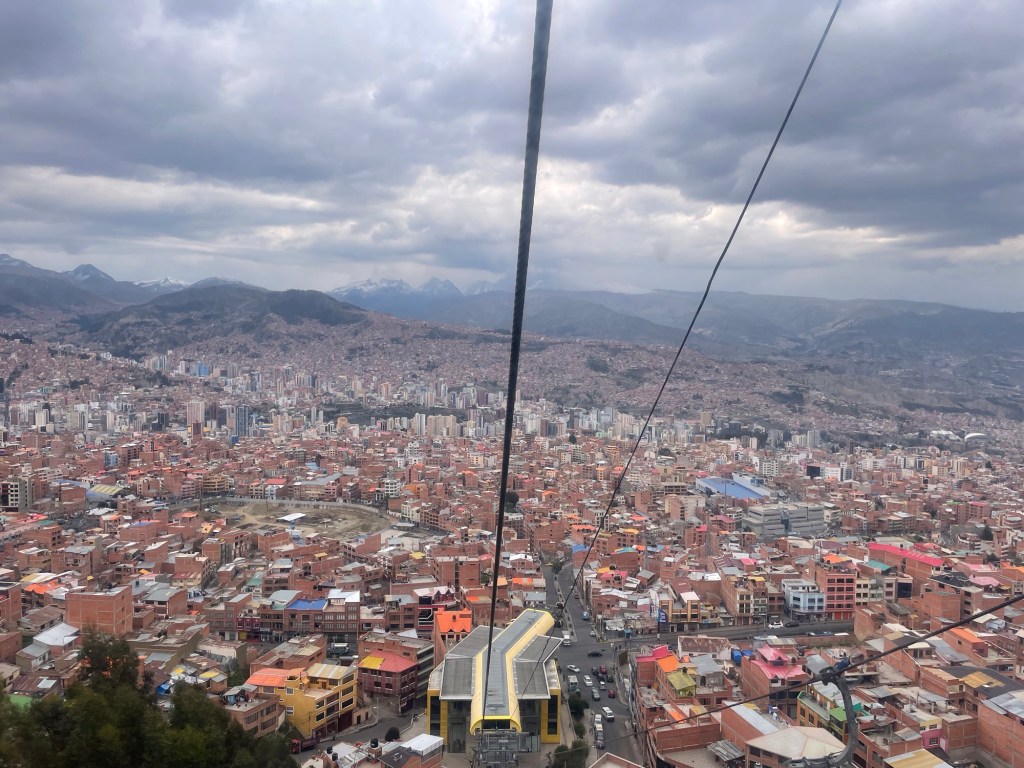
La Paz is a hectic city. We spent our first day there riding the city’s cable cars to El Alto, the city on the hill above La Paz where we found a brass band rehearsing on a basketball court. Riding public transport with aerial views of the city was certainly a change from the tube.
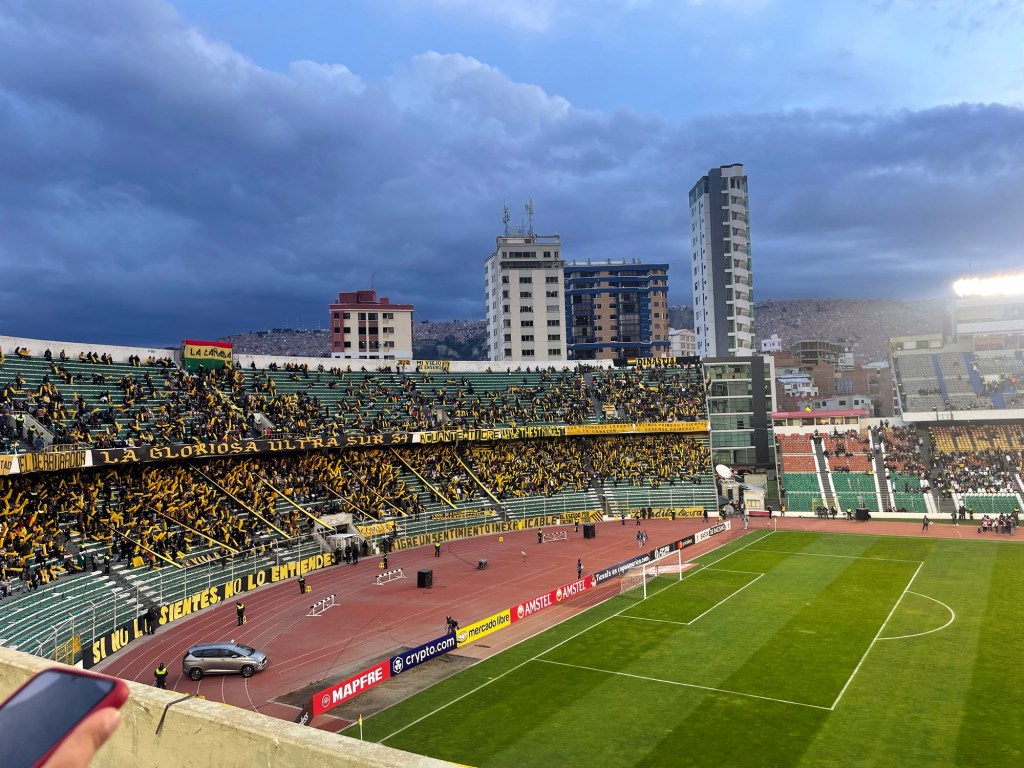
Having spent the day exploring the city, I had another new experience that evening – my very first football match: The Strongest vs. Huanchipato. Our choice of opting for the uncovered seats proved a bad one when a thunder storm began. The staff who had been walking up and down the stands with food and drink immediately transitioned to selling ponchos and probably made a killing. The Strongest won 4-0 which was fortunate as their fans made up 95% of the spectators. When the match was over, everyone calmly left the arena and went home – I guess not selling alcohol makes a big difference to the spectator experience.
The following day we went mountain biking down Death Road, which starts at 4600m and finishes at 1500m. The road used to be a frequent bus route which is how it earned its name but now is only used by bikes and occasional cars. Freewheeling the whole way, the route was pretty spectacular and no one died.
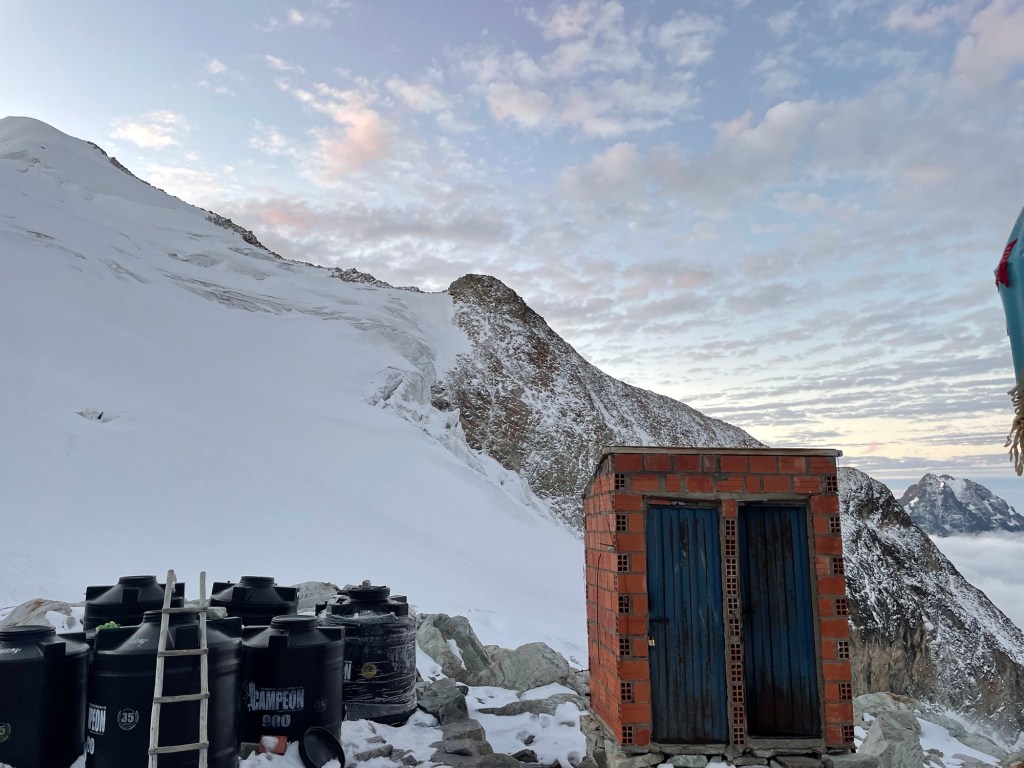
Huanya Potosi
After another day of relaxing in La Paz, we’d had enough rest and it was time to go up another mountain – this time, a 6088m mountain.
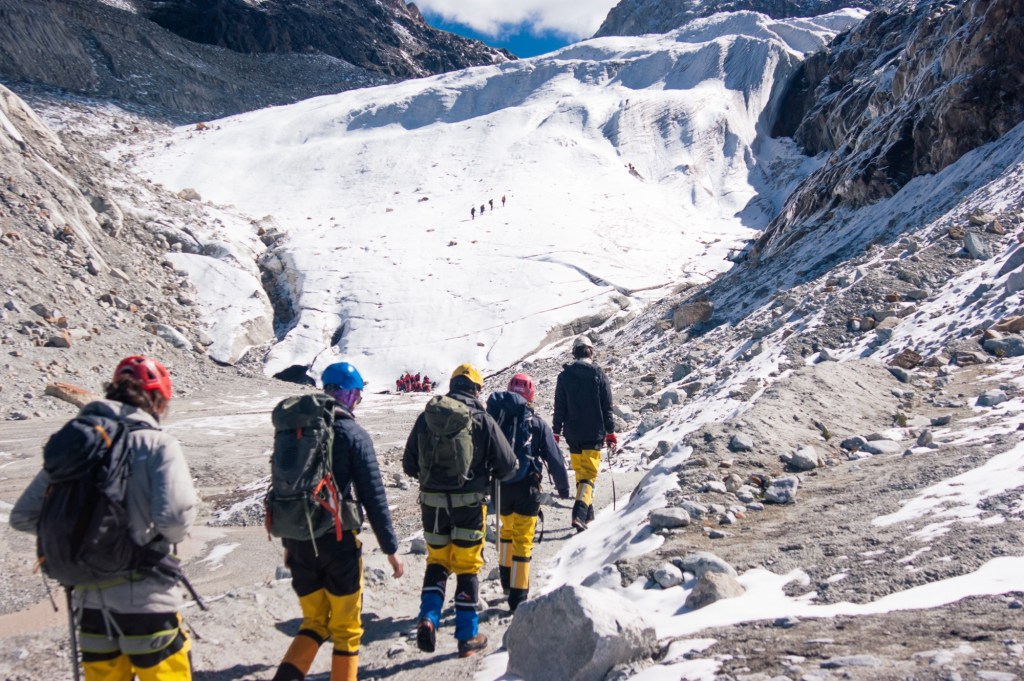
At 8:30 on Saturday morning, my friend and I were sat outside the tour agency, where we’d said we would be, waiting for someone to show up with some idea of how we were to get up to 6000m. Unlike the hiking in Cusco, we had arrange this trip through a tour company as climbing to 6088m when neither of us had any mountaineering experience seemed like a bad idea. Going with a guide means you don’t need to plan anything which means you don’t need to know anything either. It might be fair to say I was slightly underprepared for what Huayna Potosi entailed. I thought we would be walking up to a high summit and coming back down and sure the altitude would be a challenge but I had been at +3500m for the best part of a month. How bad could it be?
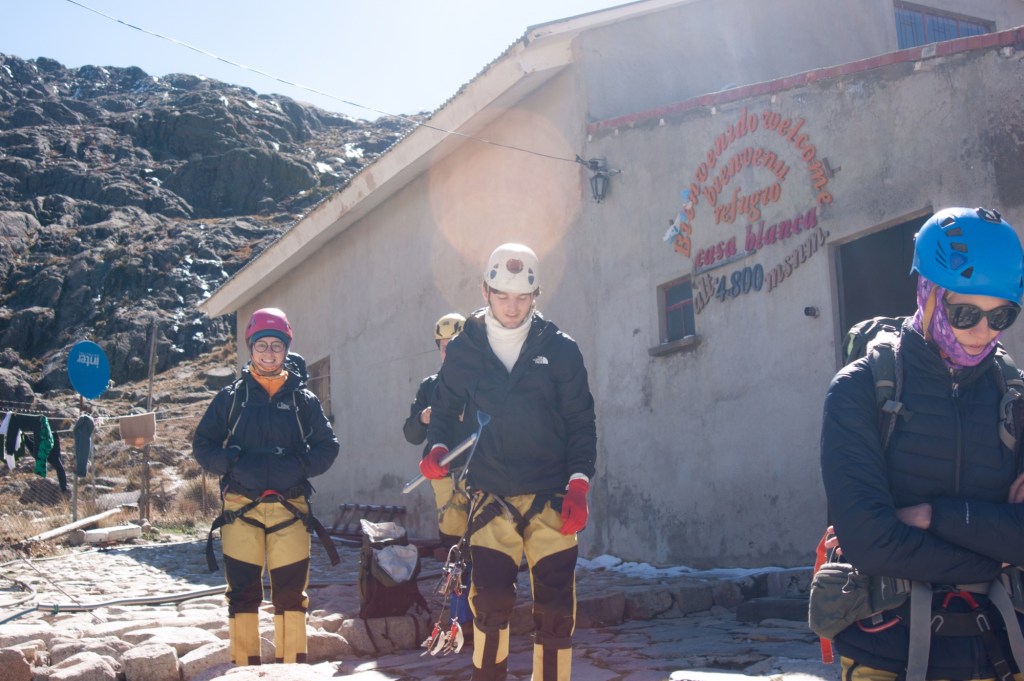
After arriving at base camp (4800m) by bus on the first day and heading out that afternoon to learn how to use crampons and ice picks, I felt I might’ve misestimated what was about to happen. The training session also involved ice climbing with axes and crampons and whilst this wasn’t actually required for the climb itself, scaling a glacier is pretty cool.
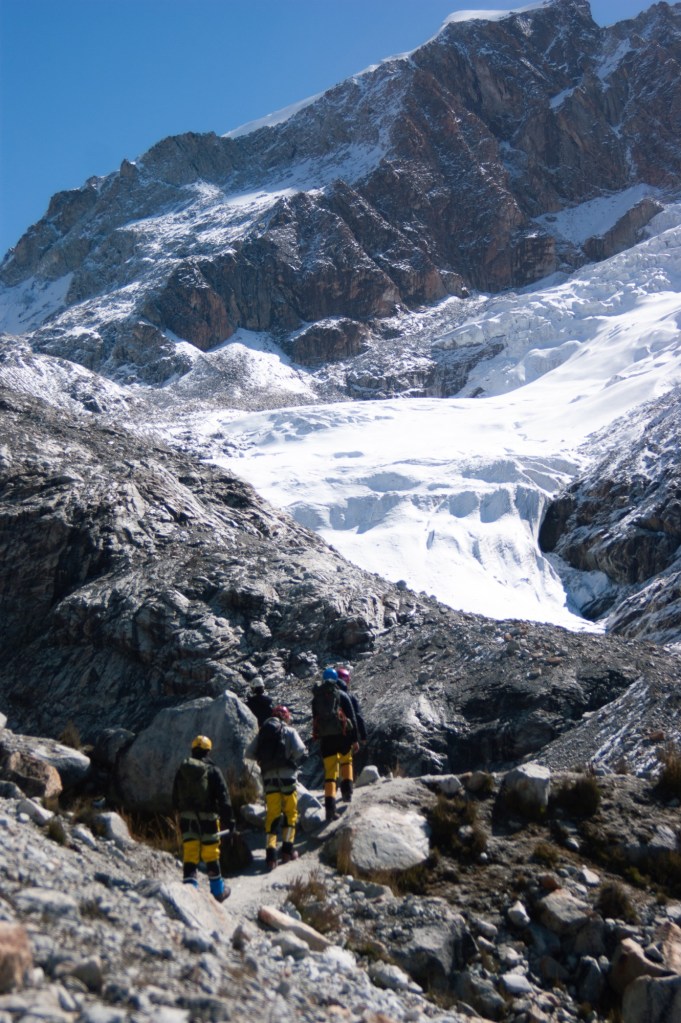
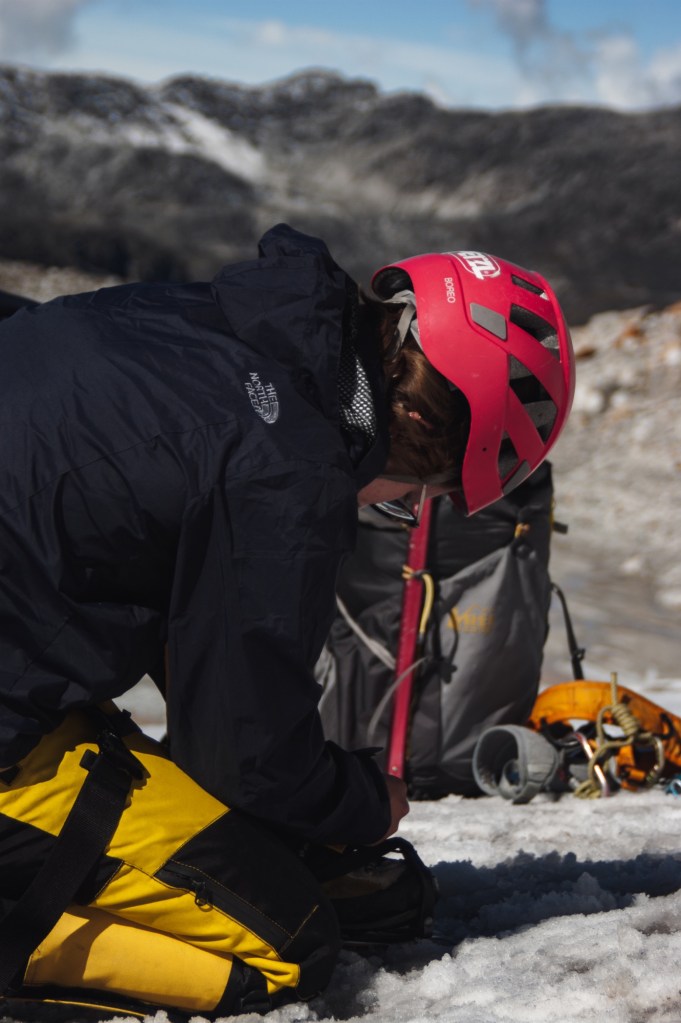
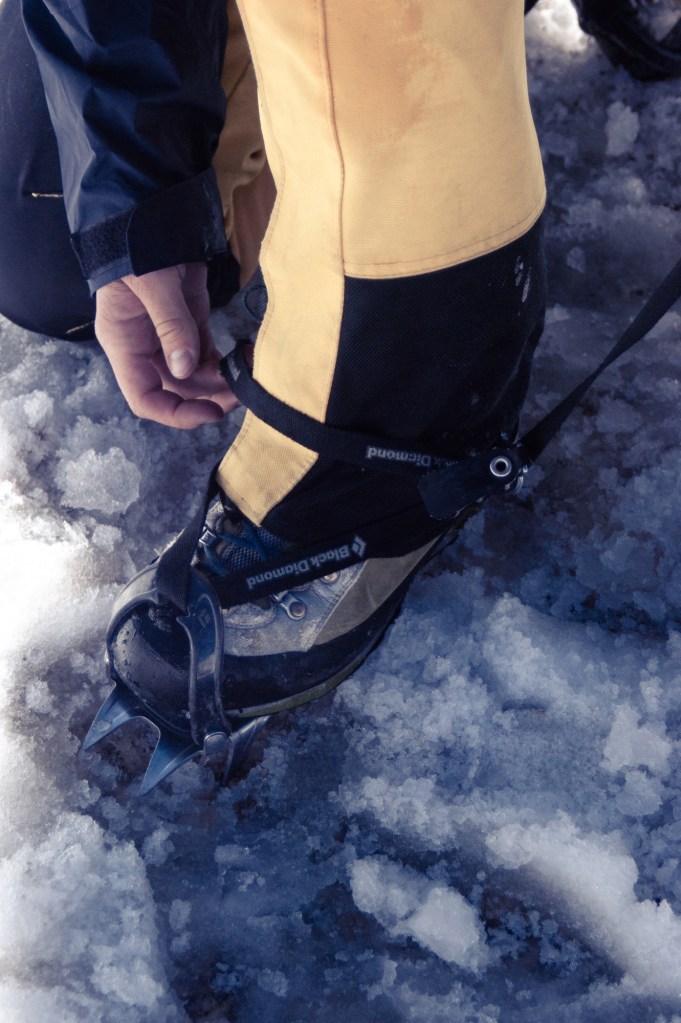
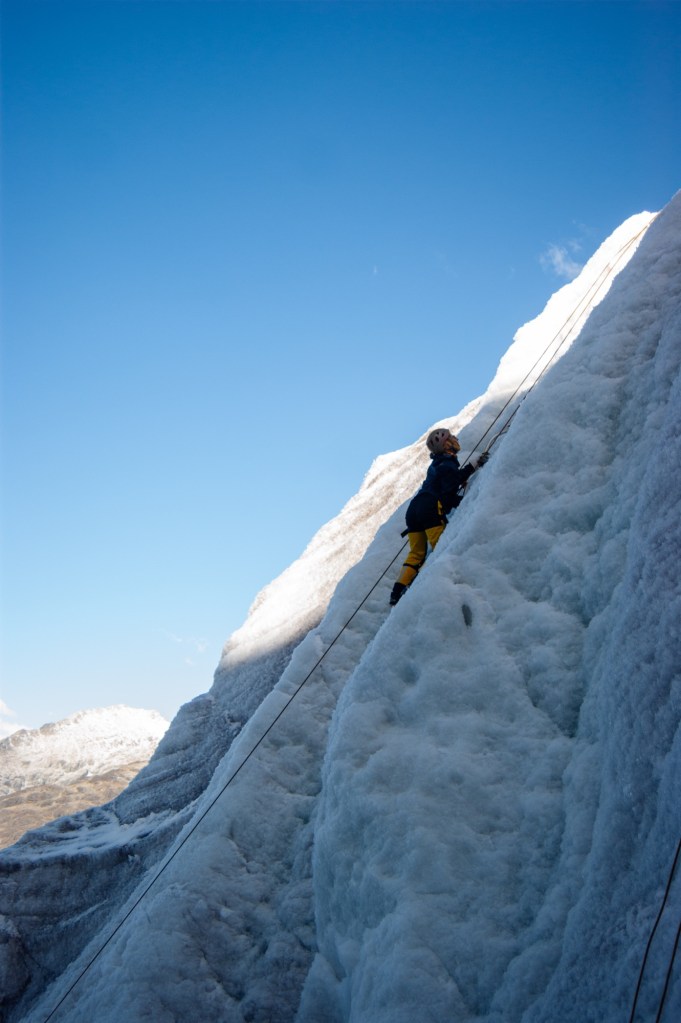
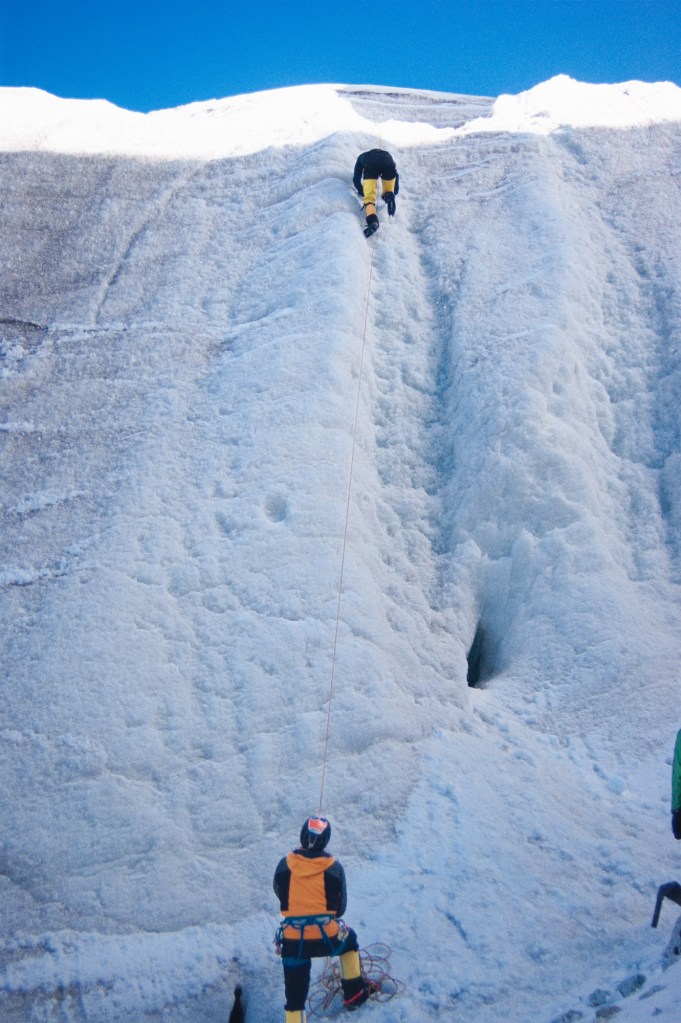
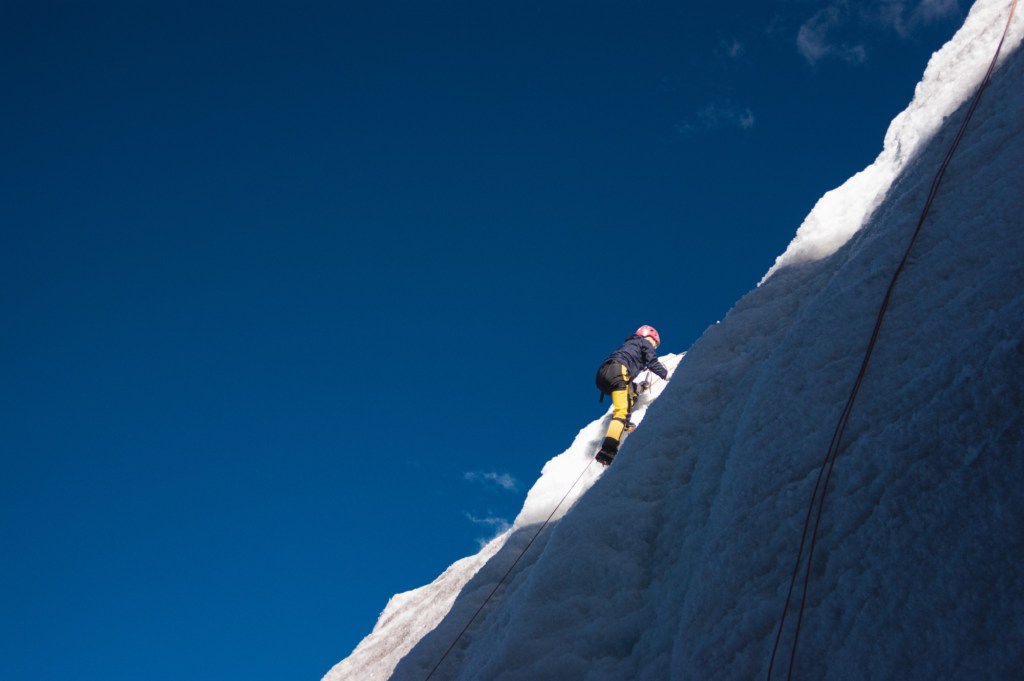
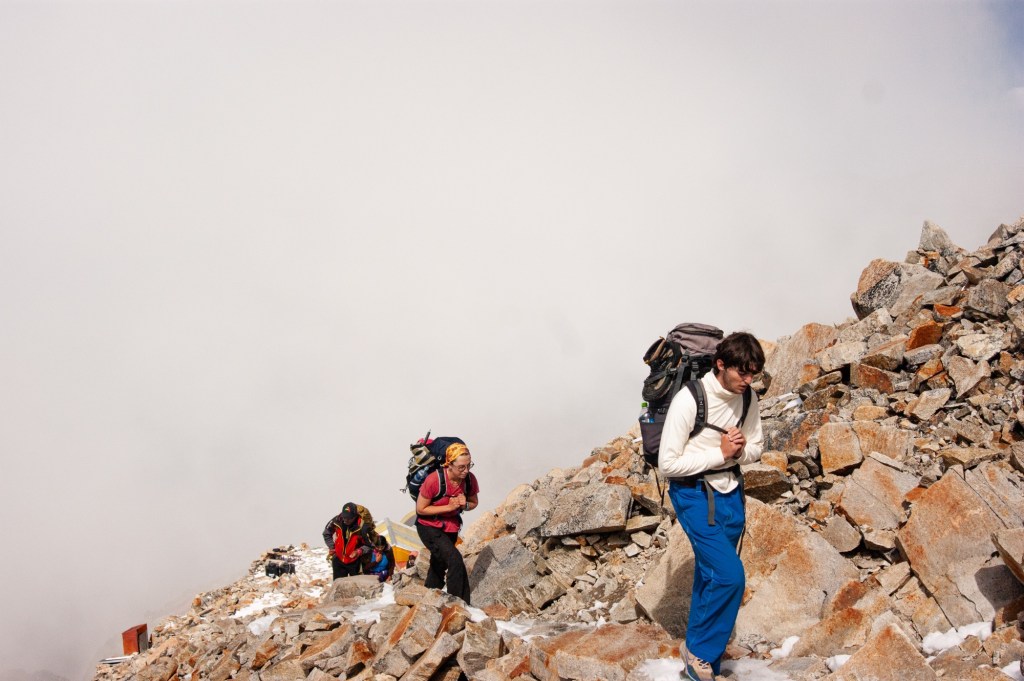
The following morning was perhaps the slowest morning I’ve ever had whilst on a hiking trip. Waking up at 7:40 having had over 8 hours of sleep – unheard of! We only had 2 hours to walk that day, climbing up from base camp to high camp (5200m). To reduce time spent at altitude and coordinate groups climbing up with those coming down, we didn’t leave until after lunch and arrived a little past two.
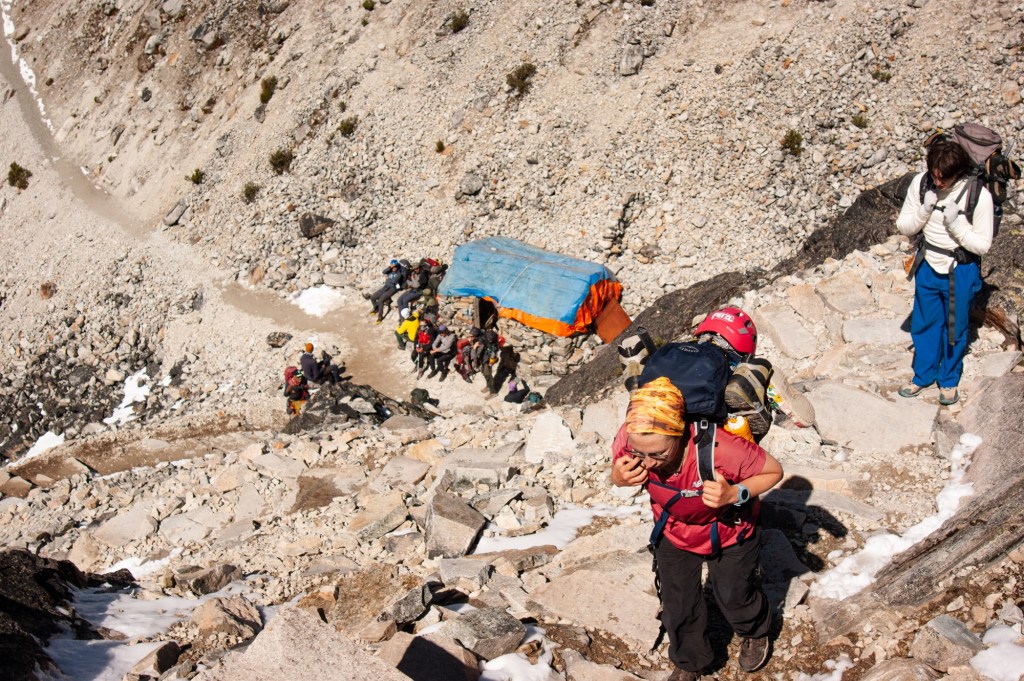
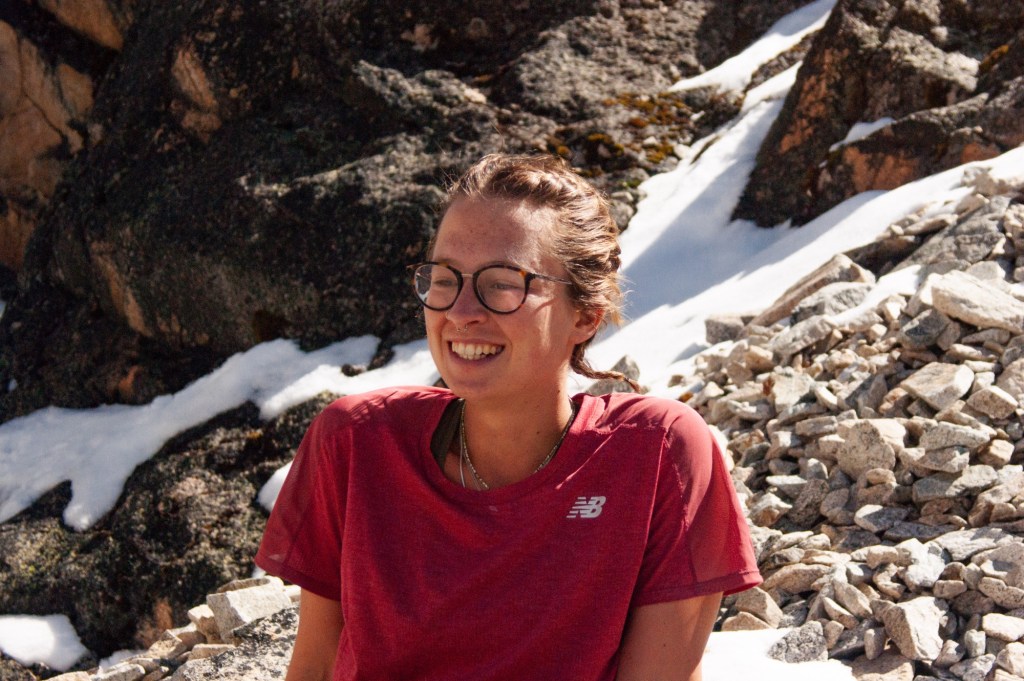
Surrounded by snowy mountains, we dropped our bags at the camp and had a snow ball fight.
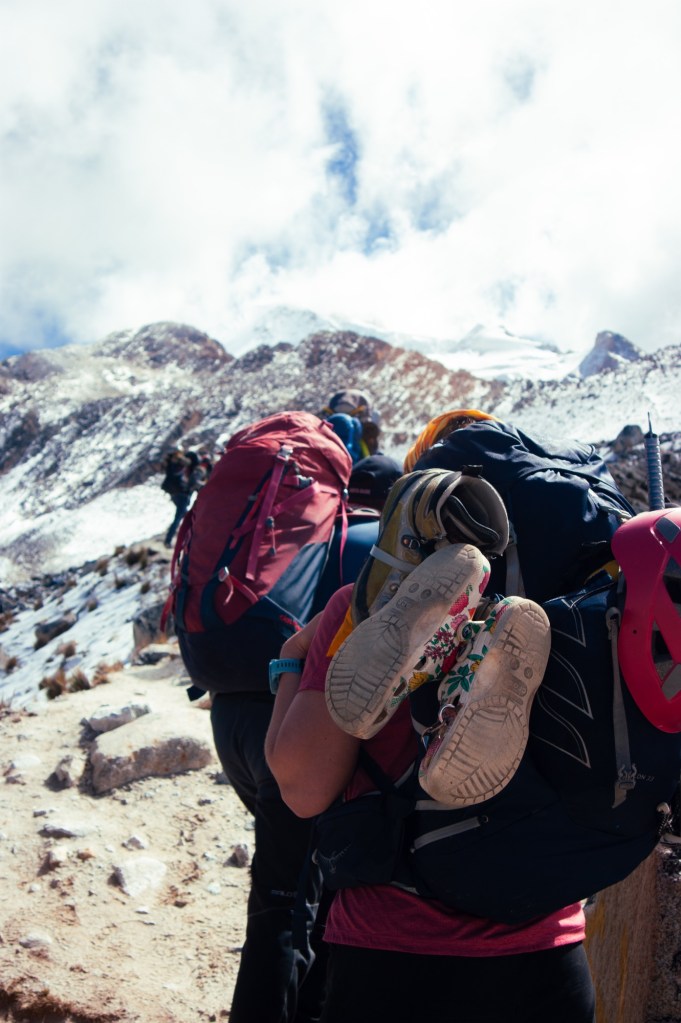
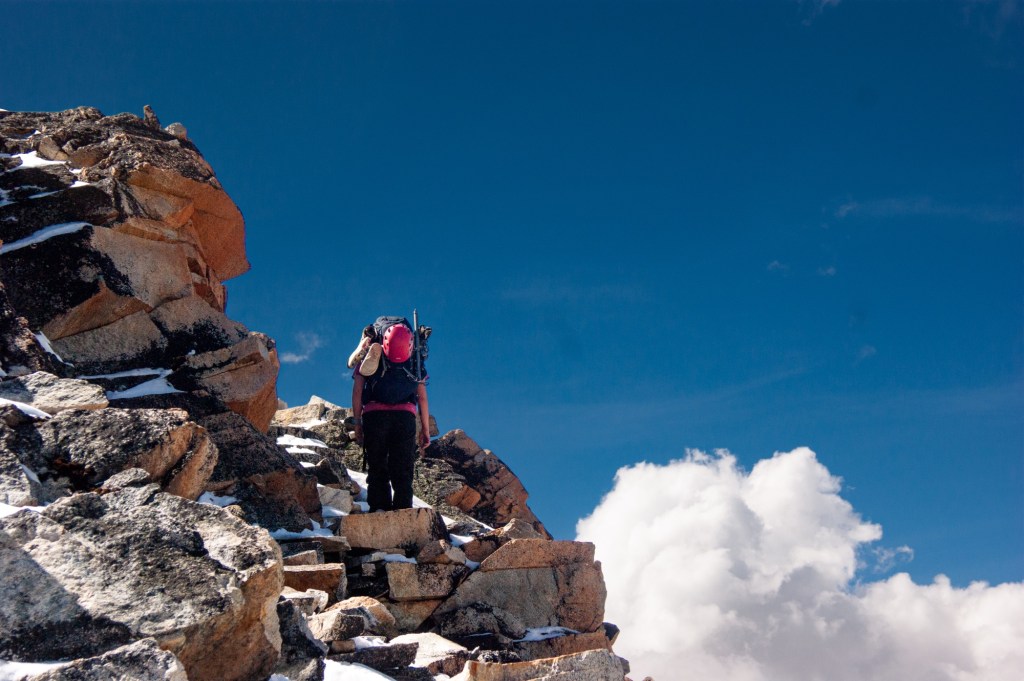
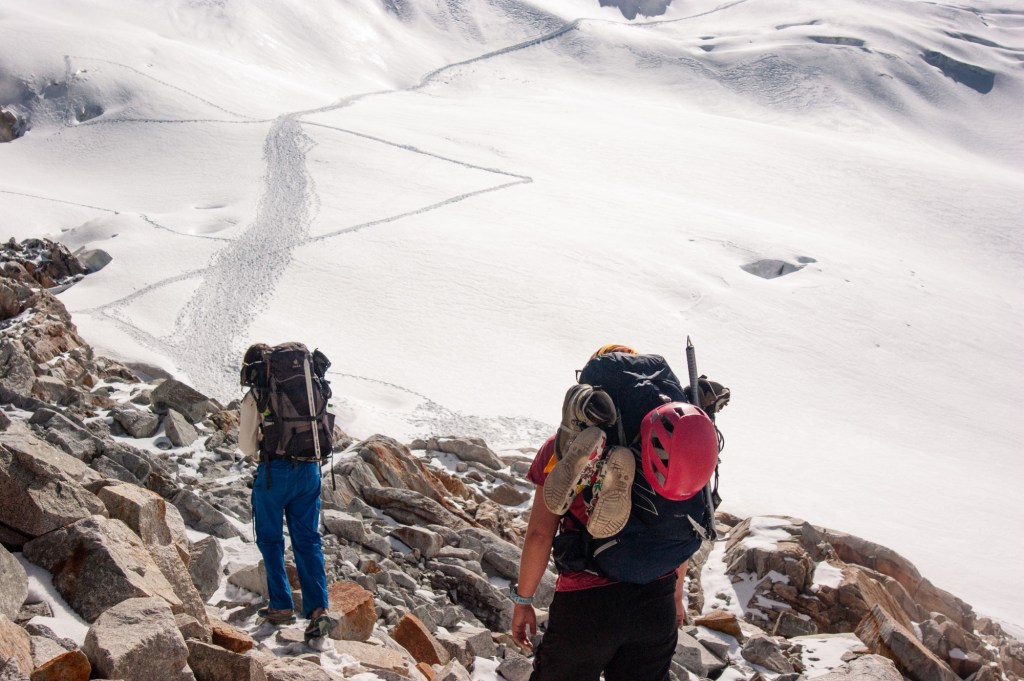
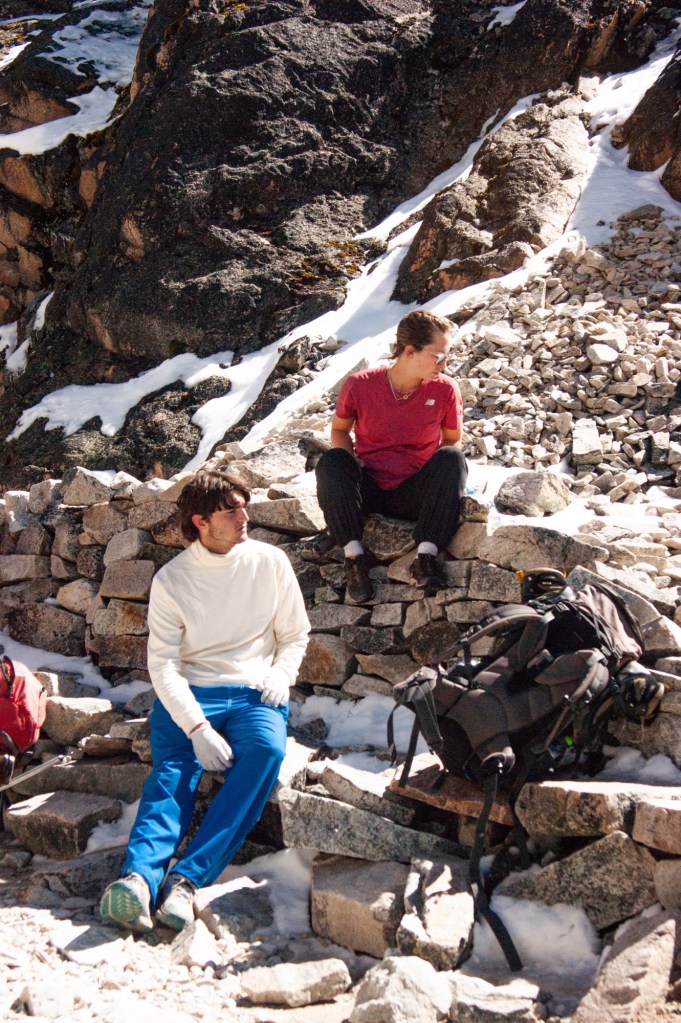
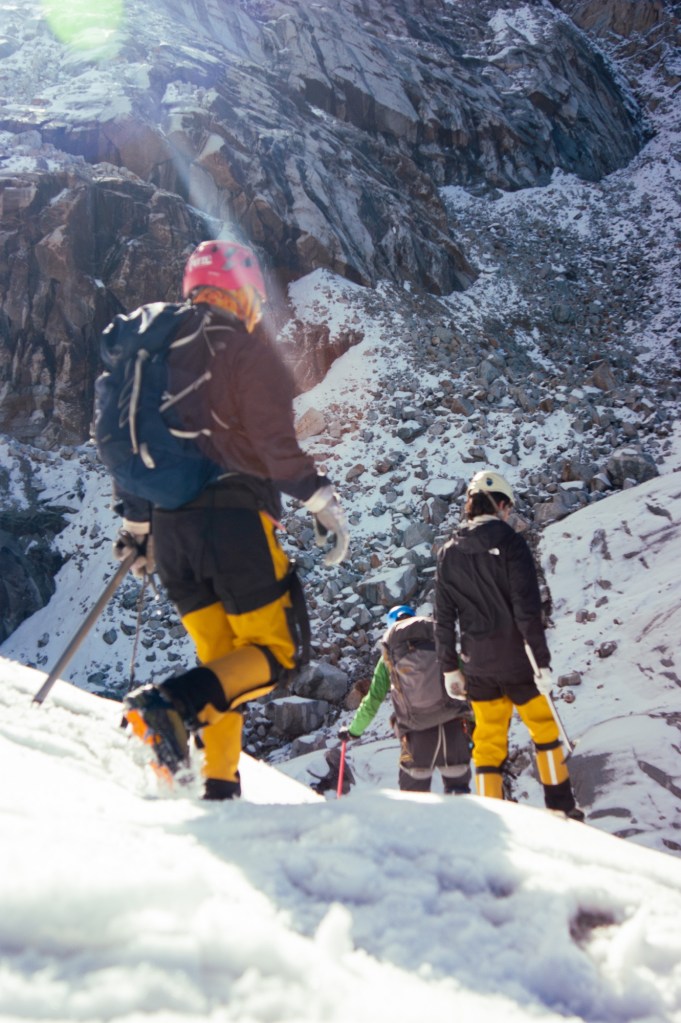
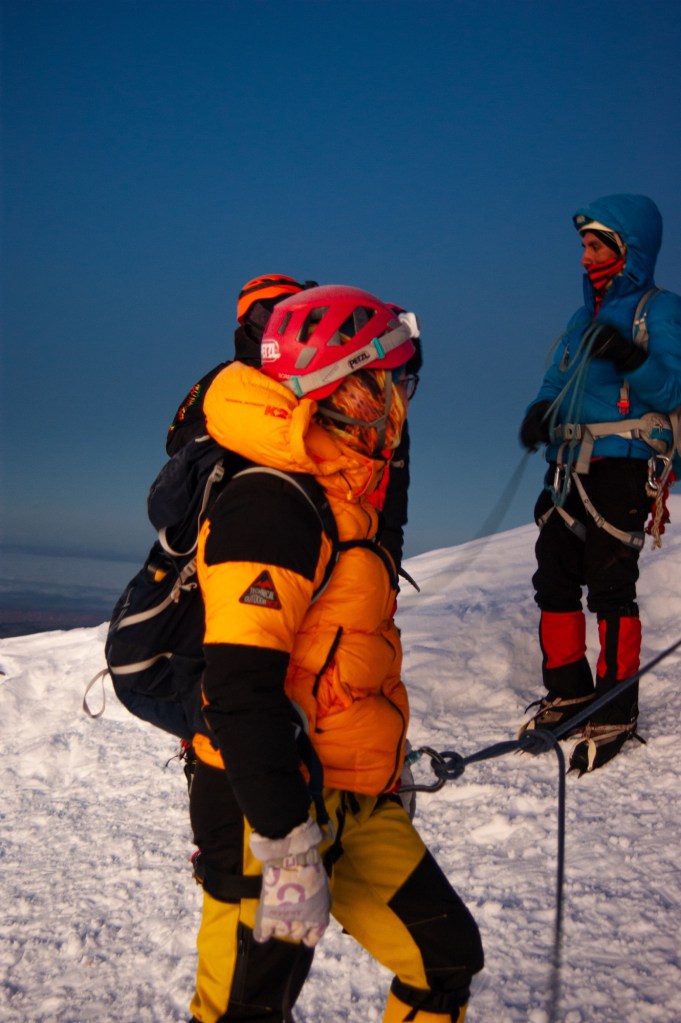
If the first two days had been relatively relaxed, the final day was very much full-on. Waking up (or rather, getting out of bed) at half midnight, we had ‘breakfast’ and were geared up and tied to guides in groups of 2-3. At this point I was glad we had not attempted this alone.
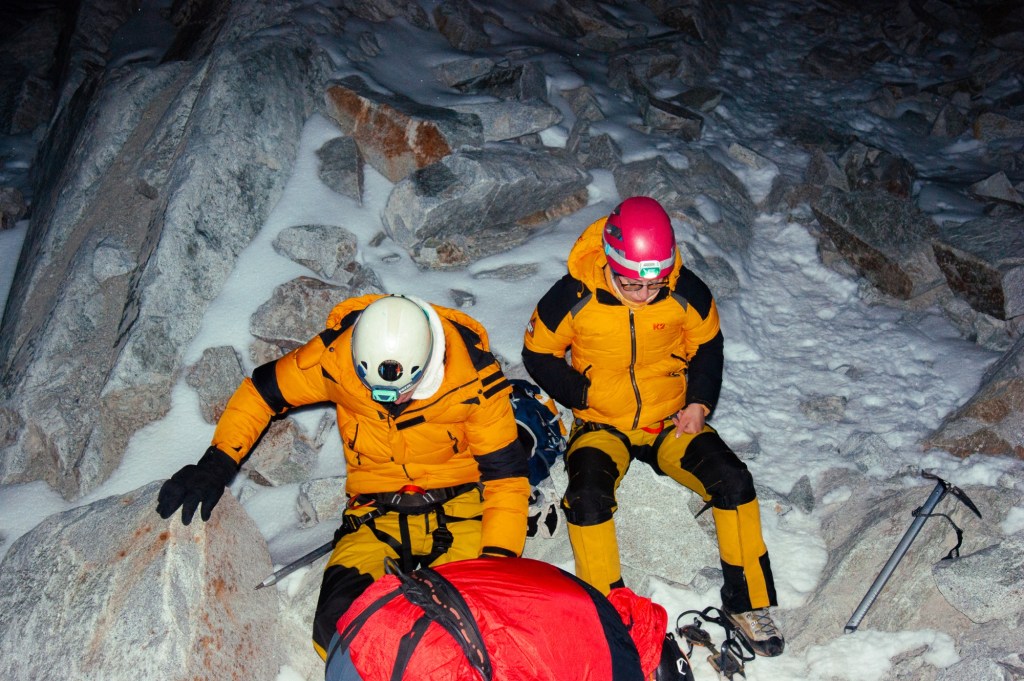
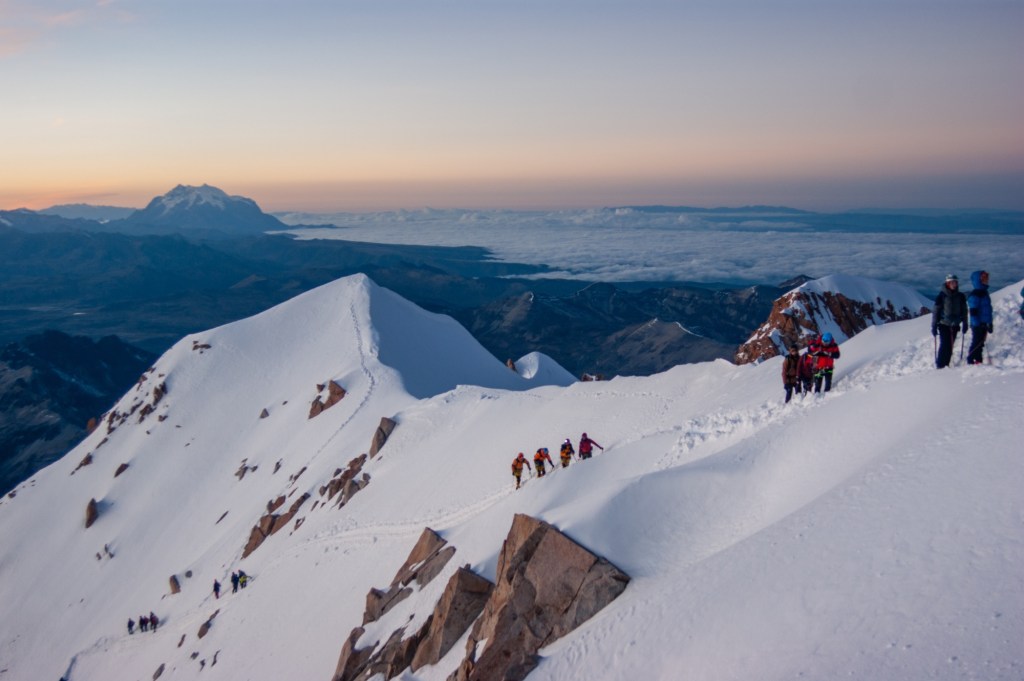
2am-6:30am we climbed. Having had less than 15 minutes of sleep, the way up should’ve hurt a lot more than it did. However, when skirting your way along a ledge of snow the width of your foot with a very wobbly person tied ahead of you, looking like they might drop any minute with you in tow – you tend to stay awake. We walked up in the middle of the night to arrive at the summit for sunrise and get back down and off the snow before it gets slushy and slippery mid-morning. Personally, I was grateful I couldn’t see ahead of me. I think when you find yourself on a bridge between two crevasses or balancing on a narrow path with a steep slope above and below you you have to deal with it. If I had seen these sections approaching, I’m not sure how it would’ve gone.
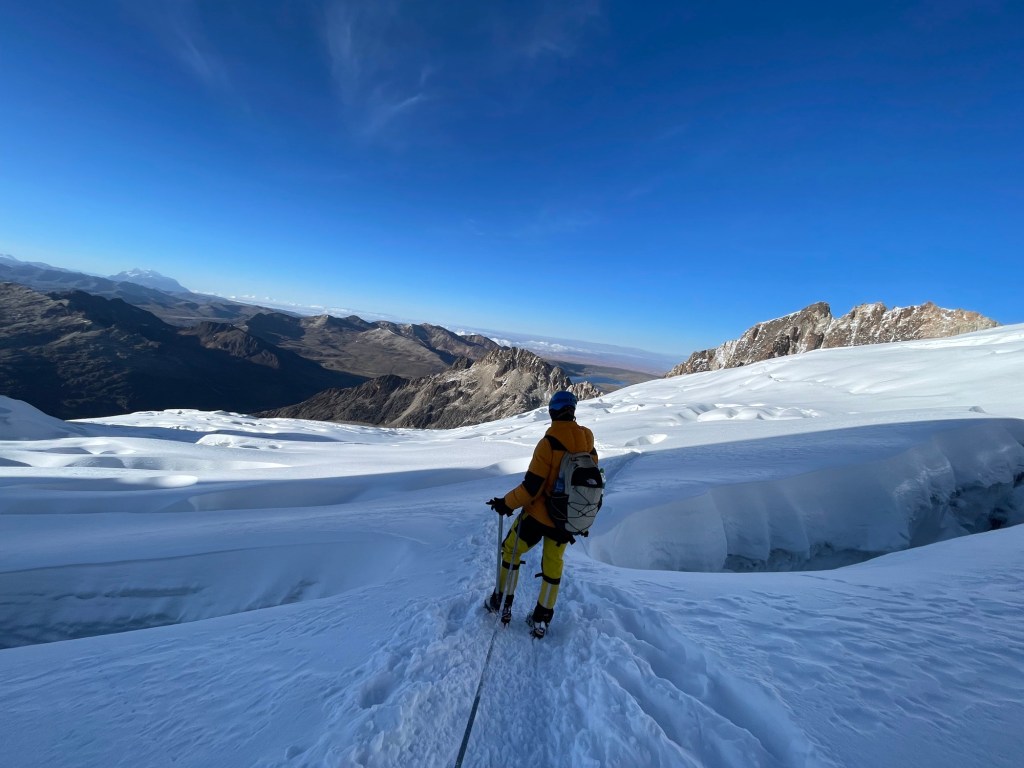
The climb was hard and at one point was genuinely pretty scary. When the crampon of the wobbly person ahead of me came loose whilst we were precariously balance on a ledge, I was left balancing one foot in front of the other on the narrowest section of the path. What I had been enjoying was suddenly not so fun and it took me until the next corner to regain confidence. A lot of people turn back due to the altitude or just the nature of the paths and after being scared myself, I really get it – being scared of heights and trying to do this climb would suck!
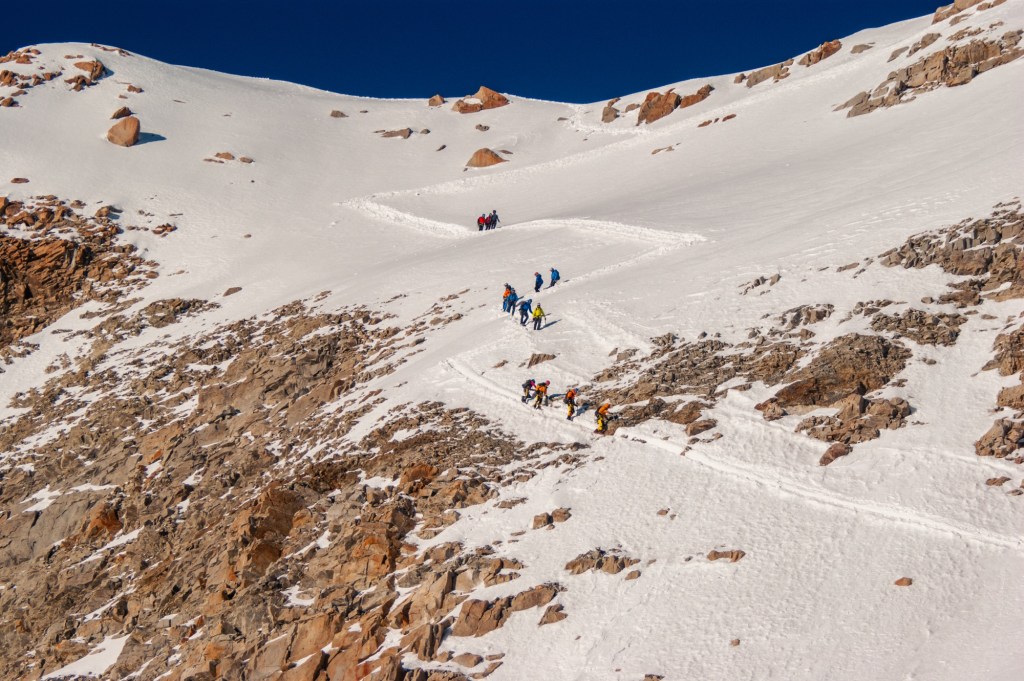
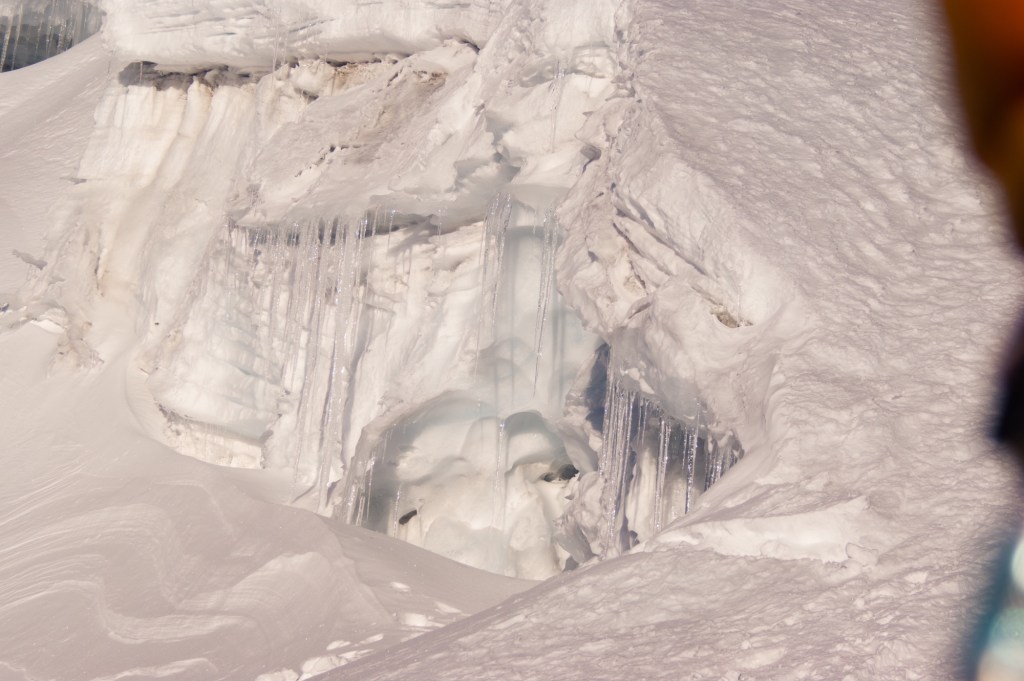
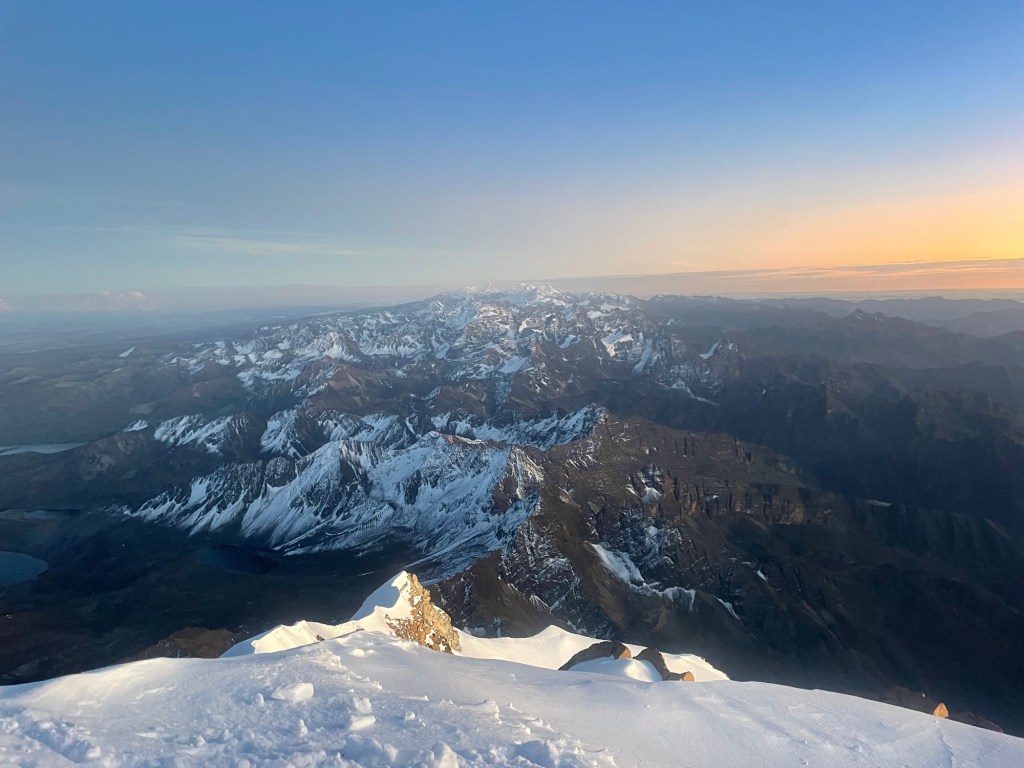
We arrived at the summit just as the sun came up. The place was unlike anything I’ve ever seen – completely out of this world. We could only spent ten minutes at the top and tried to take some photos before we froze. Despite the views, the cold drove us down quickly.
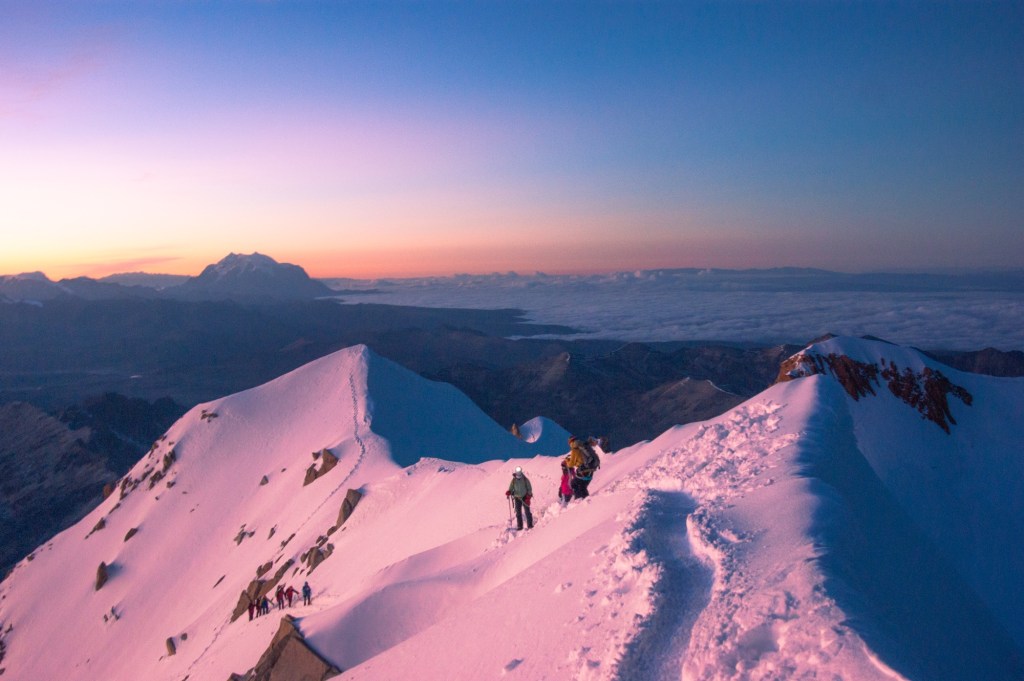
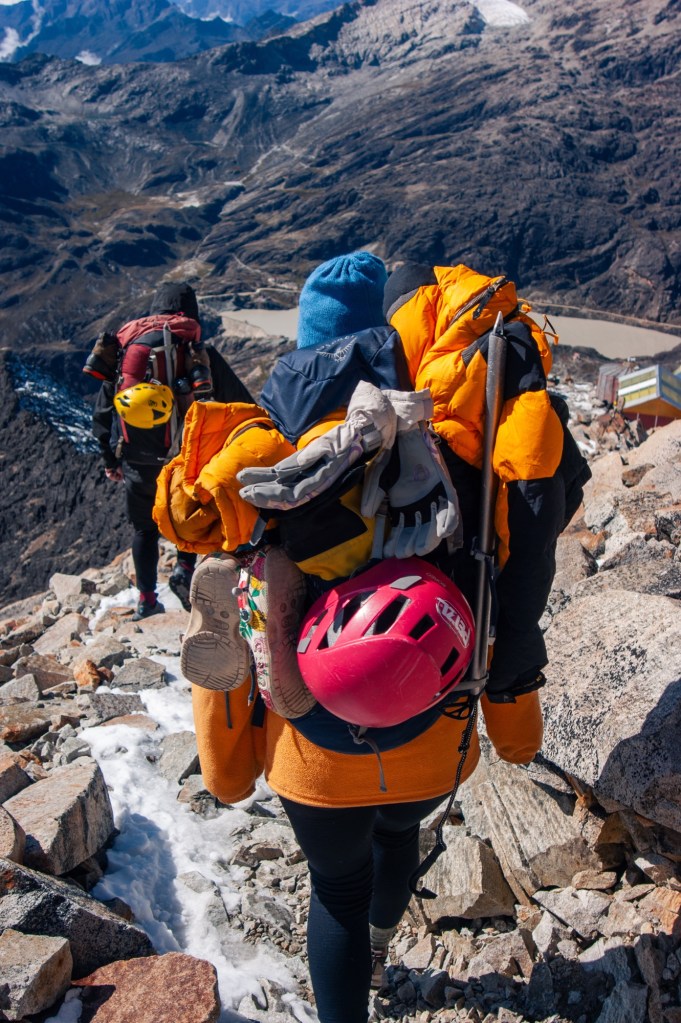
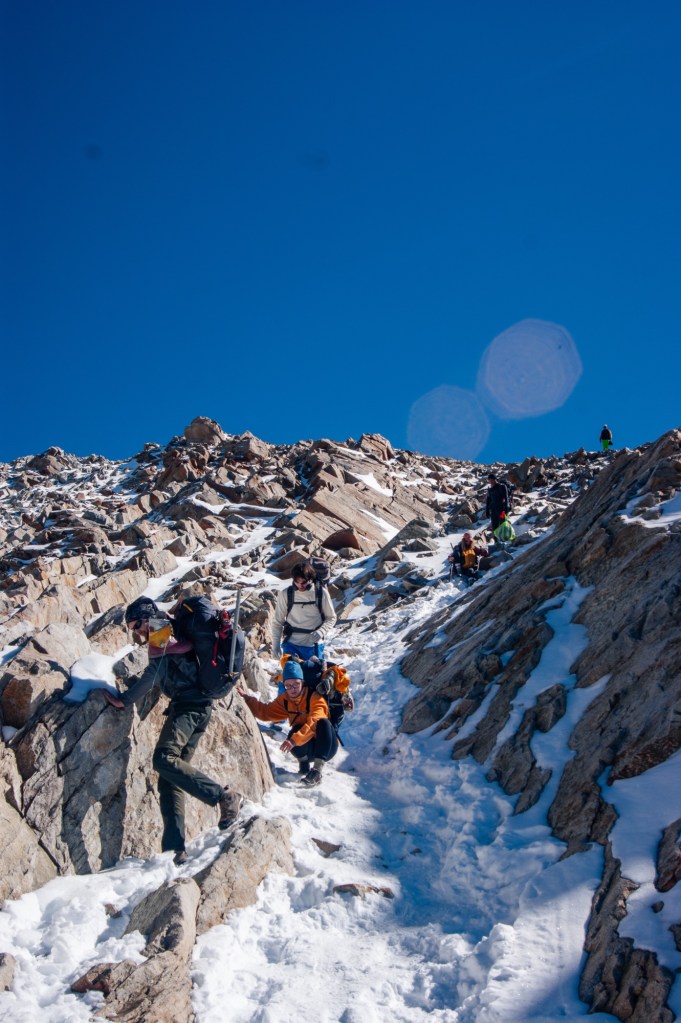
As soon as we began the descent, all the adrenaline left my body and I was exhausted with a slight case of altitude sickness that ibuprofen and the fear of falling had kept at bay until that point. Coming down in the light, we saw everything that we had missed that morning and I was very glad we had missed it that morning.
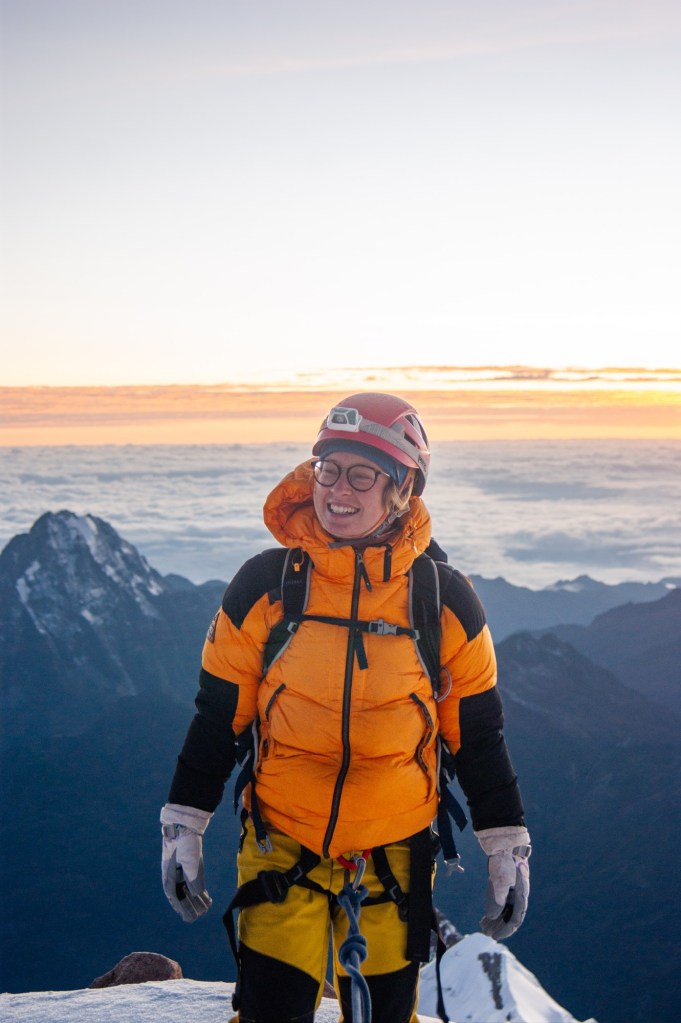
Completely exhausted, we arrived back at high camp at 9:30am, fearful to think of the bags that needed to be packed and carried back to base camp. The snow on the route back to base camp had hardened since the day before and the first part of the climb down became more of a slide. Finally we reached base camp to be rewarded with empanadas, Coca Cola and views of poor souls on their first day.
Finally, a cramped and bumpy mini-bus took us back to La Paz and 13 hours of sleep.
P.S. my ankle is very much still swollen and has not appreciated my treatment of it.
 A Year in Nepal